
Rules for Singles Pickleball: The Ultimate Solo Guide
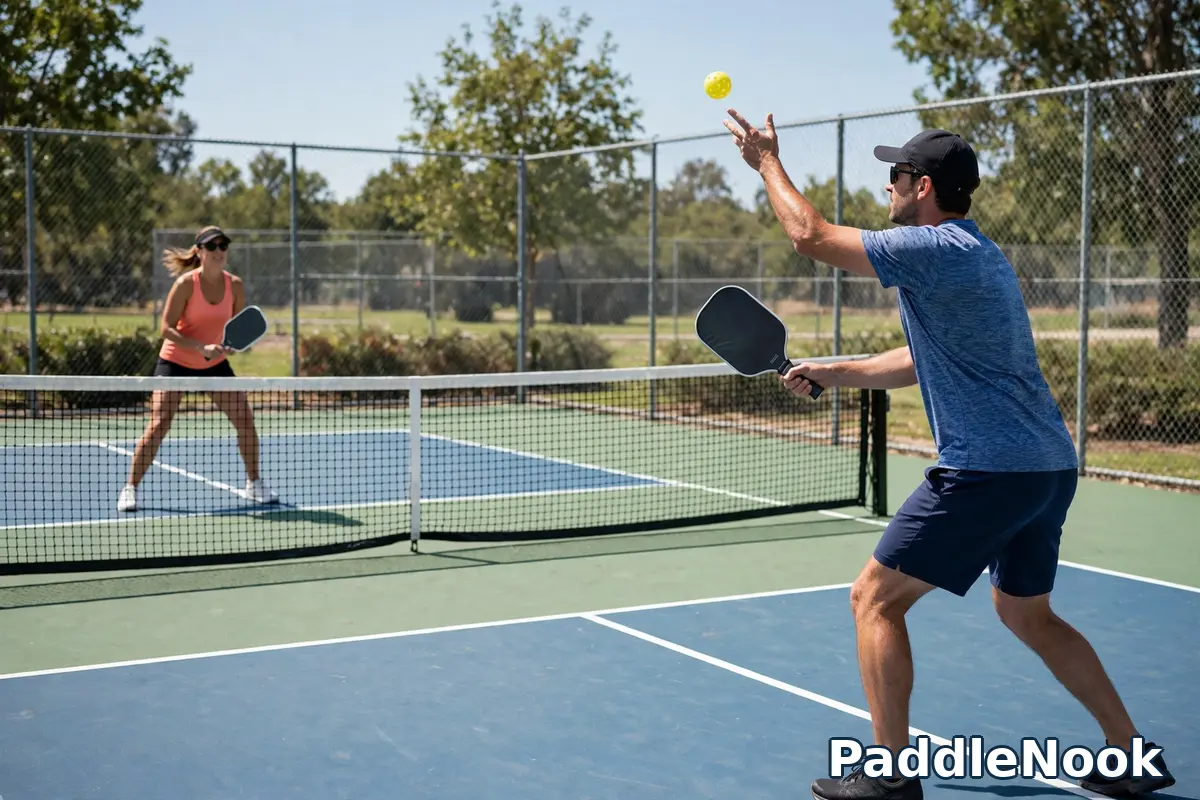
The rules for singles pickleball are simpler than many new players expect, because there is no partner to track. You play one against one, on the same court used for doubles, and you cover the whole side yourself. That sounds hard, and it can be tiring, but the rules themselves stay short and clear. It rewards quick feet, soft shots, and clear calls, and it suits players who enjoy a direct test of skill.
This guide walks through the court, the serve, the score, and the faults, in the order you meet them in a game. You will also get a short checklist for your first solo match, so you can stop worrying about the rules and focus on the next shot. Keep this guide nearby for your first few games, until the rules feel second nature. For the full rules behind this game, see the complete simple rules guide.
What Are the Rules for Singles Pickleball in Short?
The rules for singles pickleball in short are: play one against one on the full 20 by 44 foot court, serve underhand and diagonally past the kitchen, let the serve and the return each bounce once, score only when you serve, call two numbers before serving, and play to 11 points, winning by 2.
That short list covers most friendly games. The sections below explain each line, so you know what to do when a shot looks close or a rally feels unclear.
Which Court Do You Use for Singles?
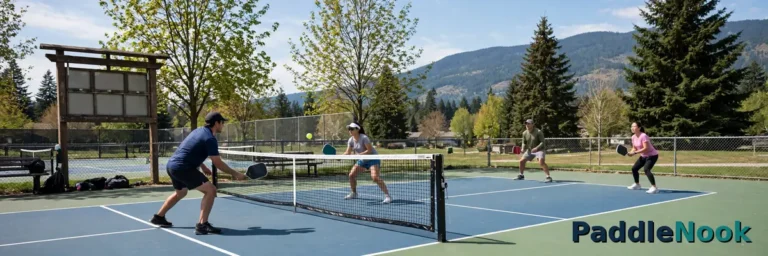
Singles uses the full court, not a smaller one. The court is 20 feet wide and 44 feet long, with a net 36 inches high at the sides and 34 inches at the centre. The kitchen, or non-volley zone, runs 7 feet from the net on each side.
Because you cover the whole side, position matters more than power. After most shots, move back toward the centre of your side, just behind the kitchen line.
How Does the Serve Work in Singles?
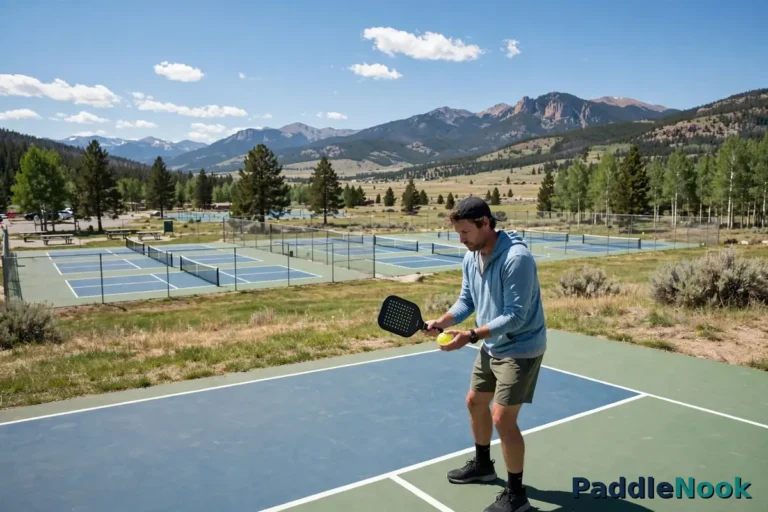
Serve underhand, from behind the baseline, into the diagonally opposite service box. The serve must clear the kitchen, and it must land past the kitchen line. Keep at least one foot behind the baseline at contact, and do not step on or over the line before you hit the ball.
Serve from the right side when your score is even, and from the left side when your score is odd. Zero counts as even, so the game starts from the right. If you win the rally, you score a point, switch sides, and serve again.
You get one serve attempt per rally. If the serve hits the net but still lands in the correct box, play goes on. If it lands in the kitchen, in the net, or out of bounds, that is a fault, and the serve passes to your opponent.
How Do You Score and Call the Score?
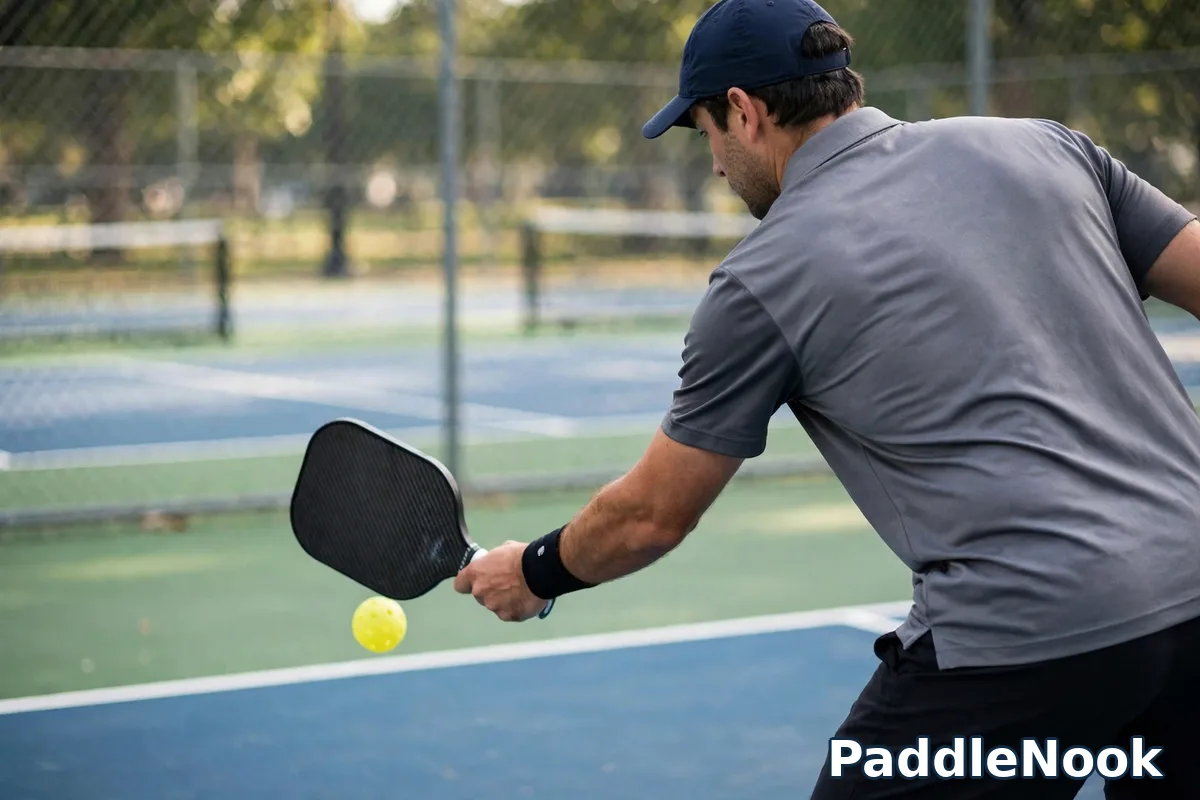
Only the serving player can score a point in singles. If you win a rally while receiving, you do not score. Instead, you win the serve, and you then have the chance to score on your own serve.
Call the score as two numbers before every serve: your score first, then your opponent’s score. For example, if you lead 5-3 and you are serving, call “5-3” before you serve. There is no third number in singles, because there is no second server to track.
Games are usually played to 11 points, and you must win by 2. At 10-10, the game is not over. Play on until one player leads by 2, so a game can finish 12-10 or later. Some friendly games use 15 or 21 points, still win by 2, so agree on the target before you start.
What Is the Two-Bounce Rule?
The two-bounce rule says the serve must bounce before the receiver returns it, and the return must bounce before the server hits it next. After those two bounces, you may volley the ball, or play it after a bounce, as long as you are outside the kitchen.
What Counts as a Fault?
A fault ends the rally at once. The main faults are simple: hitting the ball into the net, hitting it out of bounds, letting it bounce twice on your side, volleying while standing in the kitchen, or breaking the two-bounce rule.
If you commit a fault while serving, you lose the serve, and your opponent serves next. This is called a side-out. If your opponent faults while you serve, you score a point and keep serving.
How Is Singles Different From Doubles?
The biggest difference is the serve rotation. In doubles, both partners serve before the serve changes sides, except at the very start of a game. In singles, there is only one server per side, so a lost rally means an immediate side-out.
The score call is also shorter in singles. Doubles uses three numbers, with a server number at the end. Singles uses two numbers only, which makes it easier to keep track during a fast game. For a full call-it-yourself walkthrough, see the scoring call guide.

People Also Ask
Do singles and doubles use the same court?
Yes. Both use a court 20 feet wide and 44 feet long, with the same net height and the same 7-foot kitchen on each side.
Can the receiver score a point in singles?
No. Only the serving player scores. Winning a rally as receiver wins you the serve, not a point.
What side do you serve from at 4-4?
Serve from the right, because 4 is even. Serve from the left when your own score is odd, such as 5.
What happens if the serve lands on the kitchen line?
It is a fault. A serve must land past the kitchen line, in the correct diagonal service box.
Conclusion
Singles pickleball rewards clear habits more than fancy shots. Serve underhand and diagonally, respect the two bounces, call two numbers, and move back to the centre after each shot. Keep those habits, and the rules will soon feel automatic. For a plain-English overview, see a simple definition of the game.
Play your first solo game to 11, win by 2, and use the checklist above between points. Valley Athletics also explains the same solo rules in its pickleball singles rules guide. Parrot Paddles gives a second clear walkthrough in its pickleball rules for singles guide.


One Comment