Single Pickleball Rules: The Ultimate Solo Court Guide
Solo pickleball is a test of movement, patience, and shot choice, all under one set of simple rules. With no partner to rescue a wide ball or cover a gap, every rule lands harder, and every smart choice pays off faster. The single pickleball rules in this guide explain the game for one player per side, with a focus on how to move, where to aim, and how to practise alone.
You will not find a separate rulebook for solo play, because singles uses the same core rules as the wider game. What this guide adds is the solo layer: how serving sides work without a partner, how scoring changes without a second server, and how to use the full court without running yourself out of a rally. You will also learn a half-court practice form that builds accuracy without full-court running.
What Are the Single Pickleball Rules?
The single pickleball rules are: one player per side on a full court, an underhand diagonal serve from behind the baseline, a bounce for the serve and a bounce for the return, and no volleys from the kitchen. Points go only to the server, games go to 11 by a lead of 2, and serving sides follow even-right and odd-left.
That summary is the rulebook in miniature. The sections below explain how those rules feel in solo play, where court coverage and shot depth matter as much as the rules themselves.
Where Should You Stand in a Solo Rally?
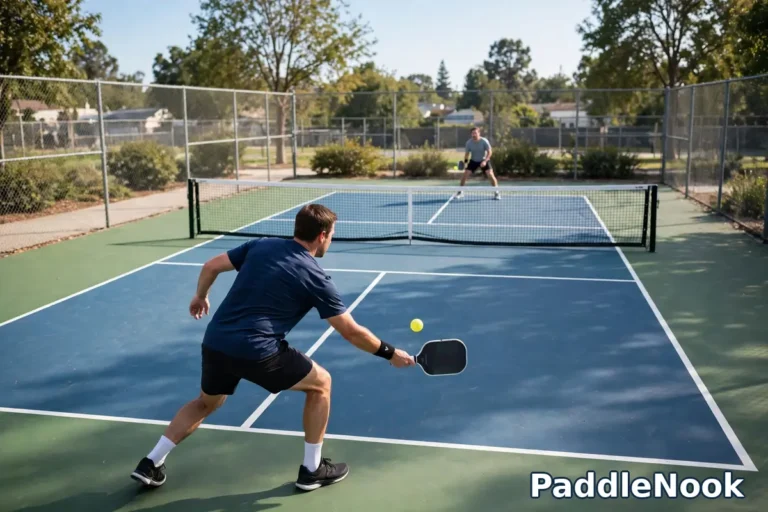
Stand near the middle of your side after most shots, slightly behind the baseline for deep rallies and closer to the kitchen line for short rallies. The middle is the fairest base, because it keeps both corners within reach and stops your opponent from winning with one wide angle.
After a wide shot of your own, recover toward the middle at once, even before you see your opponent’s reply. Players who admire their own shot stay stuck in a corner, while players who recover early win the next ball. See the court shoes guide before a long session.
How Do You Serve for Solo Play?
A solo serve follows the same legal form as any serve: an underhand serve, below the waist, paddle head below the wrist, from behind the baseline, diagonally into the opposite box, past the kitchen line. For the lines that shape a serve, see the court layout guide.
The solo difference is aim. A deep serve pushes your opponent back and gives you time to set your feet.
Aim most serves deep, near the baseline, rather than short and risky. A deep serve is hard to attack, easy to repeat, and kind to your own court position. A short serve invites your opponent forward and leaves your whole court exposed behind them.
How Does Scoring Work Without a Partner?
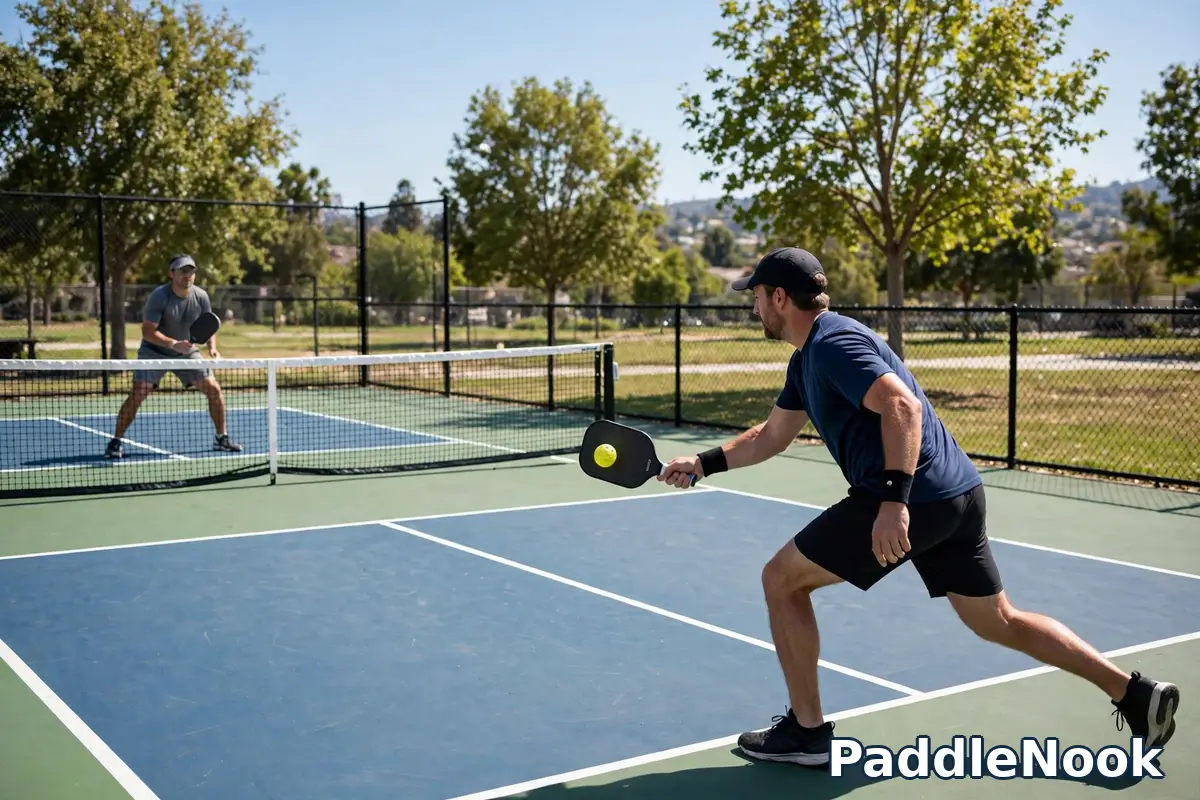
Scoring without a partner is simpler than doubles scoring, because the score call has only two numbers. Call your score first, then your opponent’s score, before every serve. Win a rally on your serve to score, switch sides, and serve again from the side your new score names.
Win a rally as receiver to win the serve, with no point scored. This side-out is the heartbeat of singles scoring, and it means a long run of receiving wins still leaves the score unchanged. Stay patient through those runs, and wait for your serving turn to score.
What Kitchen Play Works in Solo Games?
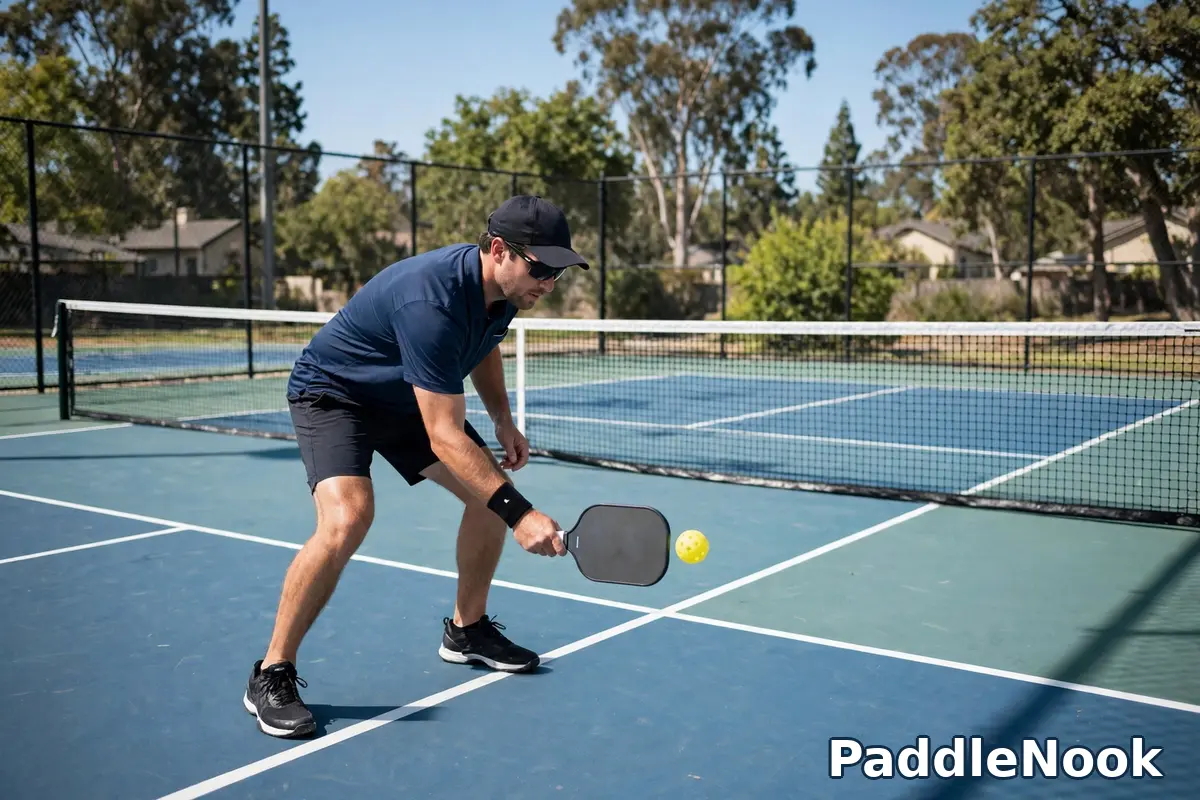
Kitchen play in solo games is about timing, not speed. You may enter the kitchen at any time, and you may hit a bounced ball from inside it. You may not volley while touching the kitchen, the non-volley zone, or its line, and momentum into the kitchen after a volley is a fault.
Move forward only on a short ball you can reach with control, and stop behind the line before volleying. If you arrive late, let the ball bounce and play a soft shot from inside the kitchen instead. A bounced-ball reply from the kitchen is legal, safe, and often enough to reset the rally.
What Is Skinny Singles, and How Does It Help?
Skinny singles is a practice form of singles played on half the court width, using the same core rules. Each player uses one half of the court, often the diagonal half, so rallies stay cross-court and placement matters more than power. The game still goes to 11, win by 2, with only the server scoring.
Skinny singles helps solo players because it trains accuracy without the full-court running load. It is a strong drill for players building fitness, or for a friendly session on a busy court. The Dink and Drill guide explains the half-court boundaries in its skinny singles guide.
How Do You Win the Endgame in Singles?
The endgame in singles rewards calm, deep play. At 10-10, no single point wins the game, because the win by 2 rule still applies. Play your safest serve and your deepest return, and let your opponent take the first risk.
Fatigue decides many close singles games, so save energy early with deep shots and middle recovery. A player who sprints for every ball in the first half often fades at 10-10, while a patient player still moves well at the finish. For the wider rules behind these faults, see the complete simple rules guide.
People Also Ask
Do single pickleball rules use a different court?
No. Singles uses the same full court, net, and kitchen lines as doubles, with one player per side.
What is skinny singles used for?
Skinny singles is a half-court practice form that trains placement and control with less running than full singles.
Can you volley from inside the kitchen in singles?
No. Volleying while touching the kitchen or its line is a fault in singles, just as in doubles.
How do you know which side to serve from in singles?
Your own score decides: even scores serve from the right, and odd scores serve from the left.
Conclusion
Solo pickleball rewards the player who moves well, aims deep, and respects a short list of rules. Serve underhand and diagonally, let the first two shots bounce, keep volleys out of the kitchen, score only on your serve, and win at 11 by 2. Add middle recovery and skinny singles practice, and your solo game will grow fast.
Play your next singles game with depth first and patience throughout. A second skinny singles walkthrough, with pro tips for cross-court play, is given in this skinny singles tips guide.