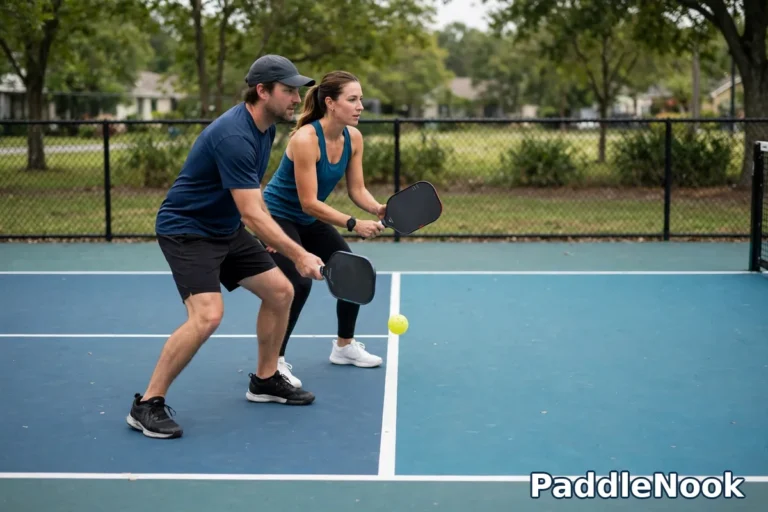
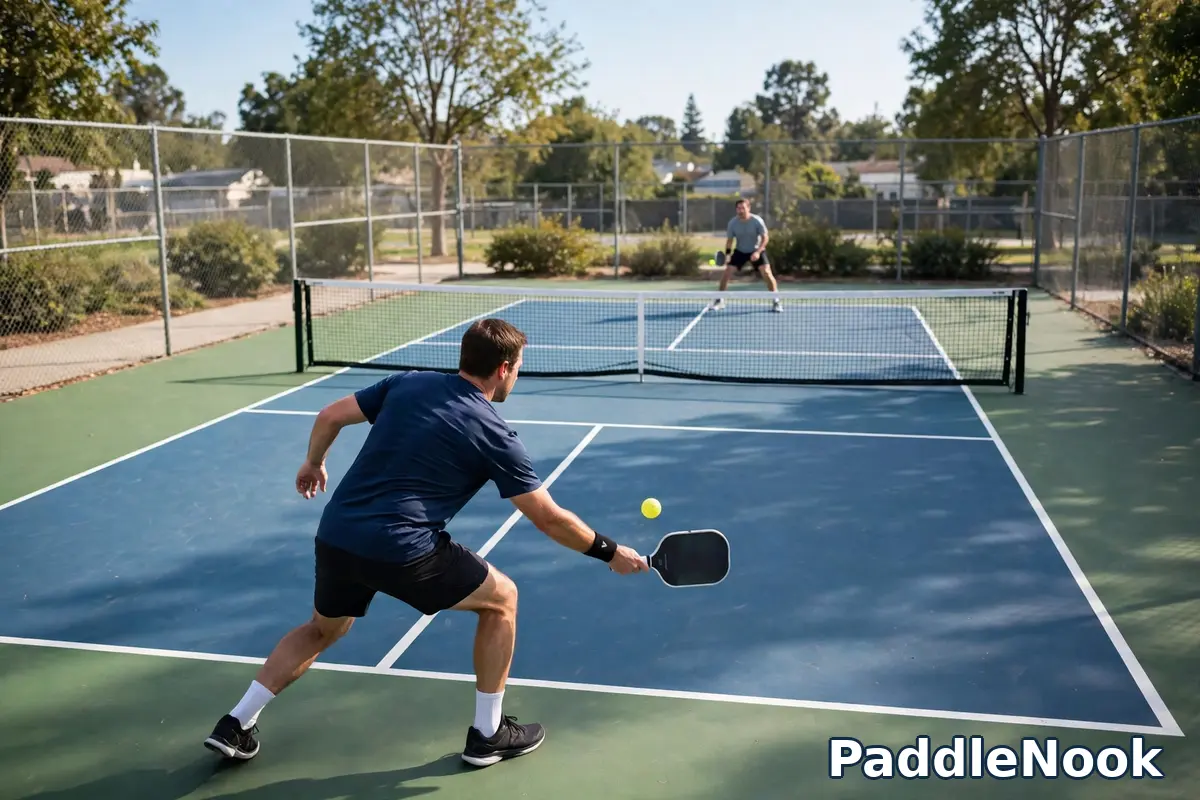
Rules for Pickleball Singles: The Ultimate First-Game Guide
Your first singles game feels different from doubles from the very first serve. There is no partner beside you, no one to share the court, and no second server to save a lost rally. That is also what makes singles so clear to learn. The rules for pickleball singles rest on a few simple ideas, and once you know them, you can play a full game without stopping to ask what happens next.
This guide follows one game from start to finish. You will see how the first serve works, how the score moves, where the kitchen fits in, and which mistakes cost you the serve or a point. Read it once before you play, then use the checklists between games. You will also learn the fault new players commit most often, and the simple habit that prevents it in your very first match.
What Are the Rules for Pickleball Singles?
The rules for pickleball singles are: one player per side on a full court, an underhand diagonal serve from behind the baseline, two bounces before volleys are allowed, and no volleys from the kitchen. Points go only to the server, and games go to 11 by a lead of 2.
Those seven ideas are the whole game in brief. The rest of this guide turns each one into a step you can use on court, in the order you will meet it.
How Do You Serve, Step by Step?
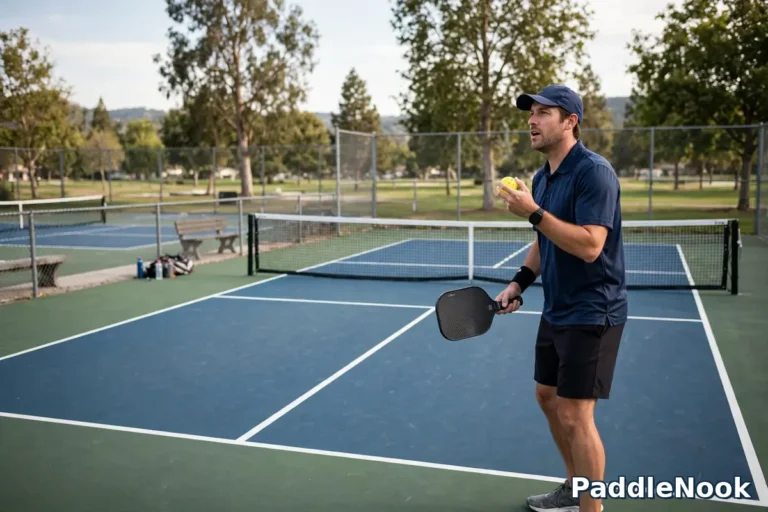
Stand behind the baseline and serve underhand, with the ball struck below your waist and the paddle head below your wrist. Hit a diagonal serve, so a serve from your right side lands in your opponent’s right service box, and a serve from your left lands in their left box.
The serve must clear the net and land past the kitchen line. A serve into the net, out of bounds, or on the kitchen line is a fault, and the serve passes to your opponent at once. A serve that clips the net but lands in the right box stays live.
How Does the Score Move in Singles?
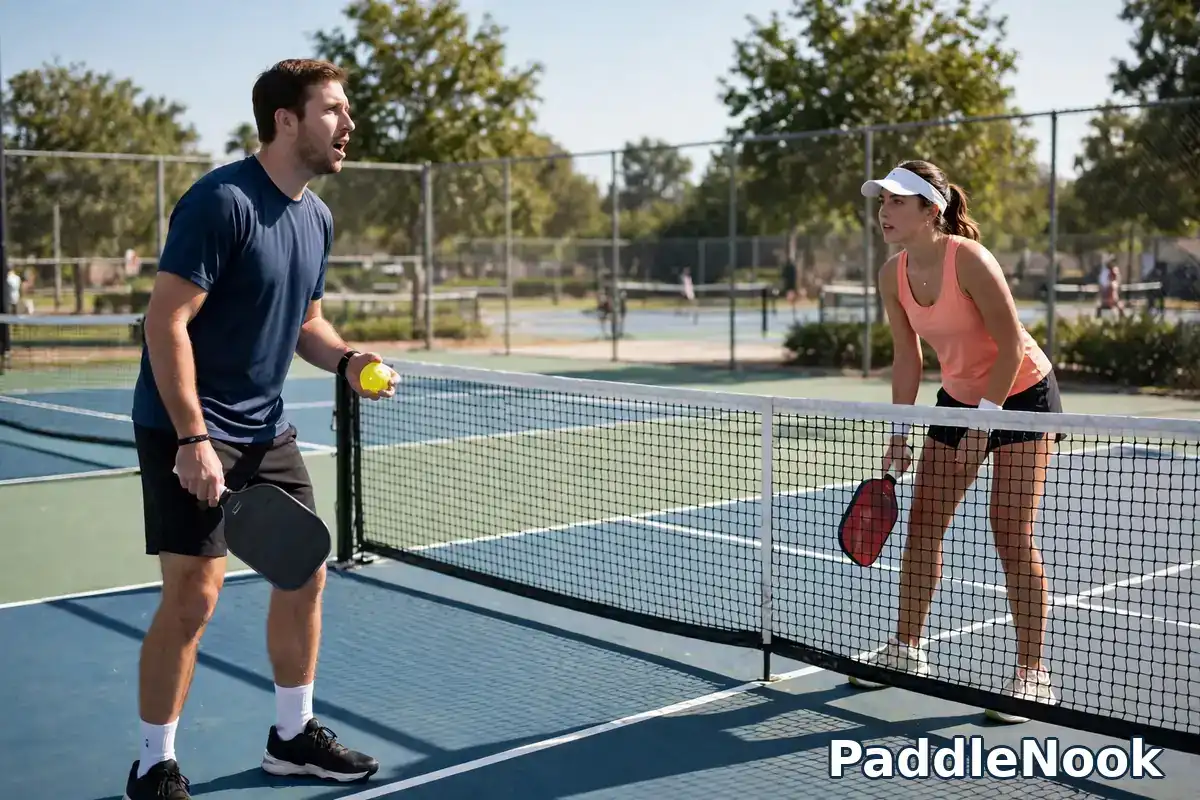
The score moves only when the serving player wins a rally. Win a rally on your serve, and you score one point, switch sides, and serve again. Lose a rally on your serve, and the serve passes to your opponent with no point scored.
This is called side-out scoring, because the serve moves from side to side while the score stays still. Make a score call before every serve, with two numbers: your score, then your opponent’s score. For the full scoring picture, see the scoring rules guide.
| What happens | Score change | Serve change |
|---|---|---|
| Server wins a rally | Server gains 1 point | Server keeps serving, switches sides |
| Receiver wins a rally | No change | Serve passes to the receiver |
| Game reaches 10-10 | No winner yet | Play on until a lead of 2 |
Which Side Do You Serve From?
Your score decides your side, every single time. An even score means the right side, and an odd score means the left side. This rule never changes during a game, so it works as a built-in score check.
If you are serving from the right, your score should be even. If you are serving from the left, your score should be odd. When the side and the score do not match, stop and agree on the score before the next serve. Fixing it early saves a long argument later.
When Can You Volley in Singles?
You may volley only after the two-bounce rule is complete. The receiver must let the serve bounce, and the server must let the return bounce. After those two bounces, either player may hit the ball out of the air, as long as the kitchen rule is respected.
Volleying the serve or the return of serve is a fault, even if the shot wins the rally. This rule gives both players a fair start to every point. It also stops the server from rushing the net for a quick put-away.
What Kitchen Mistakes Should You Avoid?
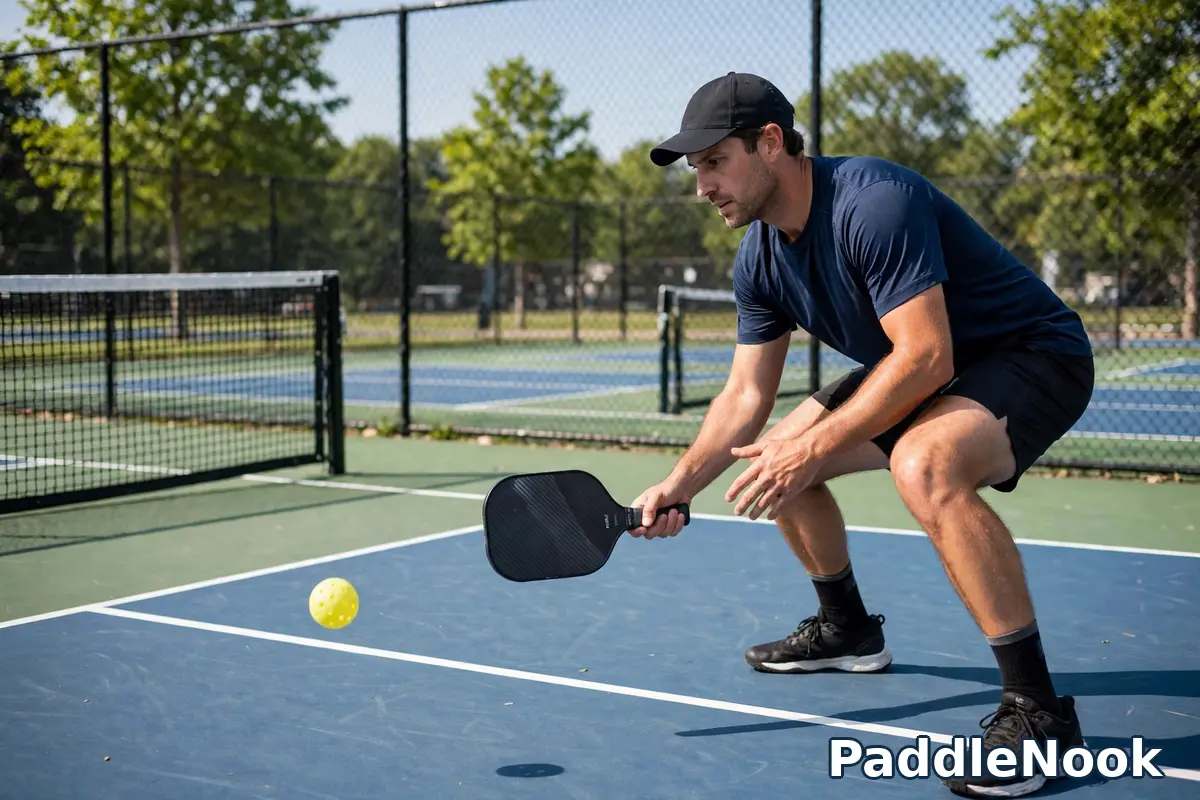
The kitchen, the non-volley zone, is the 7-foot zone beside the net, and the rule is about volleys, not about standing there. You may enter the kitchen, stand in it, and hit a ball from it after it bounces. You may not volley while touching the kitchen or its line.
The most common kitchen fault in singles is momentum. If you volley near the line and your motion carries you into the kitchen, the rally is lost, even if the ball is already dead. Slow down near the line, or step back after a volley. The PickleTip guide explains these cases clearly in its kitchen rules guide.
How Do You Finish a Close Game?
Most games end at 11 points with a win by 2 lead, so a 10-10 score means the game goes on. At 10-10, the next point alone does not win. A player must lead by 2, so the game can end 12-10, 13-11, or later, however long the lead takes.
Stay calm at 10-10 and play your safest patterns. Deep serves, deep returns, and patient rallies win close games more often than sudden risky shots. For a plain-English overview of the sport itself, see a simple definition of the game.
People Also Ask
How many numbers do you call in a singles score?
Two numbers only: the server’s score first, then the receiver’s score, such as “7-5”.
What happens when the receiver wins a rally in singles?
The receiver wins the serve but scores no point. The new server then calls the score from their side.
Is there a second serve in pickleball singles?
No. Each player gets one serve attempt per rally, and a service fault passes the serve to the opponent.
Do you switch sides after scoring in singles?
Yes. After scoring on your serve, switch sides and serve again from the side that matches your new score.
Conclusion
A first singles game needs only a few habits: call the score, serve from the side your score names, let the first two shots bounce, and respect the kitchen on volleys. Keep those habits, and the rules for pickleball singles will feel natural by your second game.
Before you play, agree on the finish line and the first server, then enjoy the run. For the wider rulebook that singles sits inside, see the complete simple rules guide. The Simpli Pickleball guide also covers the same singles basics in its singles rules guide.