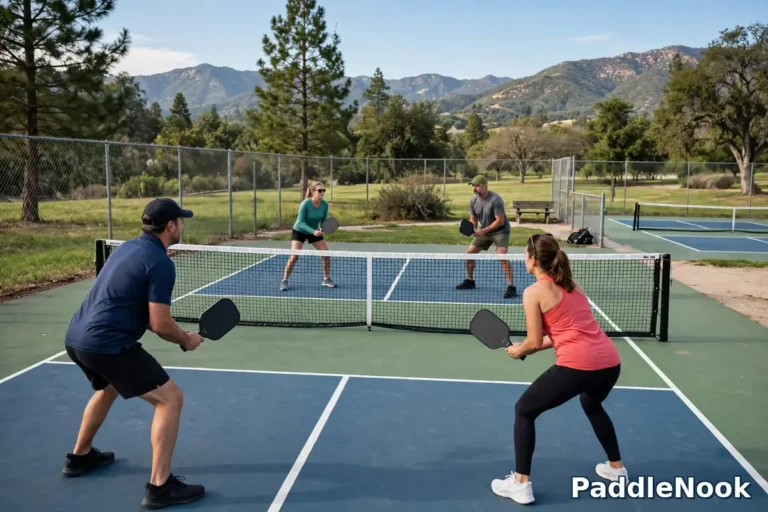
Pickleball Rules for Singles: The Ultimate Beginner Guide
If doubles feels busy and crowded, singles may feel like a breath of fresh air. It is just you, one opponent, and the full court, with rules that are easy to learn and hard to forget. The pickleball rules for singles below are written for a true beginner, with no assumed knowledge, no jargon left unexplained, and no step skipped.
You do not need to learn the whole rulebook before your first game. You need seven ideas: the court, the serve, the two bounces, the kitchen, the score, the faults, and the finish. This guide gives you those seven ideas in the order you will use them, plus a simple plan for your first game. By the end, you will know exactly where to stand, when to call the score, and what to do after every fault on court today.
What Are the Pickleball Rules for Singles?
The pickleball rules for singles are: play one against one on a full court, serve underhand and diagonally from behind the baseline, let the serve and return bounce once each, never volley from the kitchen, score only while serving, and win at 11 points by 2. Serve right on even scores and left on odd scores.
That answer is short on purpose, because beginners remember short rules better than long lists. The sections below unpack each line slowly, with examples you can picture before you step on court.
How Do You Serve in a Singles Game?
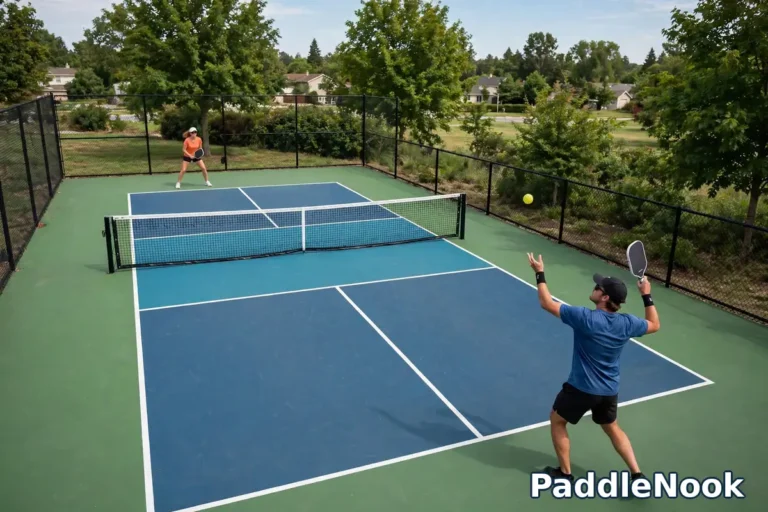
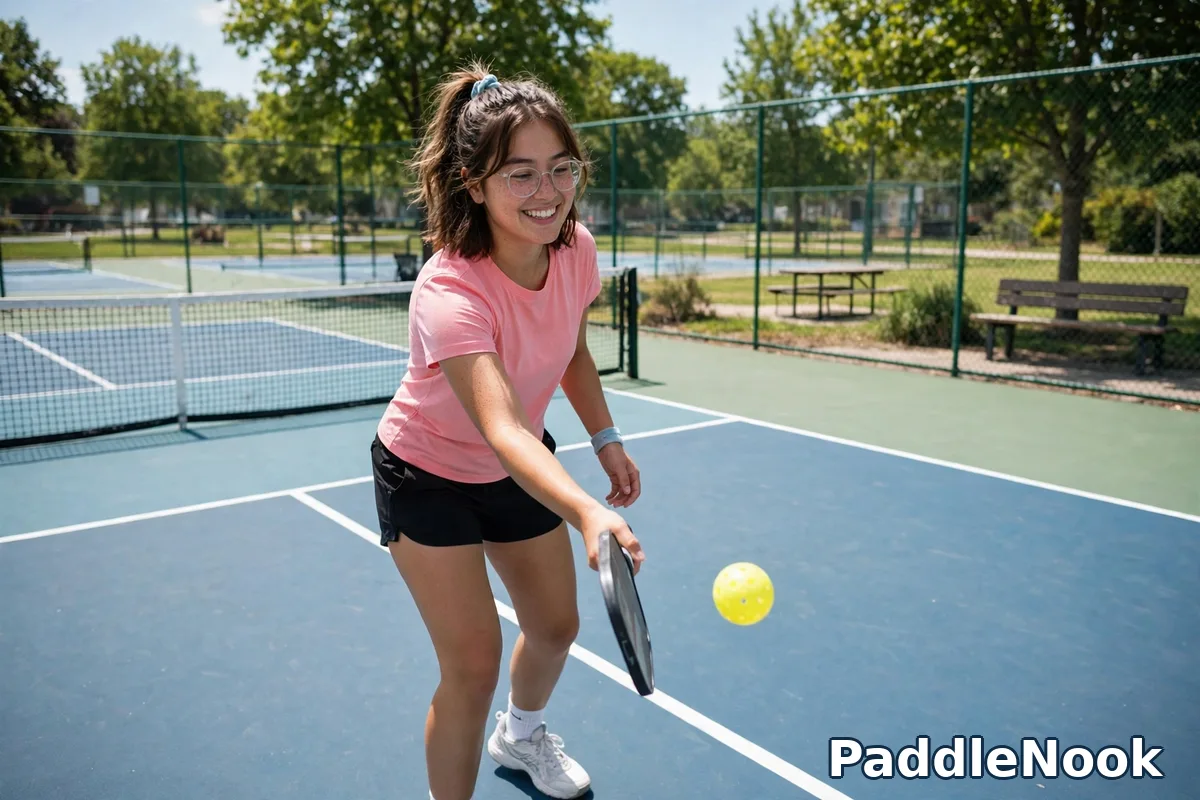
Serve with an underhand serve from behind the baseline, with contact below your waist and the paddle head below your wrist. A comfortable first paddle helps more than an expensive one, as shown in the paddle guide for new players.
The ball must travel diagonally into the opposite service box, clear the net, and land past the kitchen line. A serve on the kitchen line is short and a fault.
You have one serve attempt per rally. If the serve hits the net and still lands in the right box, it stays live, so play on without stopping. If the serve lands out, in the net, or in the kitchen, the serve passes to your opponent.
How Does the Two-Bounce Rule Work?
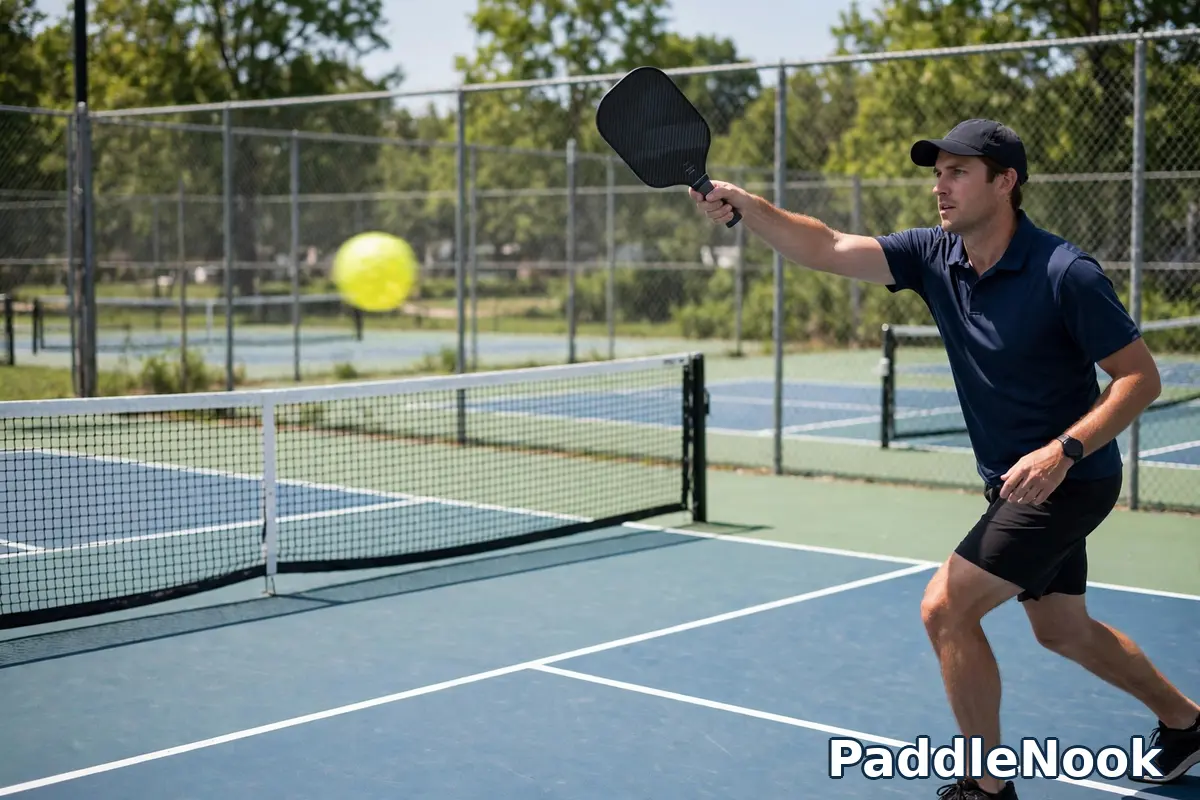
The two-bounce rule says the serve must bounce before it is returned, and the return must bounce before the server hits it. After those two bounces, volleys are allowed, except in the kitchen. This rule applies in every singles rally, without exception.
Think of the first two shots as a calm start, not a race. A deep, high return gives you time to move into position, while a rushed volley on the return hands your opponent a free point.
How Do You Score a Singles Game?
Only the server scores, and the score call has two numbers: the server’s score first, then the receiver’s score. Win a rally on your serve to score one point, switch sides, and serve again. Win a rally as receiver to win the serve, with no point, in what is called a side-out.
Your score also tells you where to serve from. Even scores serve from the right, and odd scores serve from the left. This link is your best friend in a first game, because it lets you check the score from your position alone.
What Is the Kitchen Rule in Plain Words?
The kitchen, the non-volley zone, is the 7-foot zone on each side of the net, and the rule bans volleys from inside it. You may stand in the kitchen, and you may hit a ball from it after it bounces.
You may not volley while touching the kitchen or the kitchen line, and momentum into the kitchen after a volley is also a fault. In singles, kitchen faults often happen when a player rushes forward for a short ball.
Slow down as you reach the line, and let the ball bounce if you are unsure of your feet. A lost rally hurts less than a repeated fault habit.
How Do You Cover the Whole Court Alone?
Covering a full court alone is the hardest physical part of singles. The trick is to return to the middle of your side after most shots, so no corner is too far away. From the middle, you can reach a wide shot with two quick steps instead of a long sprint.
Deep shots are your best defence in singles, because they push your opponent back and buy you time. Short, soft shots look clever, but they invite your opponent forward and leave the rest of your court open. For a friendly overview of the sport, see the full game overview.
What Happens at the End of a Game?
Most singles games end at 11 points, win by 2, so 10-10 is not a win. Play on until one player leads by 2 points, which may mean 12-10, 13-11, or a longer finish. Some events use 15 or 21 points, still win by 2, so confirm the target before you start.
After the game, both players should agree on the final score before leaving the court. A quick, friendly check avoids confusion in the next game, especially in a social session with rotating players. The Parrot Paddles guide states the same finish in its singles rules guide.
People Also Ask
Is singles harder than doubles for a beginner?
Singles needs more running, but the rules are simpler, with no partner rotation and only two score numbers to call.
Can a beginner play singles on a doubles court?
Yes. Singles and doubles share the same court, net, and lines, so any standard court works for both formats.
What is the easiest way to remember serving sides?
Link your score to your side: even scores serve from the right, and odd scores serve from the left.
How long does a first singles game usually take?
A friendly game to 11 points often takes about 15 to 25 minutes, depending on rally length and breaks.
Conclusion
Beginner singles is a small set of rules played at full-court pace. Serve underhand and diagonally, let the first two shots bounce, respect the kitchen, score only on your serve, and finish at 11 by 2. Keep the score call loud and the shots deep, and your first game will feel smooth.
Use the five-step plan above for your first match, and check the wider rules as you grow. For the complete rulebook behind this guide, see the simple full rules guide. A second beginner-friendly walkthrough is given in this how to play singles guide.