Basic Pickleball Rules: The Ultimate 90-Second Guide
Basic pickleball rules can be learned in about 90 seconds, and that short version is enough to play a real friendly game today, without reading the whole rulebook first. You need five ideas, in this order: serve underhand and diagonally, let the ball bounce twice, do not volley from the kitchen, score only while serving, and play to 11 points, winning by two.
This guide gives you that 90-second version first, then shows you the five mistakes that cost beginners the most points in their first three games on court, and how to fix each one in one sentence. Read the basics, play a game, then come back and fix one mistake at a time, and you will improve faster than if you try to learn every detail at once, because one clear fix sticks better than a long list.
What Are the Basic Pickleball Rules in 90 Seconds?
Basic pickleball rules are five short ideas: serve underhand diagonally from behind the baseline, let the ball bounce once on each side after the serve, do not volley from the 7-foot kitchen, score only while serving, and play to 11 points, winning by two, with a clear score call before each serve.
That is the whole 90-second version. If you can say those five ideas out loud, you are ready to play. The rest of this guide is not more rules to memorise. It is the mistakes that break those five rules, and the fixes that keep you in the rally.
Rule 1 and 2: Serve and Two Bounces
Serve underhand, from behind the baseline, diagonally into the opposite service box. The paddle must hit the ball below your waist, with an upward swing, and the serve must clear the net and clear the kitchen zone. Only one serve attempt is allowed, unless the ball clips the net and still lands in the correct box.
Then follow the two-bounce rule: the receiving side must let the serve bounce, and the serving side must let the return bounce, before either side volleys. That short delay gives both sides time to move into position, and it stops the serving side from rushing the net.
A common serve mistake is aiming too hard or too short. Aim deep and steady, into the back half of the service box. A deep serve gives you time to move forward, while a hard serve that misses gives your opponents the rally for free.
Rule 3: What Is the Kitchen Rule?
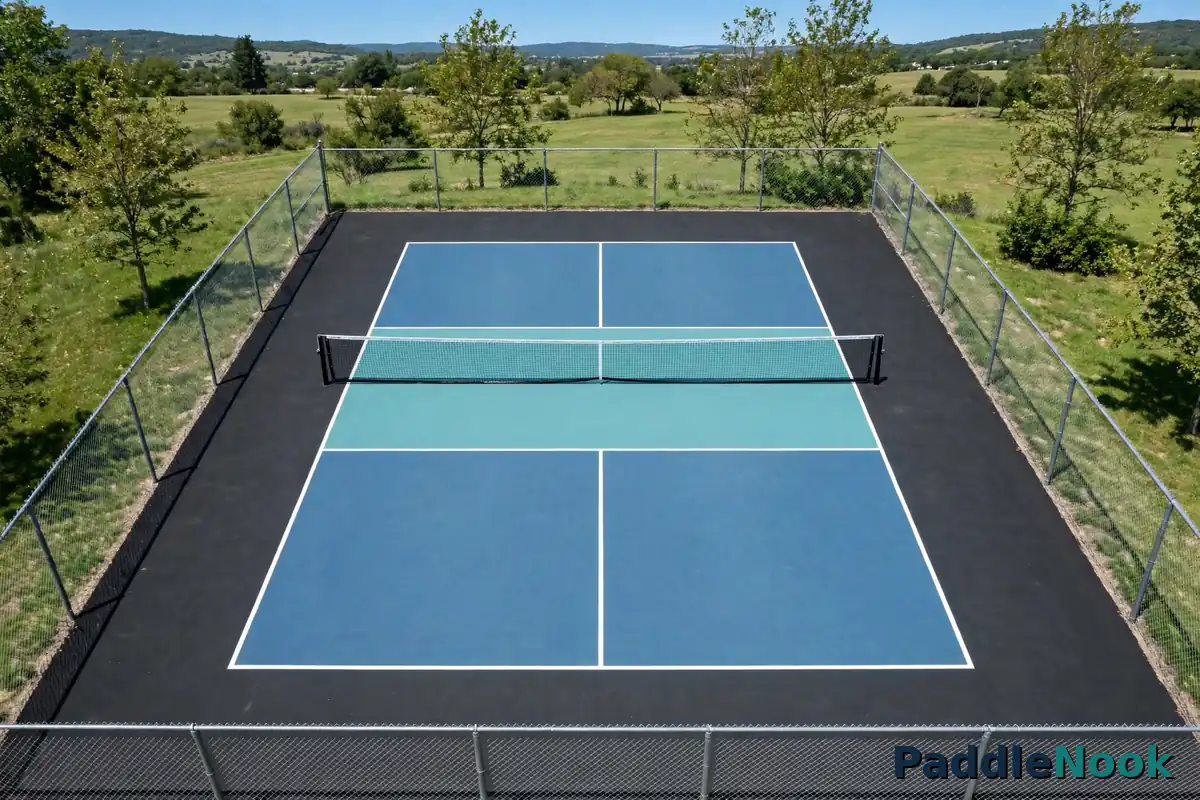
The kitchen is the 7-foot non-volley zone on each side of the net. You may stand in it, and you may hit a ball that has bounced while you are in it. You may not volley while you are in it, or while you or your paddle touches its line.
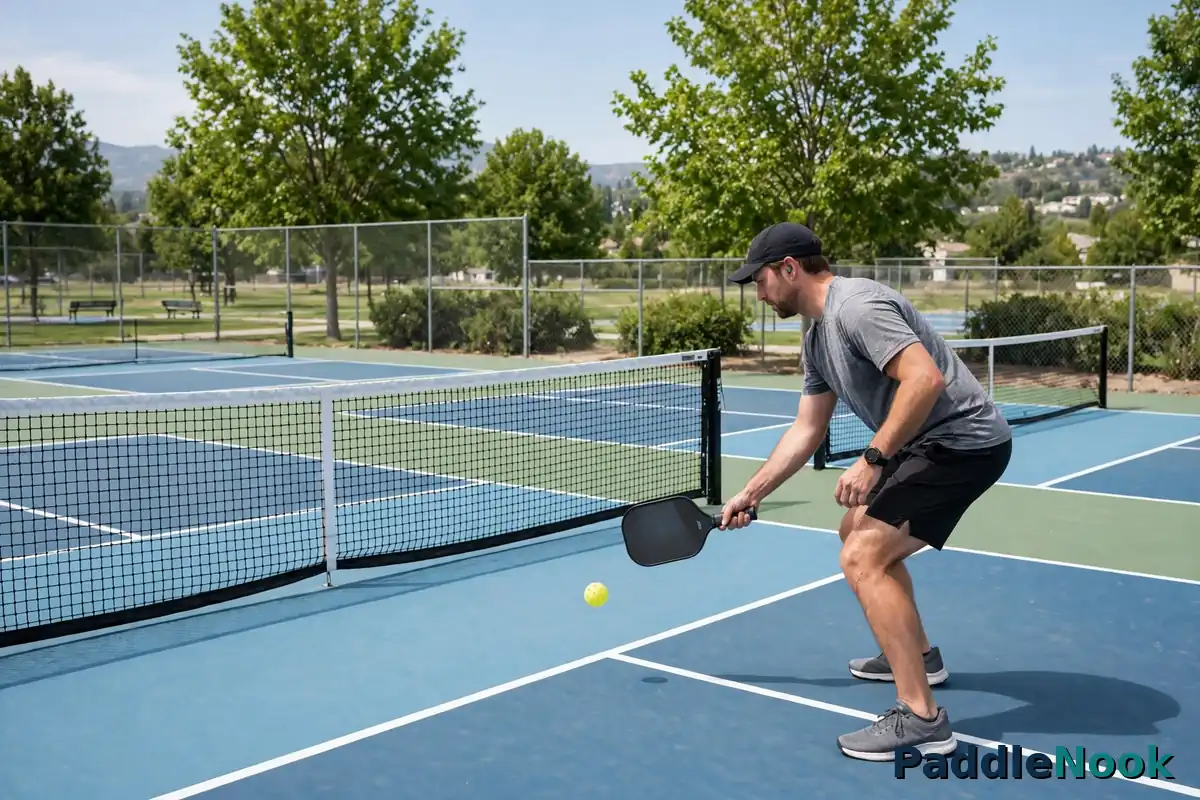
Momentum counts too. If a volley carries you into the kitchen, even after the shot, that is a fault. So step back, balance, and only then volley again. That one check prevents the most common kitchen fault in beginner games.
A soft shot in the kitchen, called a dink, is a slow, low shot that just clears the net. It forces your opponents to hit up, which gives you a safer next shot. For a fuller plain-English overview, see a simple definition of the sport.
Rule 4 and 5: Scoring and Faults
Only the serving side scores in traditional scoring. Win a rally while serving, and you score one point and keep serving. Lose a rally while serving, and no point is scored, and the serve moves on to the next server, or to the other team.
Call the score out loud before every serve. In doubles, call three numbers: your score, your opponents’ score, and the server number, 1 or 2. At the start of a doubles game, the call is 0-0-2, because only the second server serves first.
A rally ends with a fault: a ball out, into the net, volleyed from the kitchen, volleyed before the two bounces, or bounced twice on one side. A ball on a line is in, except for a serve on the kitchen line, which is out. Our zone-by-zone tour of the court explains each line in plain words.
Five Beginner Mistakes and One-Sentence Fixes
Use this list after your first game. Find your mistake, use the fix, and play again.
| Mistake | What happens | One-sentence fix |
|---|---|---|
| Serving too hard | Serve misses, rally ends at once | Aim deep and steady, not hard |
| Volleying too early | Two-bounce fault, rally ends | Wait for both bounces, then volley |
| Volleying from the kitchen | Kitchen fault, rally ends | Step back, balance, then volley |
| Forgetting the score | Confusion about whose serve it is | Call the score out loud every time |
| Rushing the net | Out of position for the next shot | Move up calmly after the second bounce |
Most beginners make two or three of these mistakes in every early game. That is normal, and it is also good news, because fixing just one of them can change how long your rallies last. USA Pickleball, the sport’s national governing body in the United States, gives a clear overview of the basics on its What Is Pickleball page.
People Also Ask
Do I need to know all the rules before my first game?
No. Learn the five basics in this guide, play a friendly game, and learn edge cases only when they actually come up on court.
What is the easiest serve for a beginner?
A drop serve is often easiest. Drop the ball, let it bounce, then hit it after the bounce, aiming deep and steady into the service box.
Can I stand in the kitchen?
Yes. You can stand there and hit a ball that has bounced. You just cannot volley while you are in it or touching its line.
How long does a friendly game take?
Most friendly games take about 15 minutes, though close games that go past 11 points with a win-by-2 finish can take longer.
Conclusion
Basic pickleball rules are five ideas, not a book to memorise: serve, bounce twice, stay out of the kitchen for volleys, score only while serving, and play to 11, win by 2. For a complete rules overview in plain words, see the full simple rules guide.
Play one game with those five ideas, fix the one mistake you made most, and play again. PickleTip also gives a helpful beginner rules overview in its guide to the rules.