What Are the Rules for Pickleball? Ultimate Purpose Guide
What are the rules for pickleball for? That small word, for, changes how you learn them. A rule is not just a line to memorise, and it is not just a test to pass before you play. It exists for a reason: to keep play fair, to keep players safe, or to keep the game moving, so everyone on court knows what happens next, even in a fast rally with no referee watching.
This guide groups the rules by purpose, not by list order. When you know why a rule exists, you will remember it on court, and you will explain a call calmly, instead of arguing about wording. It also covers who calls what, which is the part most guides skip, and it shows you how to settle a dispute without spoiling the session for everyone else on court.
What Are the Rules for Pickleball, by Purpose?
The rules for pickleball exist for three purposes: fairness, safety, and flow. Fairness rules give both sides the same start, safety rules keep play at the net gentle, and flow rules keep games short, with a clear score, a clear serve order, and a clear end to every rally.
Learn the purpose first, and the rule follows. A serve rule is a fairness rule. A kitchen rule is a safety rule. A scoring rule is a flow rule.
Rules for Fairness: A Fair Start for Both Sides
Fairness starts with the serve. Stand behind the baseline, hit the ball underhand, below your waist, diagonally into the opposite service box. No power serve, no serve from inside the court, no serve that lands in the kitchen.
The two-bounce rule is also a fairness rule. The receiving side lets the serve bounce, and the serving side lets the return bounce, before either side volleys. That delay stops the serving side from rushing the net.
Line calls are fairness rules too. A ball on a line is in, except for a serve on the kitchen line, which is out. Only call a ball out if you clearly saw space between the line and the ball.

Rules for Safety: Gentle Play at the Net
Safety rules live at the net. The kitchen is the 7-foot non-volley zone on each side of the net. You may stand in it, and you may hit a ball that has bounced while you are in it. You may not volley while you are in it, or while you or your paddle touches its line.
Momentum counts too. If a volley carries you into the kitchen, even after the shot, that is a fault. That rule stops a tall player from standing at the net and smashing every ball down.
Safety also means honest, calm calls. Do not call a ball out late, after your opponent has already hit it. For a fuller plain-English overview, see a simple definition of the sport.
Rules for Flow: Score, Serve Order, and Faults
Flow rules keep the game moving. Only the serving side scores in traditional scoring. Win a rally while serving, and you score one point and keep serving. Lose a rally while serving, and no point is scored, and the serve moves on.
Call the score out loud before every serve. In doubles, call three numbers: your score, your opponents’ score, and the server number, 1 or 2. At the start, the call is 0-0-2, because only the second server serves first.
Games are usually played to 11 points, win by at least 2. A rally ends with a fault: a ball out, into the net, volleyed from the kitchen, or volleyed before the two bounces. Our zone-by-zone tour of the court explains each line in plain words.
Who Calls What in a Friendly Game?
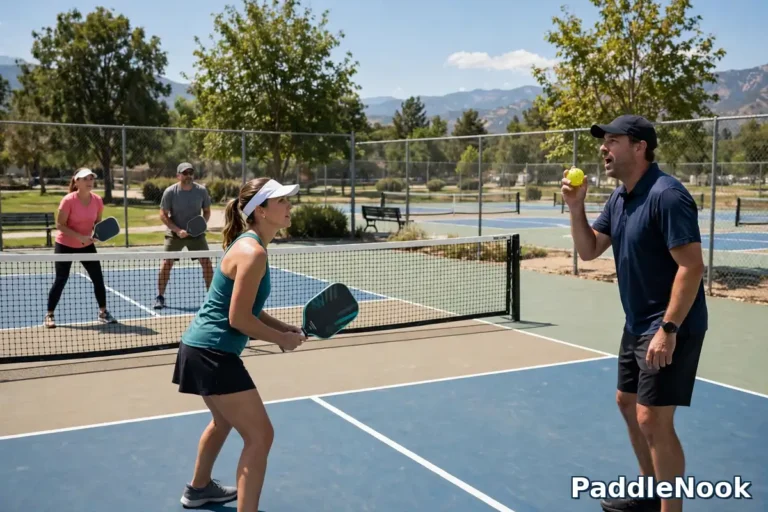
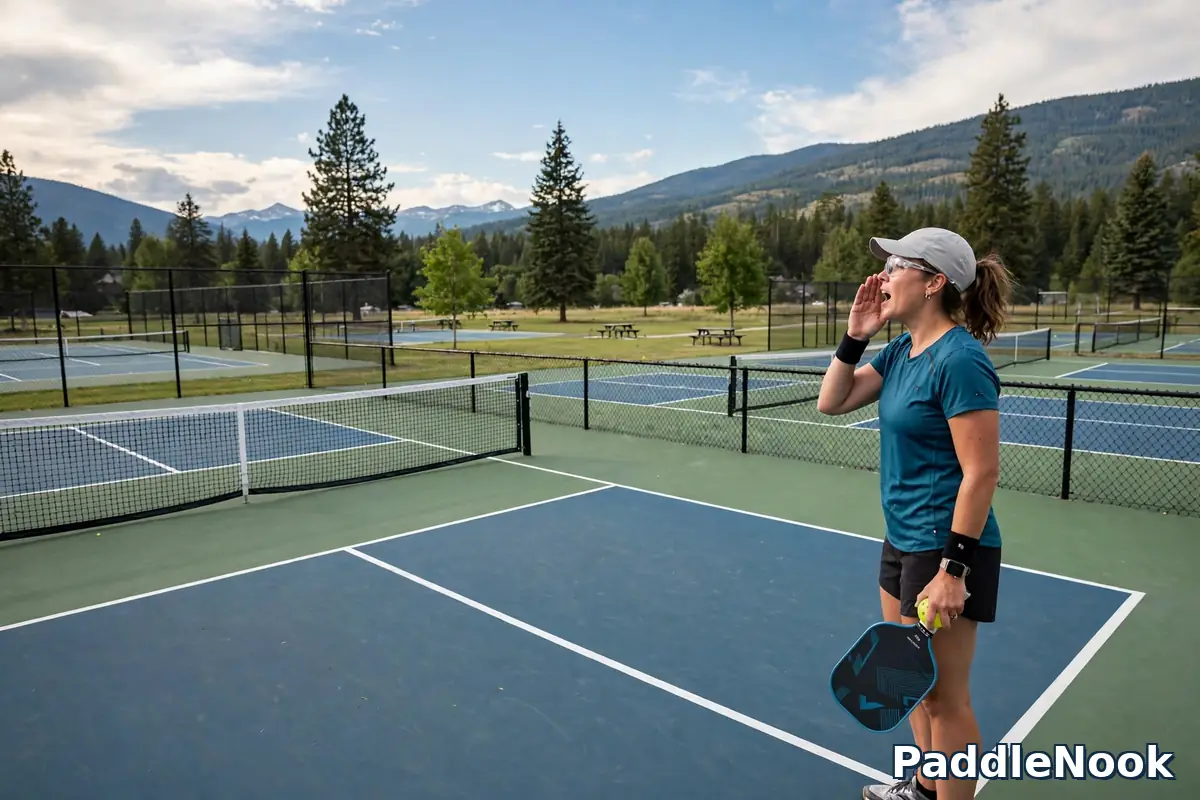
In a friendly game with no referee, the players make the calls. This table shows who calls what, so you do not have to guess in the middle of a rally.
| Call | Who calls it | When |
|---|---|---|
| Score | Server | Before every serve |
| Line calls | Side where the ball landed | At once, promptly |
| Kitchen fault | Any player who saw it | At once, calmly |
| Serve fault | Receiving side | At once, if serve is illegal |
| Disputed call | All players together | Replay the point if no agreement |
If a game has a referee, let the referee decide line calls you appeal. In a friendly game, the players on the side where the ball landed make the call, promptly and honestly. USA Pickleball gives a clear overview of the basics on its What Is Pickleball page.
What Should You Do When You Disagree?
Disagreements happen, even in friendly games. The fair answer is simple: state what you saw, listen to your opponents, and if you cannot agree, replay the point. That is far better than winning one point and losing the mood of the whole session.
Do not offer coaching to opponents in the middle of a point, unless they ask for it. Do not let one call change the whole game, and do not carry a disputed call into the next rally.
After the game, shake hands at the net, win or lose. That habit is what makes a session welcoming for new players.
People Also Ask
Why do the rules exist?
For fairness, safety, and flow. Fairness gives both sides the same start, safety keeps net play gentle, and flow keeps games short and clear.
Who calls a line in a friendly game?
The players on the side where the ball landed. Call it promptly, and only call it out if you clearly saw space.
Who calls the score?
The server, before every serve. In doubles, call three numbers: your score, your opponents’ score, and the server number.
What is the fairest way to handle a dispute?
State what you saw, listen, and replay the point if you cannot agree. Do not let one call change the whole game.
Conclusion
What are the rules for pickleball for? Fairness in the serve and line calls, safety at the kitchen, and flow in scoring and serve order, with clear calls by the players themselves. For a complete rules overview in plain words, see the full simple rules guide.
Play your next game with purpose in mind, and call each point calmly and promptly. The two-bounce rule is explained step by step in this clear guide to the two-bounce rule.