
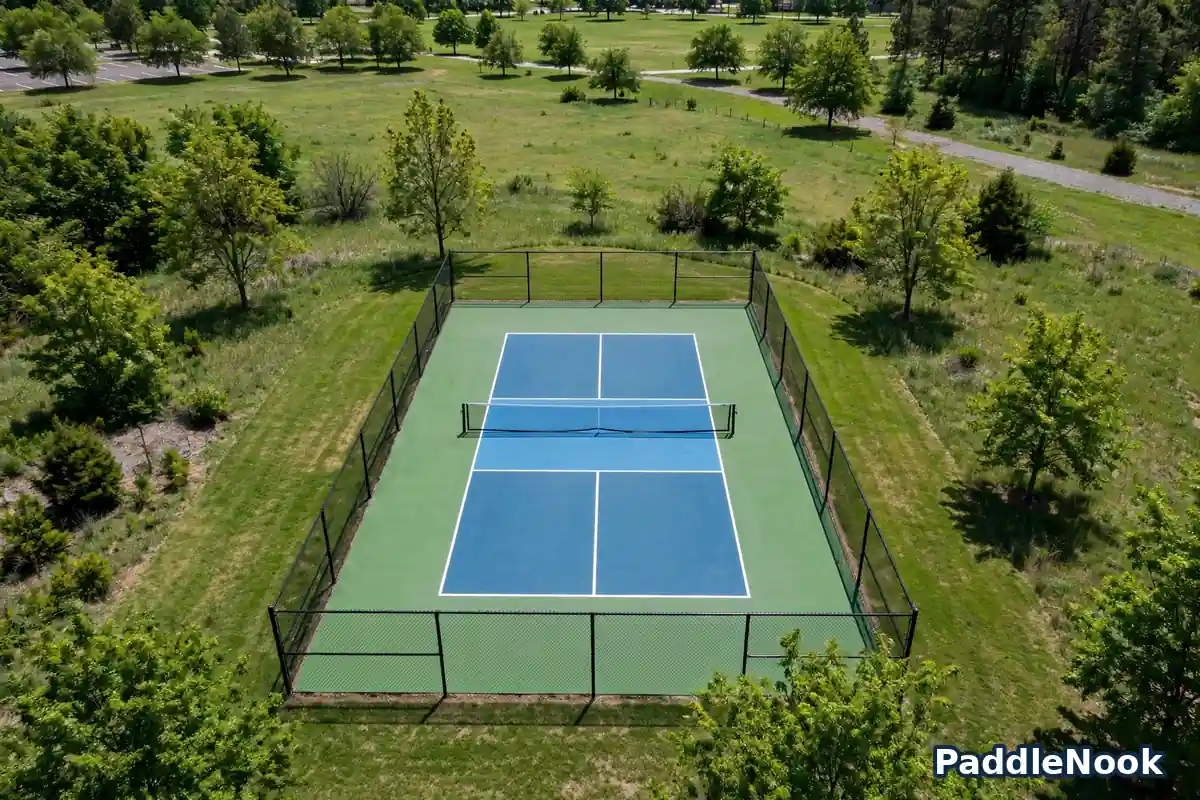
Walk a Pickleball Court Zone by Zone With Confidence
Stand at the back of a pickleball court and the lines can look like a puzzle. There is a box near the net, a line down the middle, and a lot of open space in between. Yet every line has a job, and once you know each zone, the game makes far more sense.
This guide walks you around a pickleball court zone by zone, from the baseline to the kitchen. You will learn the size of the court, what each area is for, how indoor and outdoor courts differ, and how to find a court near you.
Think of it as a friendly tour, not a technical manual, so you can step onto any pickleball court with confidence. Bring this tour to mind on your first visit, and the lines will soon stop looking like a puzzle to you.
What is the baseline on a pickleball court?
A pickleball court is 20 feet wide and 44 feet long, with a baseline at each end, service boxes in the middle, and a 7-foot kitchen beside the net. Sidelines mark the sides, the net is 34 inches high at the centre, and the same size works for singles and doubles.
The baseline is the back line on each end of the court. Serves start behind it, and deep shots aim close to it. If you stand on the baseline, you have the full court in front of you and time to react. Many beginners stay too far back, which makes the next shot harder.
A good habit is to serve, then move forward toward the kitchen line as soon as the return is on its way.
The baseline marks the end of fair ground. A ball past it is out, unless it clips the line, which counts as in for most shots. Keep your knees soft and your paddle up.
Step into the kitchen zone
Walk forward from the baseline and you cross the service boxes first, then reach the kitchen line. The kitchen is the 7-foot zone on each side of the net, also called the non-volley zone. You can stand in it, chat in it, and hit bounced balls from it. You just cannot volley while touching it or its line.
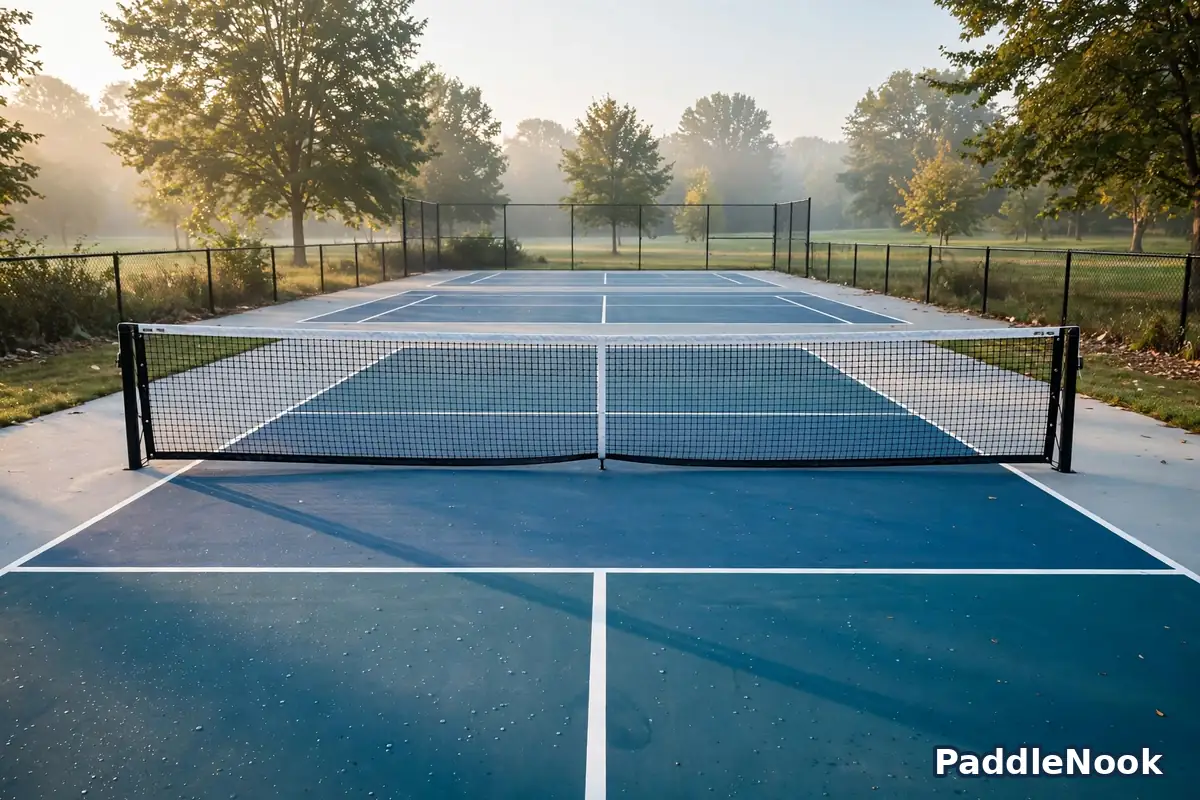
This zone shapes the game: players cannot smash from right at the net, so rallies slow into soft dinks. Practise stepping up to this line after the serve and return. The rules behind this zone are covered in the kitchen rule in plain words.
Learn the sidelines and service boxes
The sidelines run the full length of the court and mark its sides. A ball outside them is out. The court is 20 feet wide, so there is less side space than a tennis court. That smaller width is part of why pickleball feels fast and social.
Between the kitchen line and the baseline, a centre line splits each side into right and left service boxes, each 10 by 15 feet. Serves must land in the diagonal box. Even scores serve from the right, odd from the left. Once the rally starts, the whole court is in play.
See our friendly overview of how a game works.
Pickleball court dimensions in one table
| Part of the court | Size |
|---|---|
| Full court | 20 feet wide by 44 feet long |
| Kitchen, each side | 7 feet deep by 20 feet wide |
| Each service box | 10 feet wide by 15 feet long |
| Net height at the sides | 36 inches |
| Net height at the centre | 34 inches |
| Minimum playing area with space around it | 30 feet by 60 feet |
Singles and doubles use the same size. Venues leave room behind baselines and beside sidelines for safety. For a casual setup, a tape measure, court tape, and a portable net are enough.
Indoor vs outdoor pickleball courts checklist
Indoor and outdoor courts share the same size and lines, but play feels different. Use this checklist before you choose.
- Indoor: smoother floors, no wind, often a non-marking shoe rule, and softer balls with larger holes.
- Outdoor: wind, sun, and glare change shots, and harder balls with smaller holes cope better with rough surfaces.
- Surface: indoor floors feel kinder on joints. Outdoor asphalt or concrete can be rough on shoes and knees.
- Light: indoor lights are even. Outdoors, play with the sun behind you when you can.
- Shoes: check the venue rule, then match your shoes to the surface. Our guide explains how court shoes grip and fit for your surface in plain terms.
If you play both types, keep two sets of balls and check your shoes after outdoor sessions. Rough ground wears soles faster than a gym floor.
How to find a pickleball court locally
Start close to home: search your town plus “pickleball courts” in a maps app, then check open play times. Parks, community centres, gyms, and schools often run sessions. Call ahead about fees, booking, or beginners.
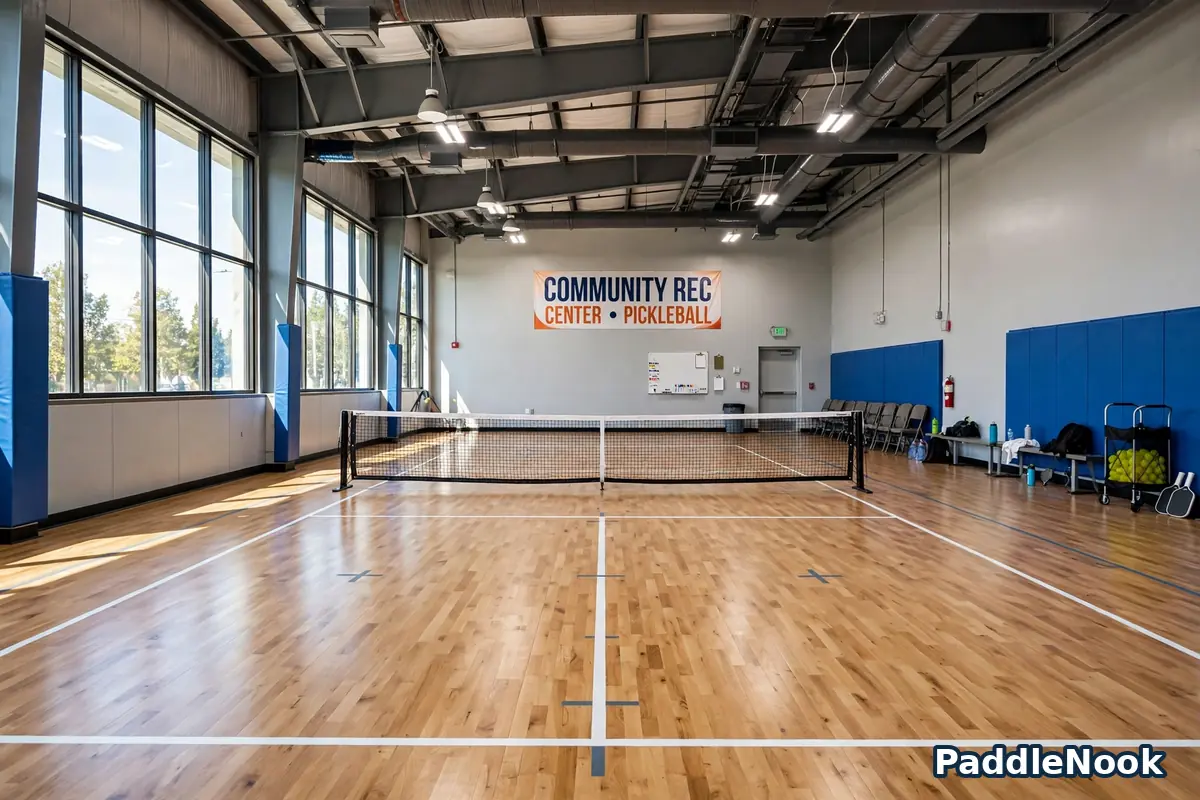
Open play is the easiest way in: players rotate, games are short, and regulars explain local customs. Bring water, a paddle if you have one, and court shoes. Arrive early and watch one game first. For full dimension details, see the court dimensions guide from Pickleball.com and the dimensions guide from PickleSportsHub.
People Also Ask
How big is a pickleball court?
A pickleball court is 20 feet wide and 44 feet long, the same for singles and doubles. With room to move around it, venues aim for at least 30 feet by 60 feet in total.
What is the kitchen on a pickleball court?
The kitchen is the 7-foot non-volley zone on each side of the net. You can stand in it, but you cannot volley while touching it or its line.
Is a pickleball court the same as a badminton court?
It is the same size as a doubles badminton court, 20 by 44 feet, but the net is lower and the lines and zones are set out for pickleball.
Do indoor and outdoor pickleball courts differ in size?
No, the court size and lines are the same. The differences are surface, ball type, wind, light, and sometimes shoe rules.
Conclusion
A pickleball court is small and easy to learn zone by zone: baseline at the back, service boxes in the middle, kitchen at the net, sidelines down the sides. Find an open play session near you and let the lines guide you.

One Comment