
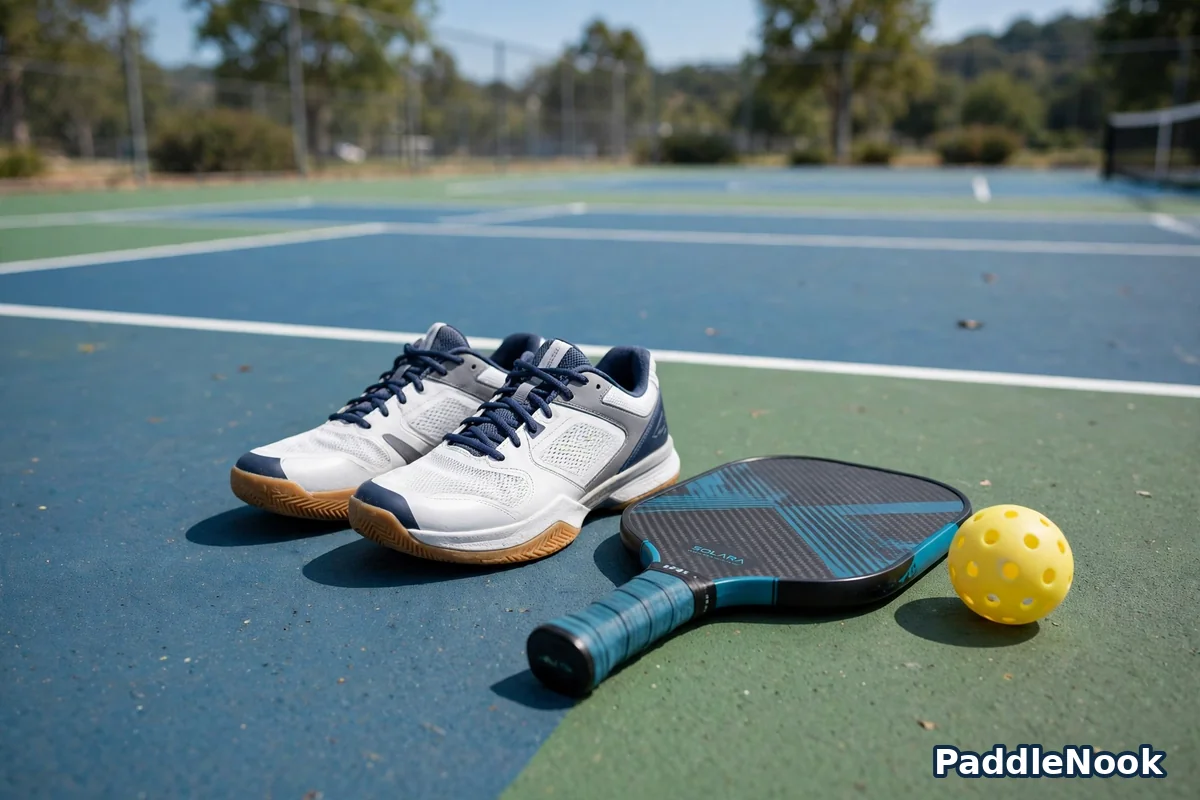
Pickleball Shoes Explained: Parts, Fit and Court Grip
Most new players spend ages choosing a paddle, then play in whatever trainers they already own. That order is backwards. Your pickleball shoes are the only gear that touches the court on every single point, and pickleball asks a lot of them. You shuffle sideways, stop hard, lunge, and change direction in a split second.
Running shoes are built for forward motion, so they can feel wobbly when you cut sideways. This guide explains why court shoes matter, how a court shoe is built, and how to test fit before you buy. You will also learn which shoes suit indoor and outdoor play, and how to make a good pair last.
By the end, you will know what to check in a shop, what to ask about, and when a worn pair is past its best. That minute of testing matters.
Why do pickleball shoes matter more than trainers?
Pickleball shoes matter because the game is sideways: court shoes sit lower and wider, grip without sticking, and support quick stops, lunges, and direction changes. Running shoes are built for forward motion, so they can roll on sideways moves and strain your ankles during regular play.
Pickleball is a sideways sport. You shuffle to the kitchen line, plant a foot, and push off the other way. A running shoe has soft foam and a high, narrow base made for straight-ahead running. On a sideways stop, that base can roll, and your ankle takes the strain.
A court shoe sits lower and wider, so your foot stays planted.
Grip matters too: court soles grab without sticking too hard, so you stop in a controlled way. If you play twice a week or more, the right shoes protect your feet over time, since sore arches and blisters often trace back to worn or wrong shoes.
Parts of a court shoe, in plain words
A court shoe has four main parts, and each one does a clear job.
- Upper: the top part that holds your foot. Mesh keeps air moving, while firmer panels add side support.
- Midsole: the foam layer under your foot. It cushions each step and landing.
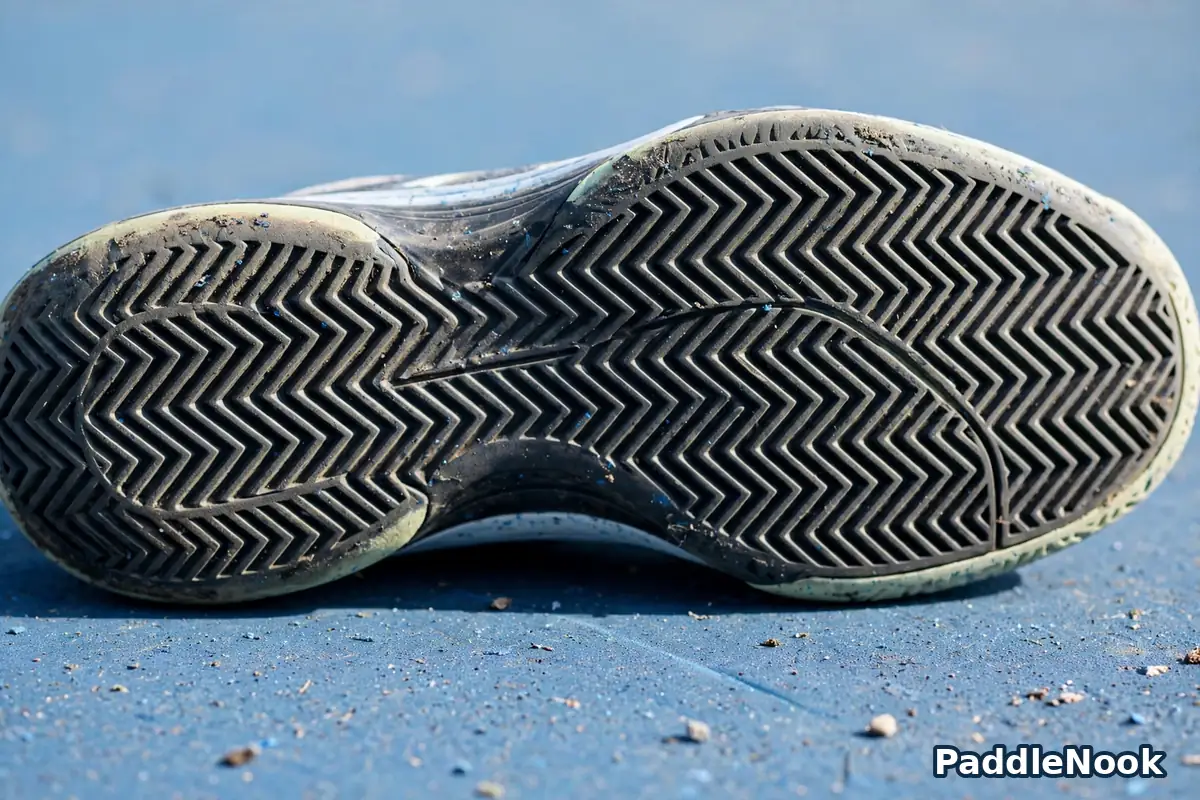
- Outsole: the rubber bottom that grips the court. Herringbone tread, a zigzag pattern, is common for court play.
- Heel counter and shank: firm parts at the back and middle that stop the foot rolling sideways.
A reinforced toe area lasts longer outdoors, since many players drag a toe when they lunge. A good court shoe resists twisting side to side far more than a soft running shoe.
Fit-test steps before you buy pickleball shoes
Fit beats brand every time. Wear playing socks, and try shoes later in the day when feet are larger.
- Toes: you should be able to wiggle them, with about a thumb width between your longest toe and the end.
- Heel: the heel should stay put when you walk. If it lifts a lot, try a smaller size or a different shape.
- Width: the shoe should hug the middle of your foot without pinching the sides. Wide feet need a wide fit, not just a longer size.
- Sideways test: stand and shift your weight side to side. Your foot should feel held, not sliding inside the shoe.
- Short walk and shuffle: walk, then do a few small side steps in the shop. Any hot spot now will become a blister later.
Break shoes in with a short session first. If a pair hurts in the shop, it will rarely improve on court.
Indoor vs outdoor surface guide for pickleball shoes
Surface changes what your shoes need. Indoor courts are usually wood or smooth sport flooring. They call for a non-marking sole that will not scuff the floor, and a grip pattern that works on a clean, smooth surface. Many indoor venues ask players to wear clean court shoes that have not been worn outside.
Outdoor courts are often concrete or asphalt. Those rough surfaces chew through soft soles, so outdoor shoes need tougher rubber and often a thicker tread. They also need a toe guard for lunges on gritty ground. For casual play, one all-court pair can work. Frequent players often keep a pair for each surface. Check what surface your venue uses first.
Care checklist to make pickleball shoes last
Shoes wear out from play, heat, and damp, not just age. A little care stretches their life.
- Air them out after every session. Do not leave them sealed in a hot car or a damp bag.
- Clean off dust and grit with a soft brush or damp cloth.
- Rotate two pairs if you play most days, so foam can recover between sessions.
- Check the outsole each month. Smooth patches under the ball of the foot mean grip is going.
- Replace shoes when support feels soft, the heel leans, or grip fades. How long they last depends on how often you play, so see the Selkirk guide to shoe lifespan and the podiatrist guide to pickleball shoes for general guidance.
Keep spare socks in your kit: dry socks cut blisters. For packing ideas, see our packing guide for your kit, and for help choosing by foot type, read how to choose a pair by your foot type.
People Also Ask
Can you play pickleball in running shoes?
For one casual game, yes, but running shoes give less sideways support. Court shoes are safer for regular play.
What makes pickleball shoes different from tennis shoes?
Good tennis shoes are close cousins, since tennis also needs sideways support. Pickleball shoes are tuned for shorter, quicker moves and often have a lower profile for the kitchen line.
Do pickleball shoes need to be non-marking?
Many indoor venues require non-marking soles so floors stay clean. Check the venue rule before you play indoors.
How often should you replace pickleball shoes?
It depends on play frequency. Frequent players may need new shoes every few months, while once-a-week players get longer wear. Replace them when grip or support fades.
Should pickleball shoes feel tight or loose?
They should feel snug at the heel and middle, with room to wiggle your toes. Tight shoes cause blisters, while loose shoes let the foot slide and roll.
Conclusion
Pickleball shoes are simple gear with a serious job: hold your foot steady while you move sideways, stop fast, and play for hours. Learn the parts, test fit with a sideways shuffle, match the sole to your surface, and care for the pair you buy. Get those basics right and your feet will thank you.

2 Comments