
Pickleball Paddles: Every Part Explained in Plain Words
Pickleball paddles all look simple at first glance: a flat hitting surface, a short handle, and no strings. Yet each part changes how the paddle feels, how much power it gives, and how easy it is to control.
If you have ever picked up a paddle and wondered why one feels light and quick while another feels solid and strong, the answer sits in the parts. This guide walks through every part in plain words, with no brand names and no spec sheet to decode.
You will learn what the face, core, edge guard, handle, and grip each do. Then you will see how materials, size, and weight shape your choice. This guide keeps it simple: one part at a time, in the order you see it when you hold a paddle.
Each part is short, clear, and tied to how the paddle feels in your hand.
Pickleball Paddles, Part by Part: Face to Butt Cap
A pickleball paddle has a face that hits the ball, a core that sets feel and power, an edge guard that protects it, and a handle with a grip you hold. A thick core gives more control, a thin core gives more power, and grip size affects comfort and wrist strain. Start wide, thick, and midweight.
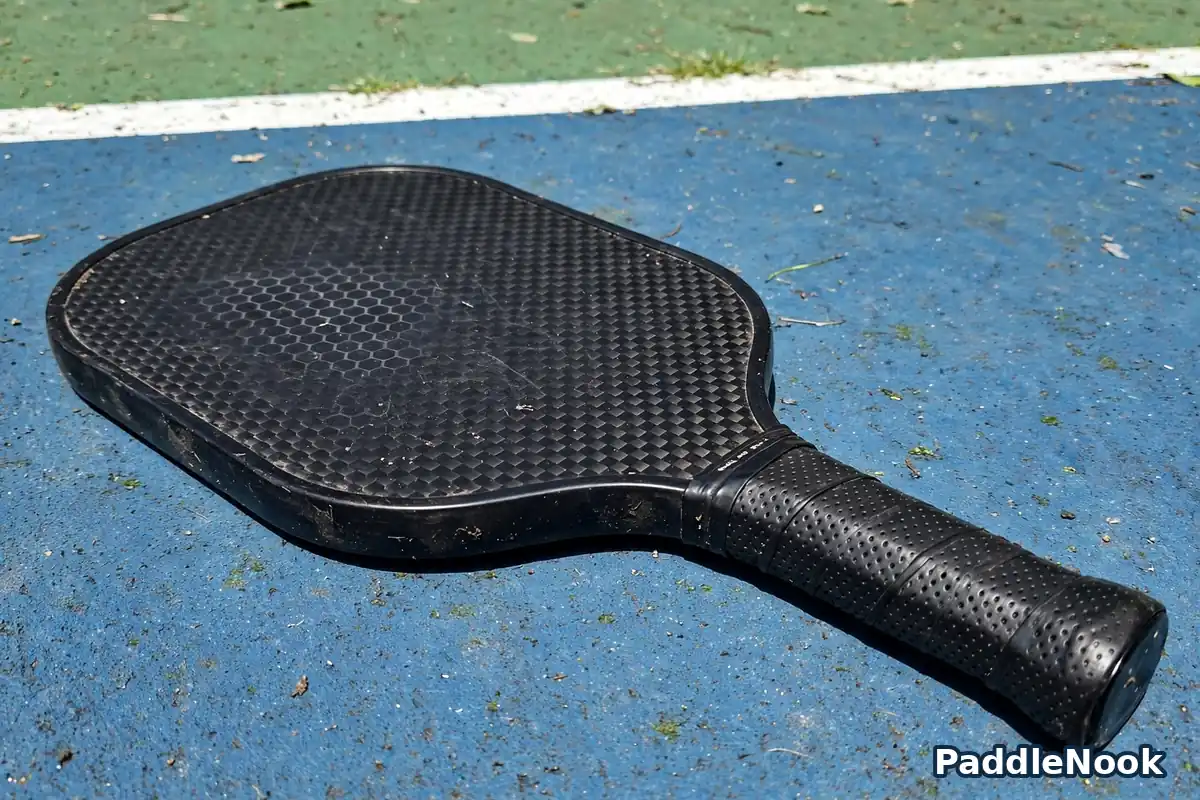
Hold a paddle with the face toward you. The wide flat area is the face. A rough face grips the ball more and helps spin, the turning motion that makes the ball curve or dip. A smooth face gives a cleaner hit. Beginners do better with a forgiving face.
Behind the face sits the core, the inner layer that gives thickness and feel. A thick core, often around 16 mm, feels soft and controlled. A thin core, often around 13 or 14 mm, feels firmer, giving more power but less help on soft shots.
Around the edge runs the edge guard, a plastic rim that protects the face and core from court scrapes. It adds edge weight, which can make the paddle feel more stable.
Below the face is the throat, where the face meets the handle, then the handle with a grip wrapped around it. Grip size matters: a grip too large tires your hand, while one too small can twist on hard hits. At the end is the butt cap, a flared cap that stops the paddle slipping out of your hand.
USA Pickleball sets basic equipment rules for approved play, and its What Is Pickleball page gives a useful starting point. A general overview of pickleball also lists common paddle types and court sizes. Check current official rules if you plan to play in a sanctioned event.
What Paddles Are Made Of: A Short Materials Guide
Three material choices shape most pickleball paddles: the face, the core, and the handle wrap.
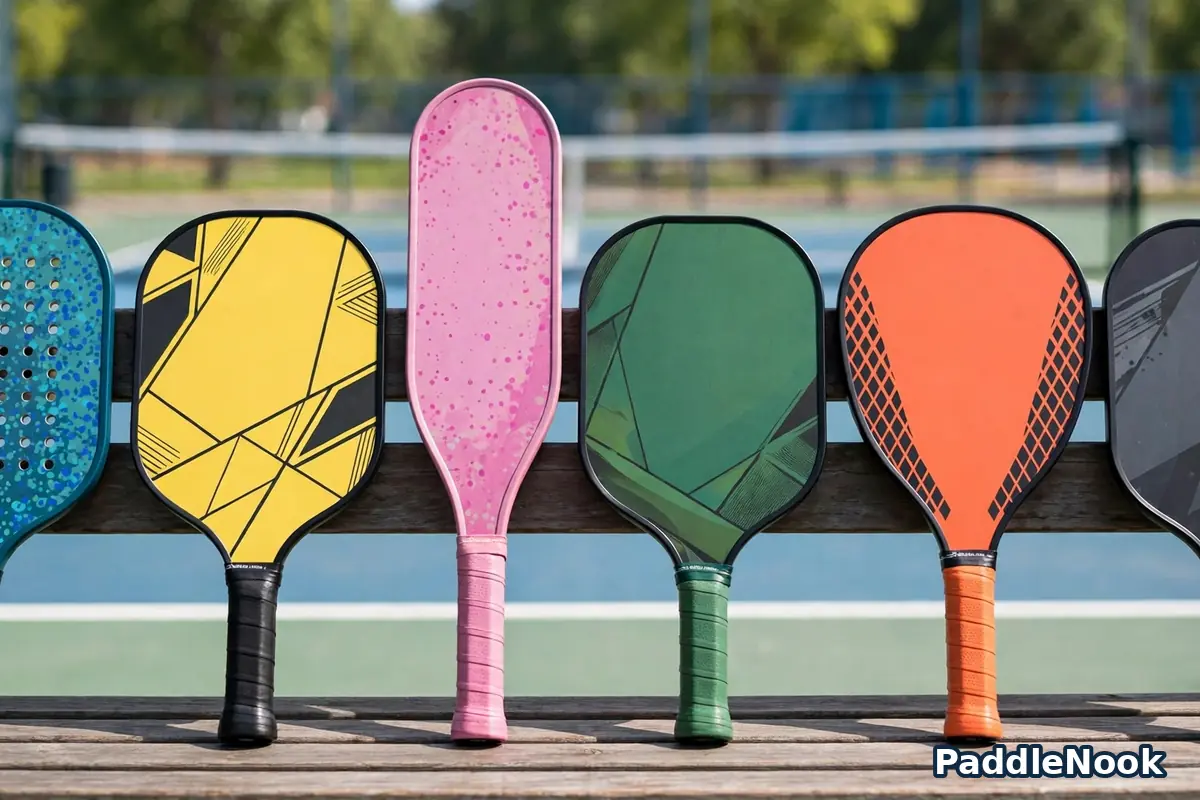
Face materials include wood, fibreglass, and carbon fibre. Wood faces are heavy, cheap, and durable, suiting a casual first paddle. Fibreglass faces are lighter and livelier, giving more power with less effort. Carbon fibre faces are light and controlled, with texture that helps spin. Prices vary by material and build, so check current listings.
Core materials include polymer, Nomex, and aluminium. Polymer cores, often honeycomb-shaped, are most common, soft, quiet, and forgiving. Nomex cores feel firmer and louder, with more pop, the quick bounce off the face. For most new players, a polymer core is safe.
Grip wraps are usually soft and tacky, and absorb sweat. Over time they wear smooth. A fresh overgrip, a thin wrap over the main grip, can restore tack and adjust size slightly.
What Size and Weight Should You Choose?
Paddles come in three broad shapes. A wide body has a broad face and short handle, giving a large sweet spot. An elongated shape has longer reach, but shrinks the sweet spot a little. A hybrid shape balances reach and forgiveness.
| If you want | Look for | Watch out for |
|---|---|---|
| Forgiving hits | Wide body, thick core, mid weight | Very light paddles may feel less stable |
| More power | Thin core, elongated shape | Power can send soft shots long |
| More control | Thick core, wide or hybrid shape | Very soft paddles may need a bigger swing |
| Quick hands at the net | Light to mid weight, shorter handle | Heavy paddles can tire your wrist |
Weight is usually light, midweight, or heavy. Light paddles feel fast at the net, midweight paddles balance speed and stability, and heavy paddles give more power but can tire your arm. Our guide explains how to judge paddle types for control, power, and all-court play, without naming specific models.
Care Checklist: Keep Your Paddle in Good Shape
Good care is simple, so most pickleball paddles need only a few habits.
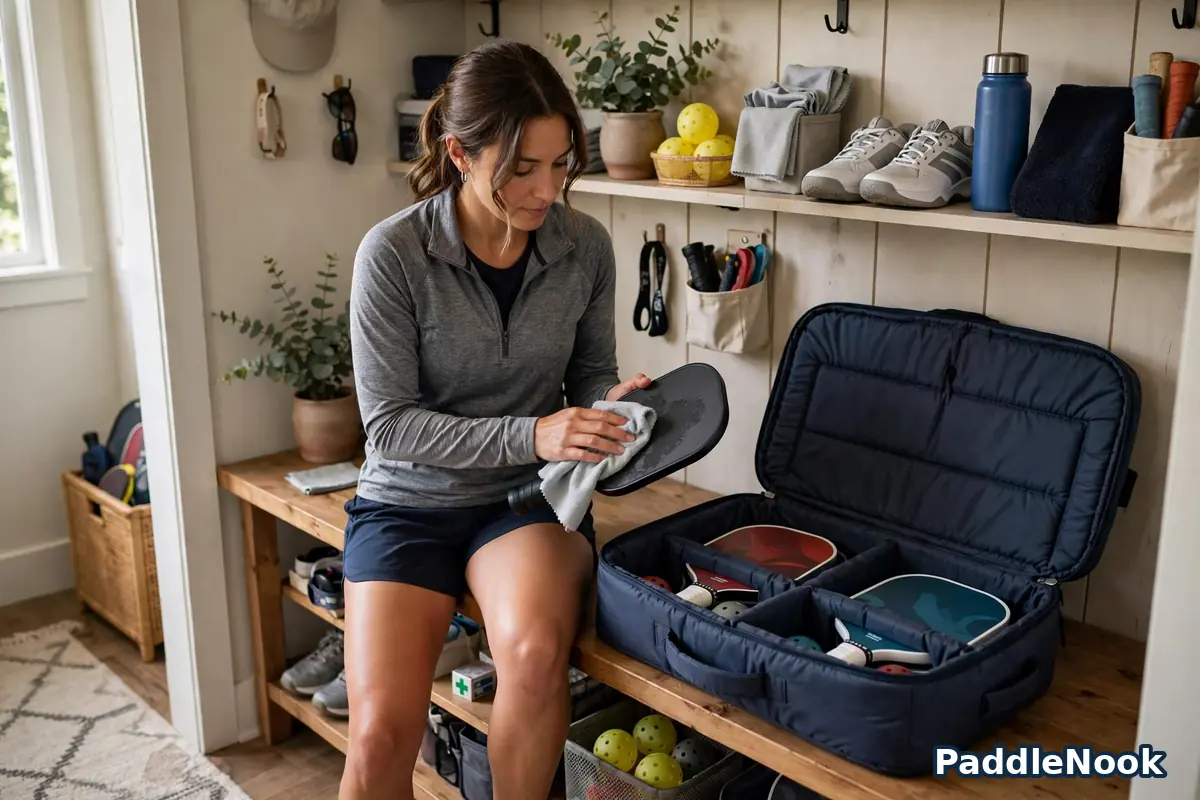
- Wipe the face with a soft, dry cloth after play.
- Keep the paddle out of hot cars and direct sun.
- Store it in a cover or bag, away from damp floors.
- Replace a worn grip wrap when it feels smooth or slips.
- Do not scrape the court to pick up balls.
- Dry a wet grip and let it air before storing.
Heat is the main enemy: a paddle left in a hot car can warp or lose its feel. A damp bag can harm the grip. When face texture goes smooth, spin drops, and the paddle is wearing out.
When the face goes smooth, it may be time to pick one replacement paddle with confidence, and to store it in a bag that protects it.
People Also Ask
What are pickleball paddles made of?
Most pickleball paddles have a wood, fibreglass, or carbon fibre face, a polymer honeycomb-style core, and a soft grip wrap.
How heavy should a paddle be for a beginner?
A midweight paddle suits most beginners: stable for drives, light for quick shots at the net.
What is the difference between a 14 mm and a 16 mm paddle?
The number is the core thickness. A 16 mm core tends to feel softer and more controlled, while a 14 mm core tends to feel firmer and more powerful.
Do I need an expensive paddle to start?
No. A simple, forgiving paddle is enough for your first months. Spend more only when you know your preferred weight, shape, and feel.
Conclusion
A paddle is trade-offs: face shapes spin, core shapes power, edge guard protects it, grip shapes comfort. Start wide or hybrid, with a thick polymer core and midweight build. Among pickleball paddles, that suits most new players.

3 Comments