
Pickleball Rules Singles: The Ultimate Solo Guide
Pickleball rules singles are simpler than doubles in one way, and harder in another. There is no partner to share the serve or the court, so the score call is shorter and the serving turn is clear. At the same time, you alone must cover the whole side of the court, call your own lines, keep moving for every rally, stay calm when the pace rises, and reset quickly after each point.
This guide gives you the solo rules in a form you can use at once. You will learn where to serve from, how to call the score with two numbers, what the kitchen still stops you from doing, and how to cover a full court without running yourself out of the game early. For the shared rules that apply to both formats, see the complete simple rules guide.
What Are the Pickleball Rules Singles Players Follow?
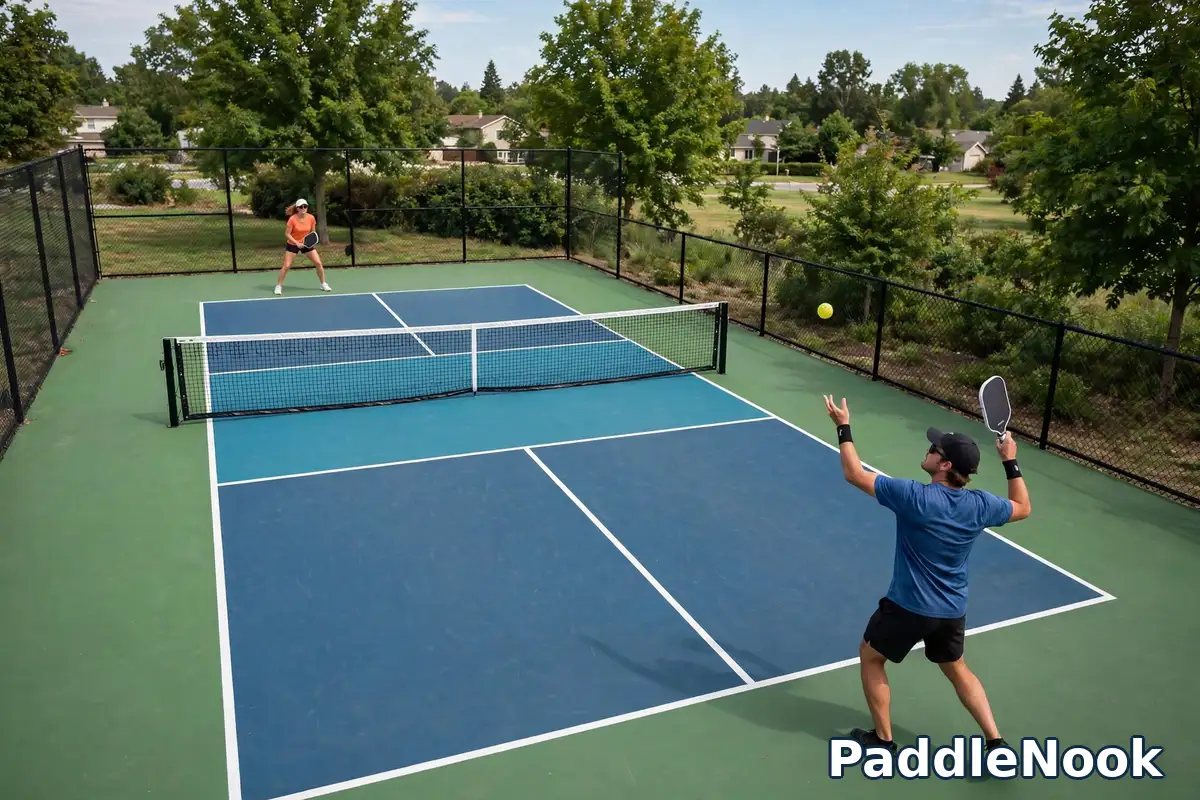
Pickleball rules singles players follow are: one player on each side of the same court, an underhand diagonal serve, and a two-bounce rule for the serve and return. There is no volley from the kitchen, points go only to the serving player, the score call uses two numbers, and games go to 11 points with a win by 2.
That is the whole solo game in one paragraph. The sections below turn each line into a habit you can use on court.
| Singles rule | Solo difference from doubles |
|---|---|
| Players | One per side, no partner rotation |
| Score call | Two numbers, no server number |
| Side-out | At once, when the server loses a rally |
| Serve side | Even score right, odd score left |
| Court cover | Whole side is yours alone |
Where Do You Serve From in Singles?
Your score decides your serve side, every time. Serve from the right when your score is even, such as 0, 2, or 4, and from the left when your score is odd, such as 1, 3, or 5. At the start, both players are on 0, so the first serve always comes from the right.
If you score, switch sides and serve again. If you lose the rally while serving, the serve passes straight to your opponent, who then serves from their own right side if their score is even.
How Must a Legal Singles Serve Look?
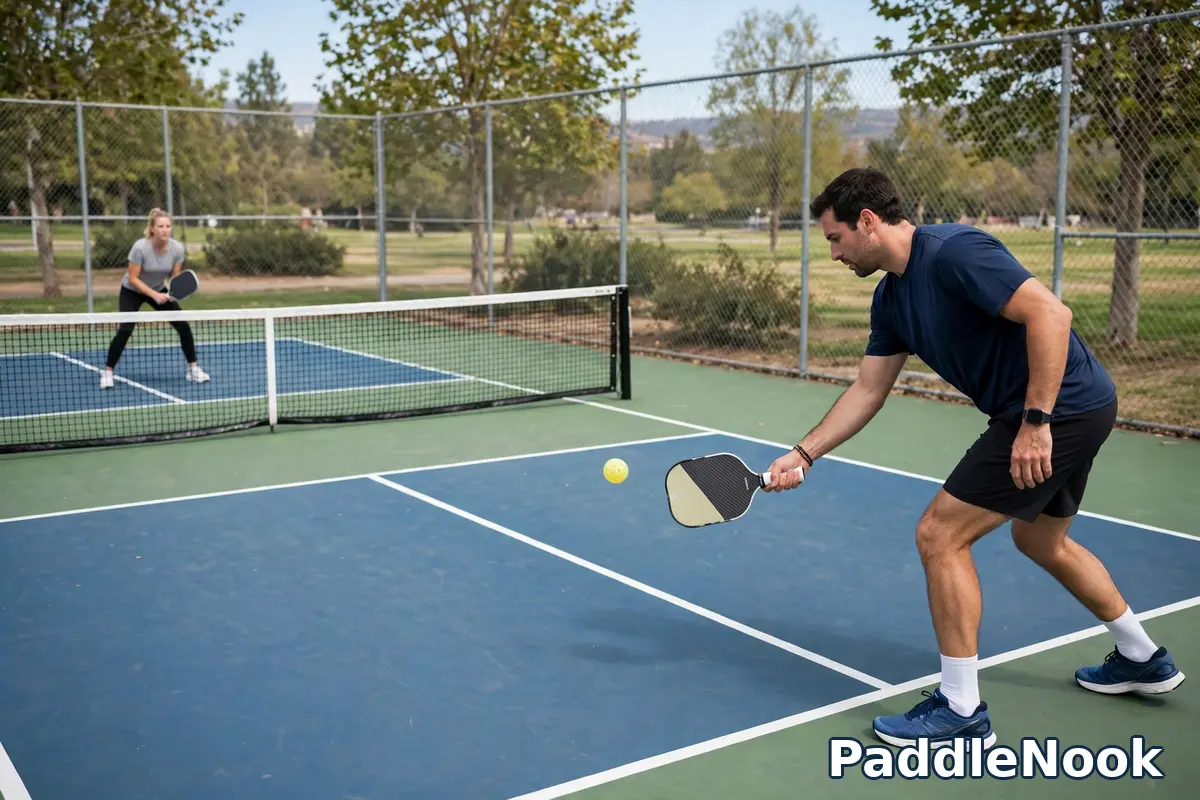
Serve underhand, with the paddle below your waist and the paddle head below your wrist at contact. Keep at least one foot behind the baseline, with neither foot touching or crossing it until after you hit the ball. Serve diagonally into the opposite service box.
The ball must clear the net and land past the kitchen line. If it lands on the kitchen line, it is short and a fault. You get one serve attempt per rally, so check your feet and then serve.
Why Does the Two-Bounce Rule Still Apply?
The two-bounce rule applies in singles just as it does in doubles. The serve must bounce on the receiving side, and the return must bounce on the serving side, before either player may volley.
This rule matters even more alone, because it stops a fast player from rushing the net and ending the rally on the second shot. Let the return bounce, move into a balanced spot, and then choose whether to volley or let the ball bounce again.
How Do You Call the Score in Singles?
Call two numbers only: your score first, then your opponent’s score. A call of 6-4 means you have 6 and your opponent has 4. There is no third number in singles, because there is no first or second server to name.
Some guides online still show a three-number call for singles, but that is a doubles habit carried over by mistake. Use two numbers, say them before every serve, and both players will always know the score. A clear singles rules guide is given in this pickleball singles rules guide.
How Do You Cover the Whole Court Alone?
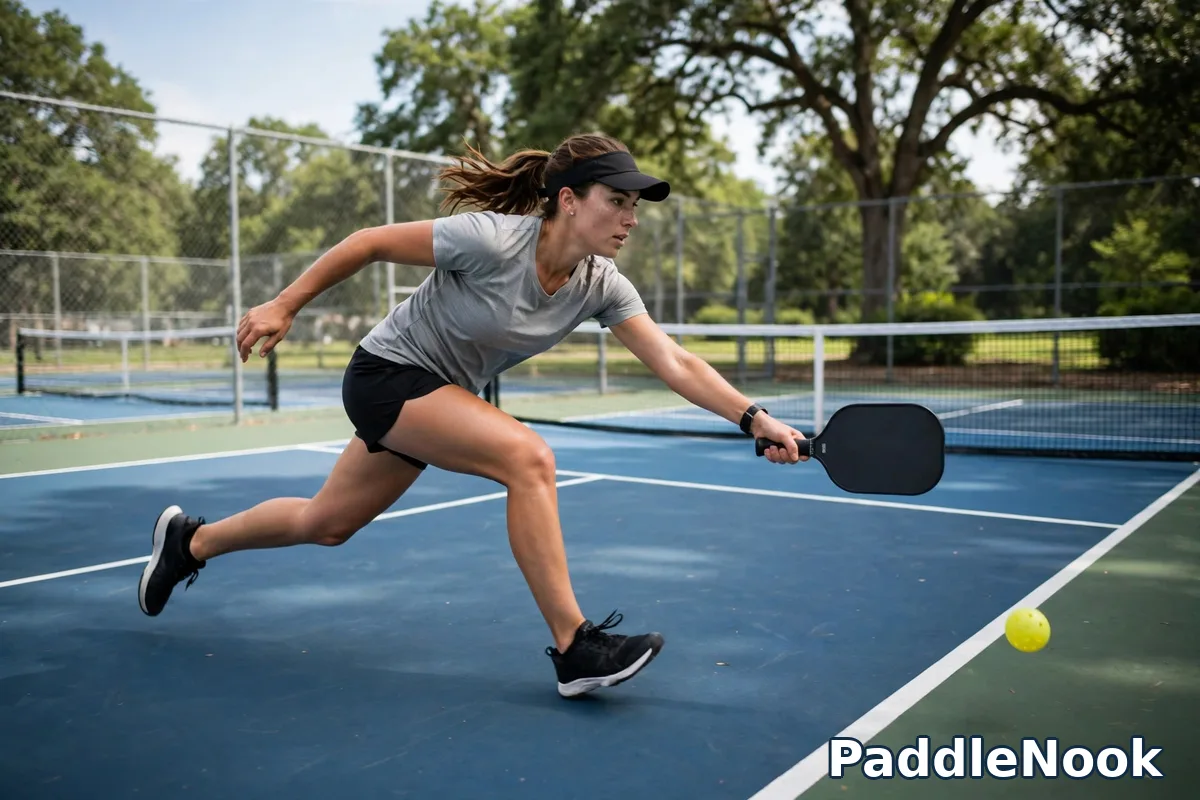
Cover the court by returning to the middle after each shot, not by standing still where you last hit. Deep serves and deep returns push your opponent back, which buys you time to recover. Short, soft shots can win points, but they also leave you open if your opponent reaches them.
Think in zones rather than chasing every ball at full speed. A map of each zone is given in a zone-by-zone tour of the court. Good footwork also helps, so wear shoes made for quick side steps, as explained in a plain guide to court shoes.
What Faults End a Singles Rally?
A rally ends when a fault happens. Common faults are a serve into the kitchen or out of the box, a ball into the net, a ball out of bounds, a ball that bounces twice on your side, and a volley from the kitchen or on its line.
Line calls are yours to make on your side. A ball that touches any part of a line is in. If you cannot make a clear call, give your opponent the benefit of the doubt and play on. Fair calls keep solo games friendly and fast.
People Also Ask
Is the singles court smaller than the doubles court?
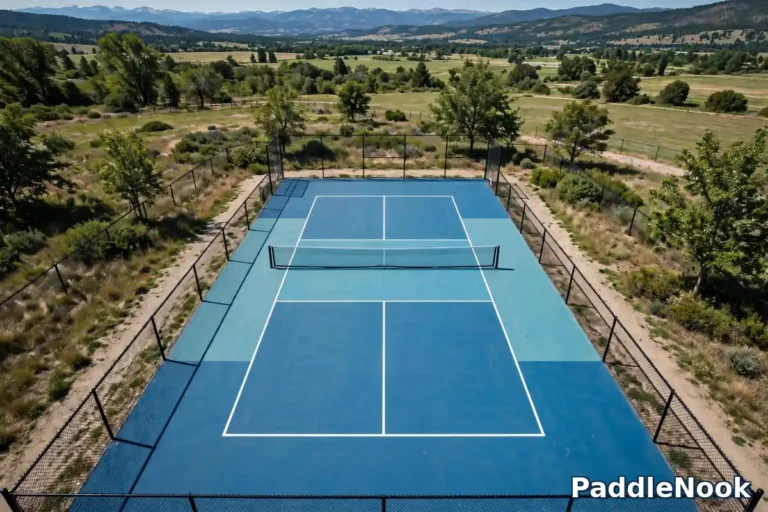
No. The court is the same size for both formats, 20 feet wide and 44 feet long. The difference is that one player, not two, must cover each side.
How do you call the score in singles?
Call two numbers: your score, then your opponent’s score. For example, 3-2 means you have 3 and your opponent has 2, with no server number added.
Can you volley in the kitchen in singles?
No. You may not volley while standing in the kitchen or on its line. You may enter the kitchen to hit a ball after it has bounced.
What happens when the server loses a rally in singles?
The serve passes at once to the opponent in a side-out. There is no partner turn, so the opponent serves next from the side that matches their score.
Conclusion
Singles rewards clear habits: serve from the side your score tells you, let the first two shots bounce, call two numbers, stay out of the kitchen for volleys, and return to the middle after each shot. Those five habits cover almost every solo rally you will play.
Start your next singles game by checking your feet, your serve side, and your score call before the first serve. A detailed singles serving position guide is given in this singles rules and serving guide.

One Comment