Best Pickleball Paddles: How to Judge One for Your Game
The best pickleball paddles are not one paddle. They are a match between a paddle type and a player. A paddle that suits a power hitter can frustrate a soft-game player, and a paddle built for control can feel weak in the hands of a hard driver. Shop lists make this harder, not easier.
They rank models, quote prices that change, and use lab terms that mean little on a real court. This guide takes a different path. It uses generic paddle types only, with no brand models, prices, or specs invented here. Prices vary by seller and over time, so check current listings before you buy.
You will learn how control, power, and all-court types differ, how to test a paddle in a few minutes, and which mistakes waste money. A few minutes with a paddle in your hand tells you more than a long ranking ever will.
Best Pickleball Paddles for Whom: Control, Power, All-Court
The best pickleball paddles depend on your game. Choose a control type for soft shots and dinks, a power type for drives and serves, and an all-court type for a mix of both. Most social players suit an all-court type. Test weight, shape, grip, and core thickness before you buy, and check current listings, since prices vary.
Start with your game, not a ranking. If you win with soft shots, drops, and resets, lean toward control. If you win with drives and serves, lean toward power. If you win a mix, lean toward all-court play.
| Paddle type | Best for | Feel on court | Trade-off |
|---|---|---|---|
| Control type | Soft game, dinks, drops, resets | Soft, steady, forgiving | Less easy power on drives |
| Power type | Drives, serves, attacking shots | Firm, lively, fast off the face | Harder to keep soft shots short |
| All-court type | Mixed play, doubles, social games | Balanced, neither too soft nor too hot | No single standout strength |
| Beginner-friendly type | New players, forgiving hits | Wide face, soft feel, stable | May feel plain as skills grow |
| Soft-game specialist type | Net play, touch players | Very soft, calm on dinks | Needs a full swing for deep drives |
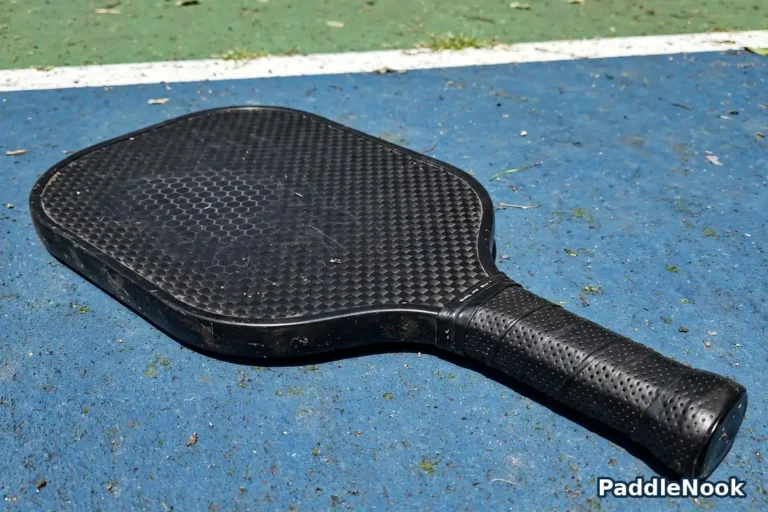
A control type often pairs a thick core with a wide or hybrid shape. A power type often pairs a thin core with an elongated shape. Our parts guide explains what faces, cores, and grips each do in plain words.
What Should You Test Before You Buy?
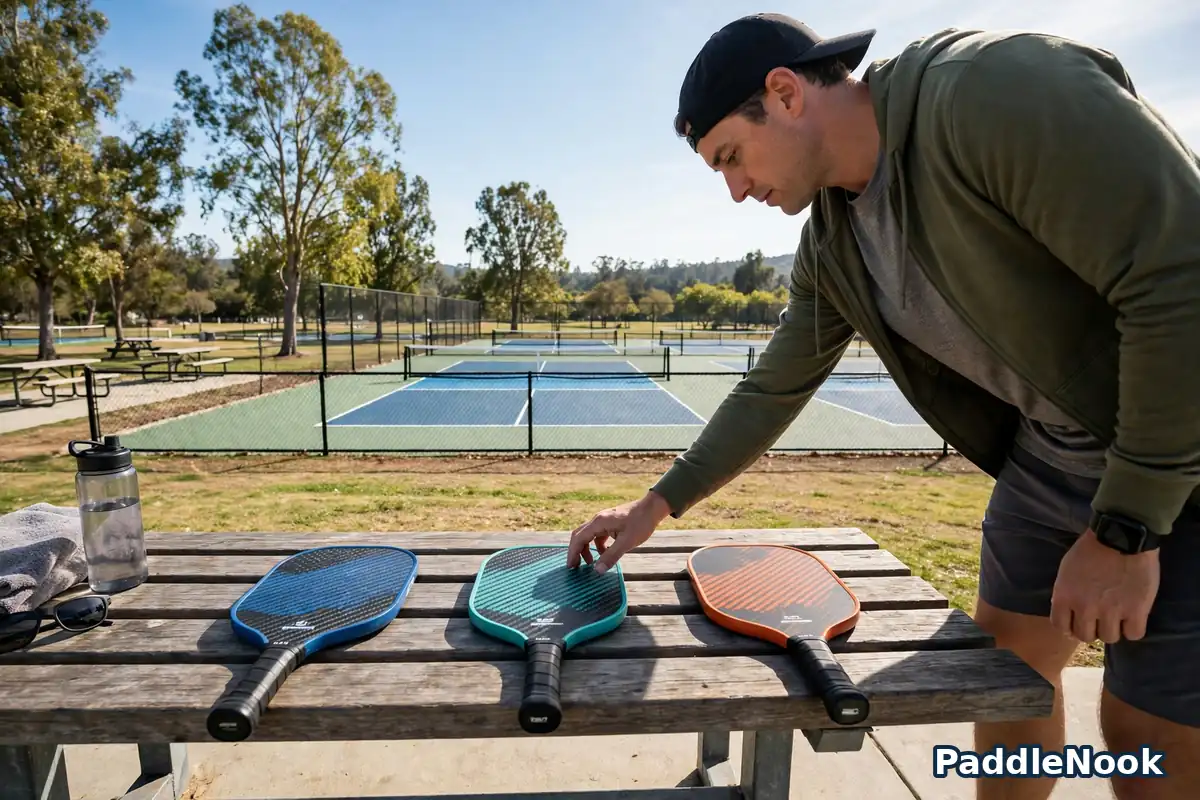
Use this checklist in a shop or at a demo day. When you test the best pickleball paddles in person, focus on feel first.
- Hold the paddle and check grip size: fingers should not overlap your palm, and the handle should not twist.
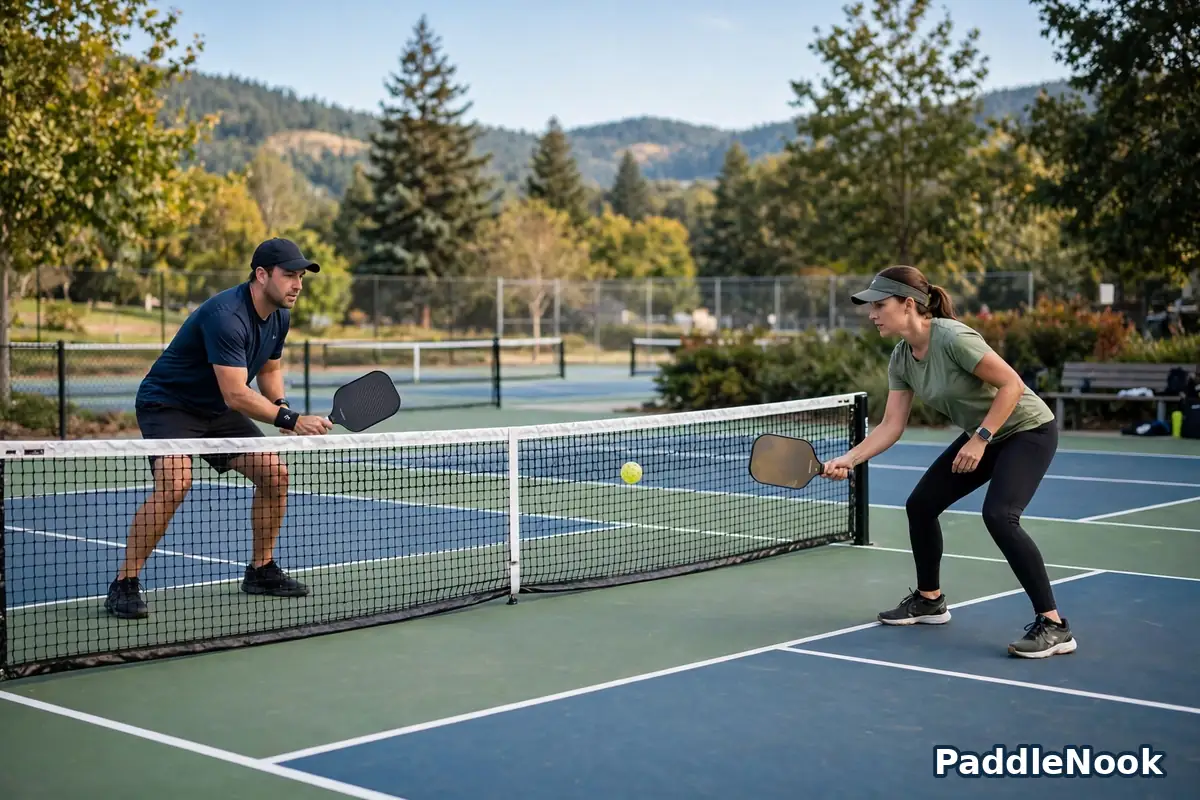
- Swing it like a soft dink, then like a drive. Note which motion feels smooth.
- Tap a ball softly. A control type should keep it low and short with a small swing.
- Hit a few firm drives. A power type should send the ball deep without a huge swing.
- Try quick volleys at an imaginary net. A heavy paddle will feel slow here.
- Check wrist tiredness after a minute of swings: tired wrists point to a paddle that is too heavy.
- Check edge guard and face texture, and ask the core thickness.
- Ask about returns. A paddle fine for two minutes may feel wrong after a full game.
Borrow from a club or friend for one session if you cannot test in person. USA Pickleball sets basic equipment rules, and its What Is Pickleball page is a good starting point. A general overview of pickleball explains the basic equipment and court setup. Check current official rules for sanctioned events.
Mistakes That Waste Money
The most common mistake is buying for a future game you do not yet play. A new player with a firm power paddle often sends soft shots long. Match the paddle to the game you play now.
The second mistake is chasing price as quality. A high price does not prove a fit, and a low price does not prove poor quality. Prices vary, so check current listings and focus on weight, shape, and core thickness. The third mistake is ignoring grip size: a wrong grip can cause a sore wrist and poor control.
The fourth is buying two paddles at once. Start with one, learn what you like, and store it well in a bag that protects it.

Mini-FAQ: Quick Answers Before You Choose
Should a beginner buy a power paddle?
Usually no. A beginner-friendly or all-court type forgives off-centre hits.
Is a thicker core always better?
No. A thick core helps control, a thin core helps power. Better depends on where you win points.
Does shape matter as much as weight?
Yes. Shape sets the sweet spot and reach, while weight sets speed and stability. Test both together.
How many paddles do I need?
One good paddle is enough to start.
When should I upgrade?
Upgrade when you can name what your current paddle lacks, such as more control at the net, not when a new model appears.
People Also Ask
What are the best pickleball paddles for beginners?
Beginner-friendly and all-court types suit most new players.
Are expensive paddles worth it?
They can be, once you know your preferred weight, shape, and feel. For a first paddle, a forgiving type is usually smarter.
How do I know if a paddle is approved for tournaments?
Check the current approved equipment list and event rules, since approval can change.
Can one paddle suit both singles and doubles?
Yes, an all-court type suits both for most social players. Singles players who drive more may prefer power; doubles players who dink more may prefer control.
What is the best pickleball paddle for control?
A control type with a thick core and a wide or hybrid shape suits touch players best. It keeps soft shots low and gives a steady feel on resets.
Conclusion
There is no single winner in a guide to the best pickleball paddles, only a good match. Name your game first: control, power, or all-court. Then test weight, shape, grip, and core. Choose a type that fits the points you win today. Avoid buying for a future game, chasing price alone, or ignoring grip size.
For one paddle, read our one-paddle chooser for a single buyer.