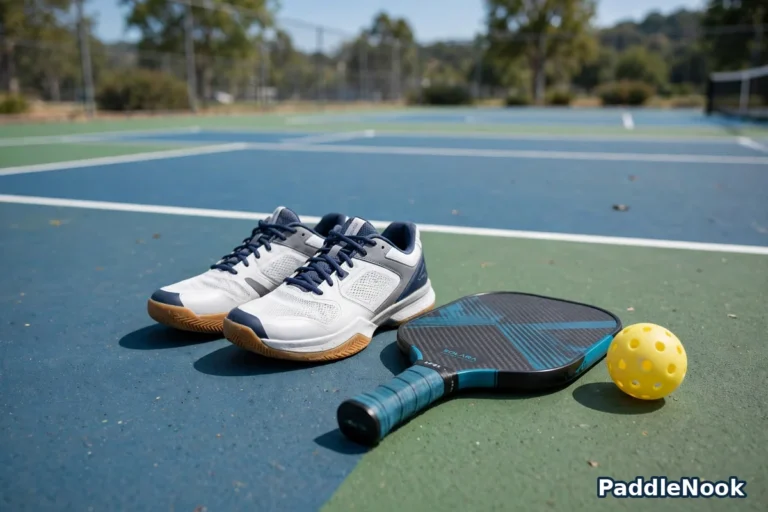
Best Pickleball Shoes for Your Feet and Your Game
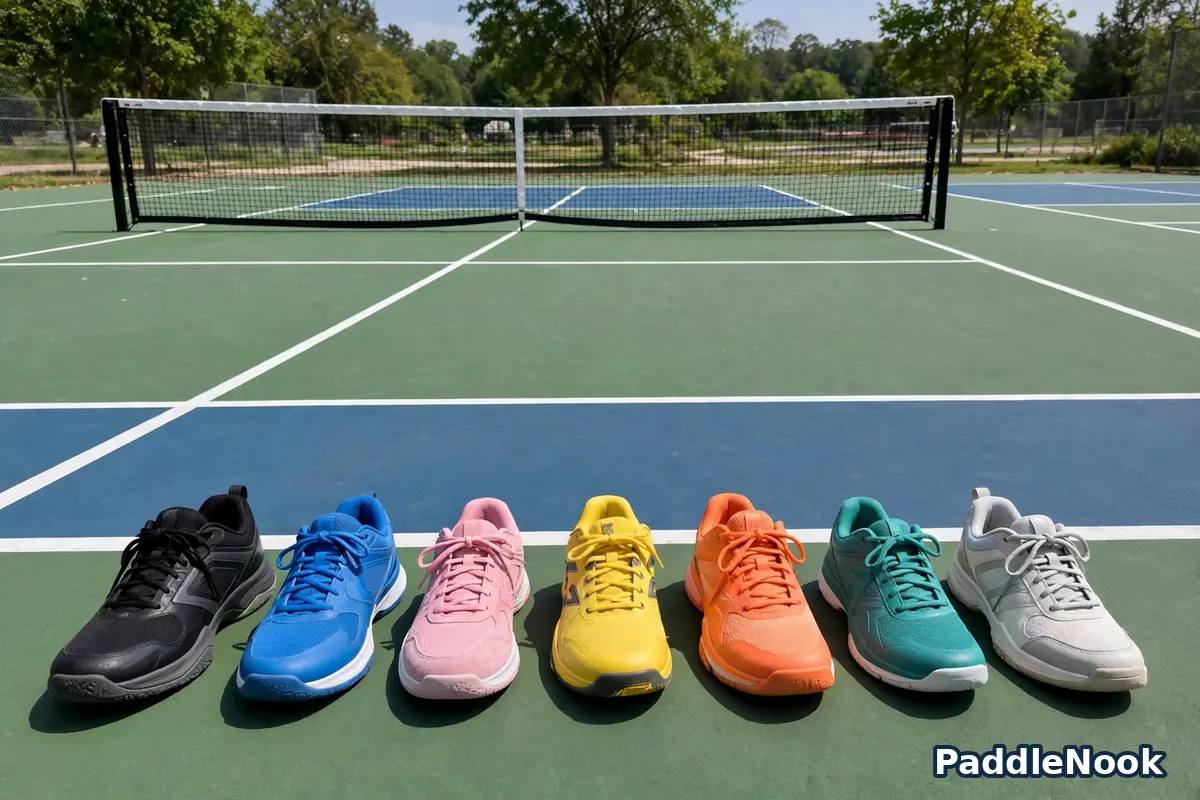
Walk into a shop, search online, and you will find a wall of court shoes that all claim to be the best. That claim means little on its own, because the best shoe for a wide foot is not the best shoe for a fast mover.
Your foot shape, your arch, and the way you play matter far more than a label. This guide to the best pickleball shoes helps you choose by foot type and play style, using generic shoe types only. No model names, prices, or specs are promised here, since prices vary and listings change.
Instead, you will learn what to look for, what to avoid, and how to test a pair before you commit. Use this guide as a shortlist tool, not as a ranking, and let your own feet make the final call every time. Trust that test over any label.
What are the best pickleball shoes by foot type?
The best pickleball shoes depend on your feet, not a single ranking: wide feet need a true wide fit, flat feet need firm arch support, high arches need cushioning, and narrow feet need a snug heel. Always test fit with playing socks and sideways shuffles before buying.
Start with your feet, not with a bestseller list. The table below matches common foot types to the shoe traits that tend to help most.
| Foot type | Look for | Avoid |
|---|---|---|
| Wide feet | A true wide fit, roomy toe box, soft upper that does not pinch | Sizing up in a narrow shoe, which leaves the heel loose |
| Flat feet or low arches | Firm arch support, stable midsole, structured heel counter | Very soft, flat shoes with no arch shape |
| High arches | Cushioned midsole, good shock absorption, room for an insole | Thin, hard soles with little padding |
| Narrow feet | Snug heel and midfoot, laces that pull the shoe closed evenly | Roomy wide fits that let the foot slide sideways |
| Sensitive toes or bunions | Wide, soft toe box and seamless front panels | Stiff, narrow toe areas that rub |
Bring insoles or orthotics when you try shoes on, since a shoe that fits without them may feel tight with them in. Try both shoes, buy for the larger foot, and adjust lacing on the smaller one.
Best pickleball shoes by play style
How you move matters just as much as foot shape. Match the shoe to your game.
Quick movers who dart, lunge, and change direction often need a light, low shoe with strong side support and a grippy outsole. The shoe should feel close to the ground, so stops feel controlled rather than wobbly.
All-day players who play for hours need cushioning first, plus breathable mesh and a comfortable toe box. A slightly heavier shoe is fine if it keeps feet fresh in the third game. Comfort over a long session beats a light feel that fades fast.
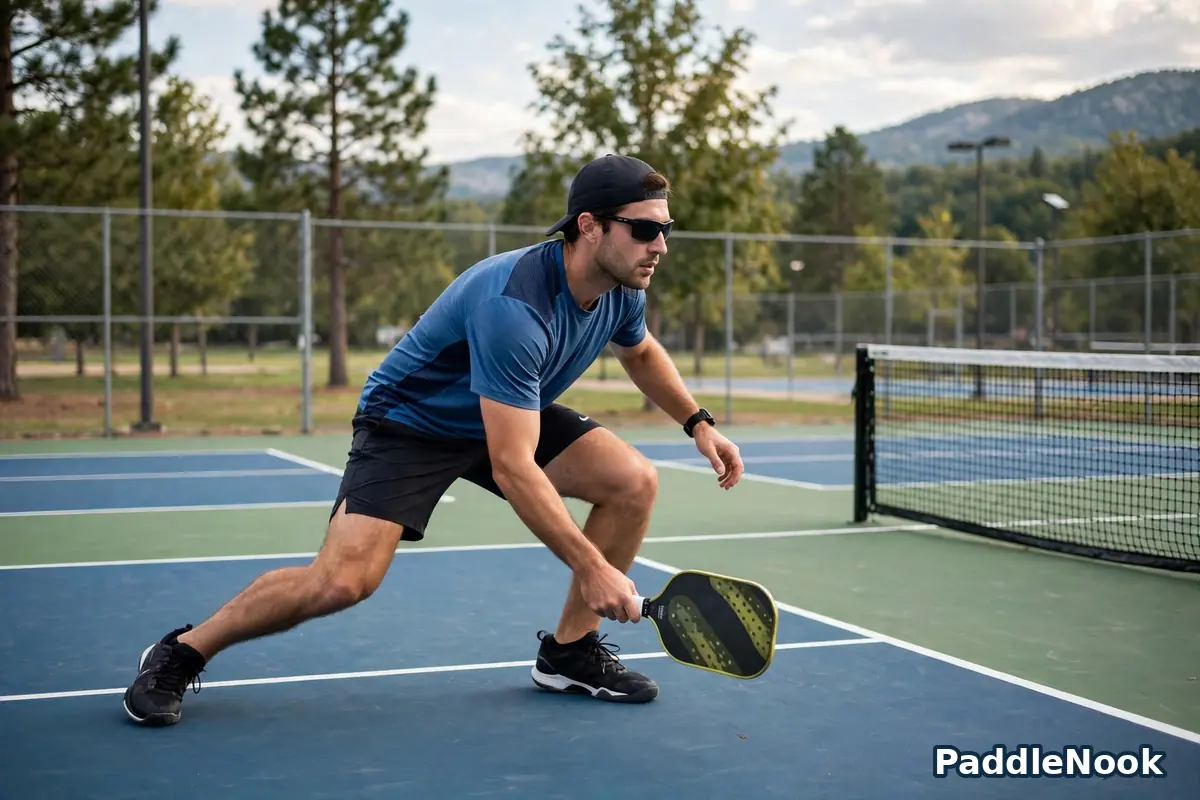
Power players need a stable base and reinforced toe, since lunges wear the front of the shoe. Weekly social players can choose a balanced all-court shoe and focus on fit and grip. Watch your own game: do you move a lot, or place shots? Your answer points to the right traits.
Fitting mistakes that ruin good pickleball shoes
Even a good shoe type fails with a poor fit. These mistakes show up again and again.
- Buying the same size as your running shoes without trying court shoes on. Court fits vary by shape, not just length.
- Choosing a shoe that feels fine standing still but slides sideways when you shuffle. Always test side steps in the shop.
- Ignoring width. A longer shoe does not fix a narrow shoe, and it leaves the heel slipping.
- Skipping your playing socks. Thick or thin socks change the fit more than most people expect.
- Breaking in new shoes during a tournament or a long session. Wear them for a short hit first.
Price is not a fit test. Prices vary by shop and season, so check current listings, and judge the shoe by feel, not by its tag. For the basics, see how shoe parts and grip work.
Quick chooser: put foot type and style together
Use this short routine to narrow your choice in a shop or online listing.
- Name your foot type from the table above, and filter for that fit first.
- Name your play style, and pick the traits for that style second.
- Check the surface you play on most. Outdoor play needs tougher rubber, as explained in our indoor-versus-outdoor surface guide.
- Try the pair with playing socks, then shuffle sideways and lunge gently.
- Keep the pair only if heel, midfoot, and toes all feel right at once.
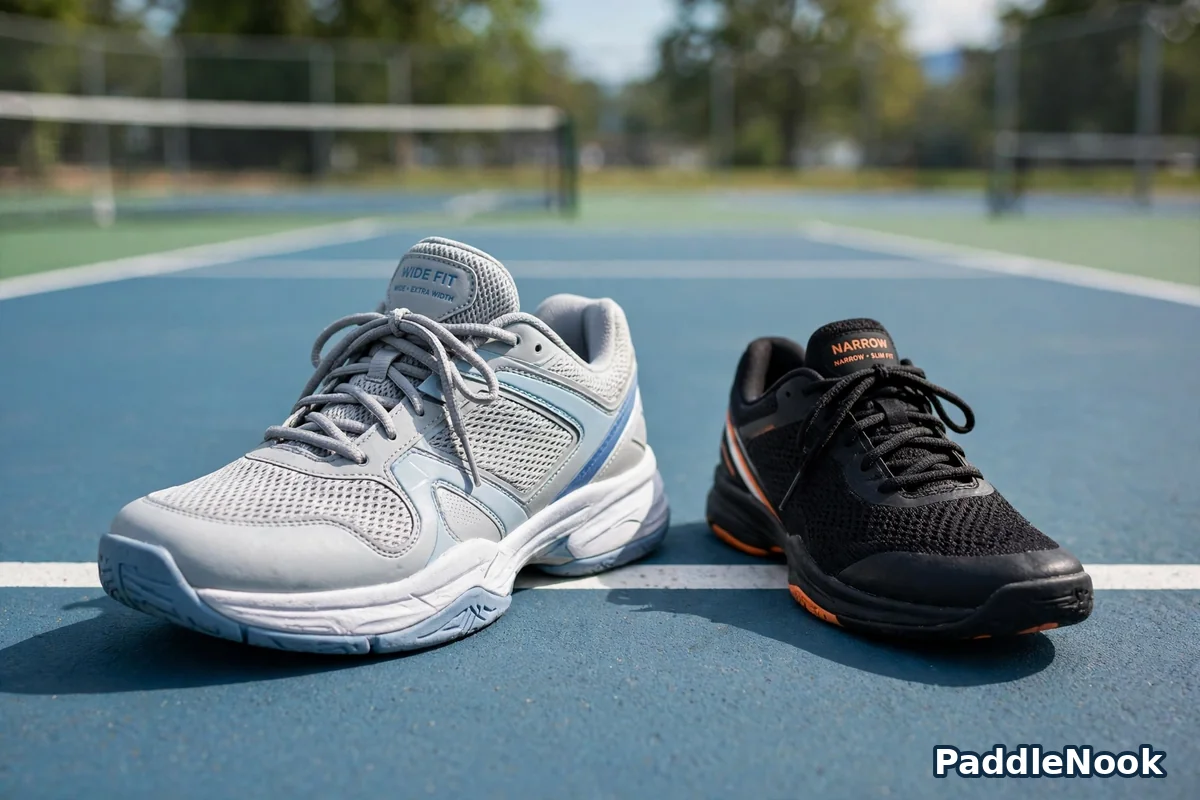
If no pair passes all three fit points, keep looking. A near miss in the shop becomes a clear miss after an hour on court. For general shoe and kit advice, see our packing guide for your kit. For wider foot-health guidance, see the podiatrist guide to pickleball shoes and the Better Pickleball shoe guide.
People Also Ask
What are the best pickleball shoes for wide feet?
Look for a true wide fit with a roomy toe box, not a size up in a narrow shoe. Test width with a sideways shuffle, and check the heel stays put.
What are the best pickleball shoes for flat feet?
Choose firm arch support, a stable midsole, and a structured heel. Soft, flat shoes with no arch shape tend to tire flat feet faster.
Are expensive pickleball shoes always better?
No. Fit, side support, and grip for your surface matter more than price. A mid-priced pair that fits well beats a costly pair that pinches or slides.
How do I know if pickleball shoes fit correctly?
Your toes should wiggle, your heel should stay put, and your foot should not slide sideways when you shuffle. Any hot spot in the shop will likely become a blister on court.
Do I need different shoes for indoor and outdoor pickleball?
Not always for casual play, but frequent players often prefer tougher outdoor soles and non-marking indoor soles. Match the shoe to where you play most.
Conclusion
The best pickleball shoes fit your feet and suit your game. Start with foot type, add play style, test fit with real side steps, and ignore hype about one winner for everyone. Do that, and you will pick a steady, comfortable pair.