
Pickleball Singles Rules: Ultimate Faults and Fixes
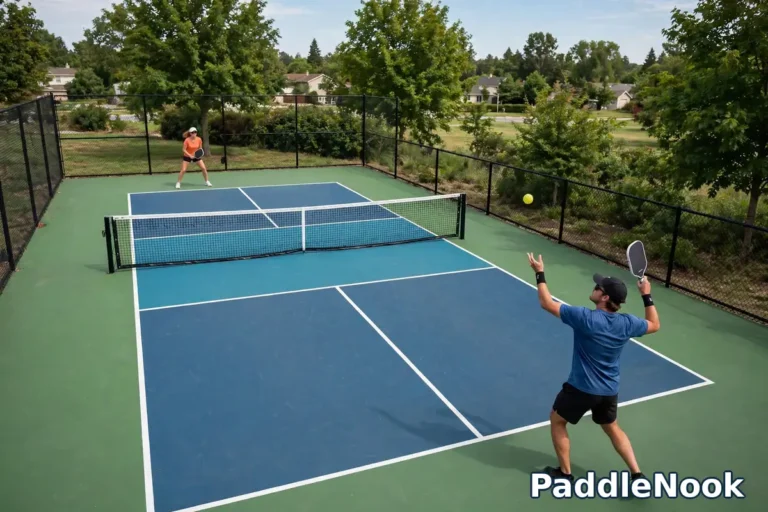
Pickleball singles rules are easy to read and hard to keep under pressure. When you are alone on court, a wrong serve side, a kitchen volley, or a missed score call can cost you a point before you have time to think. There is no partner to remind you, so the fixes have to live in your own routine, not in a list you read once.
This guide takes the fault-first route. Instead of another plain list, it shows the mistakes solo players make most, why each one is a fault, and the small fix that stops it happening again. Use it as a pre-game check, then as a quick review after a game that felt messy, and keep one fix in mind for the next game. For the basic game in full, see a plain-English definition of the sport.
What Are the Pickleball Singles Rules, Fault First?
Pickleball singles rules, fault first, are: serve underhand and diagonally or lose the serve, and let the serve and return bounce or lose the rally. Never volley from the kitchen, score only while serving, call two numbers before serving, serve from the side your score sets, and play to 11 points with a win by 2.
If you can name the fault for each rule, you can spot it in your own game before it repeats. That habit alone will save you several points in every match.
| Fault | Fix in one line |
|---|---|
| Serve from the wrong side | Check your score: even right, odd left |
| Volley from the kitchen | Step back, let it bounce, then hit |
| Volley before two bounces | Wait for the return to bounce first |
| Serve into the kitchen | Aim past the kitchen line, not at the net |
| No score call | Say two numbers before every serve |
How Do You Fix a Wrong Serve Side?
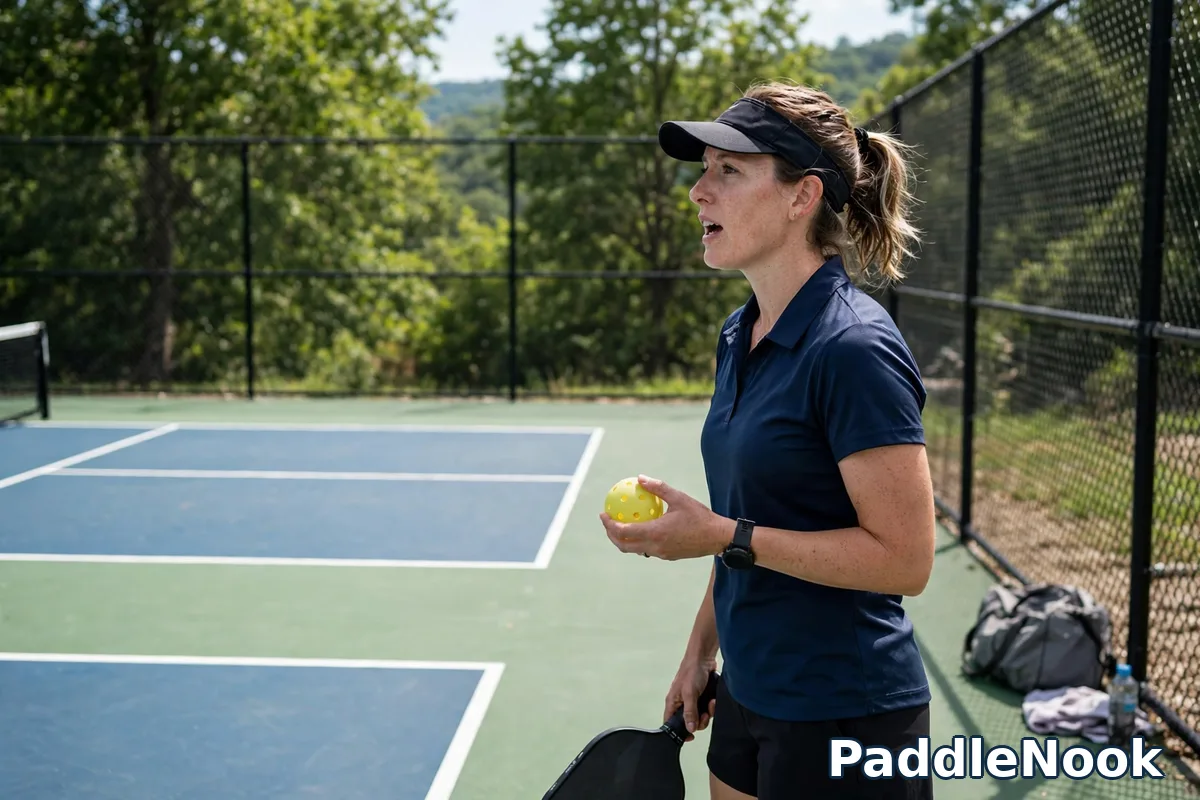
Serving from the wrong side is a fault in singles, and it is easy to do when the score changes fast. The fix is a two-second check: say your score out loud, then step to the side it sets. Even score means right, odd score means left.
Make the check part of your serve routine, not an extra thought. Bounce the ball once, say the score, look at your side, and only then serve. That pause costs nothing and saves many lost serves.
How Do You Serve Legally Every Time?
A legal serve has five parts, and missing any one is a fault. Hit underhand with an upward arc, keep the paddle below your waist and head below your wrist, keep a foot behind the baseline, and send the ball diagonally past the kitchen line.
Practice the serve slowly before a game, not at full speed. A calm, deep serve in the box beats a fast serve that clips the net or lands short. If a serve clips the net but still lands in the right box, it stays live.
How Do You Avoid Kitchen Faults Alone?
The kitchen fault is the most common solo fault near the net. You may not volley while standing in the 7-foot zone or on its line, and you may not step into it because of momentum after a volley. The ball must bounce first.
The fix is foot discipline, not less aggression. Step into the kitchen only after the bounce, hit the soft shot, then step back out. Momentum after a volley still counts. A full singles serving and rules guide is given in this pickleball rules for singles guide.
How Does Singles Scoring Differ From Doubles?
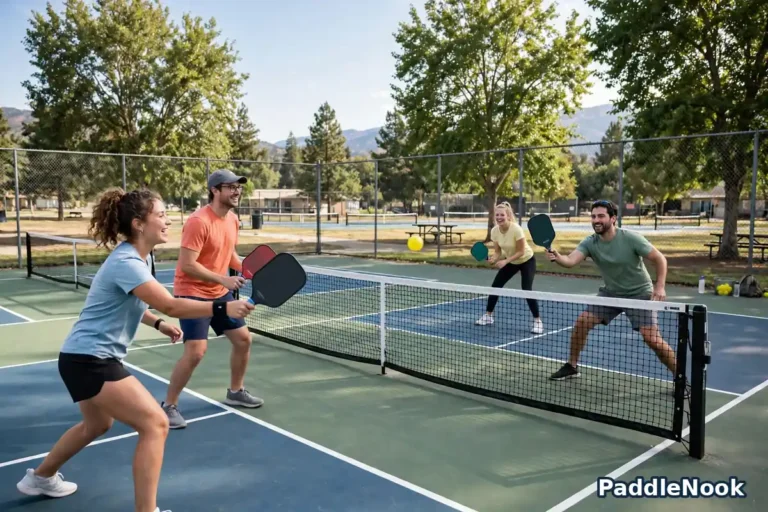
Singles scoring uses two numbers, while doubles uses three. In singles, you call your score and then your opponent’s score, and the serve passes at once when the server loses a rally. In doubles, the serve passes to a partner first, and only then to the other team.
Only the serving player scores in singles, just as only the serving team scores in doubles. Games usually go to 11 points, win by 2, though some games are played to 15 or 21. For scoring detail, see the simple scoring rules guide.
How Do You Make Fair Line Calls Alone?
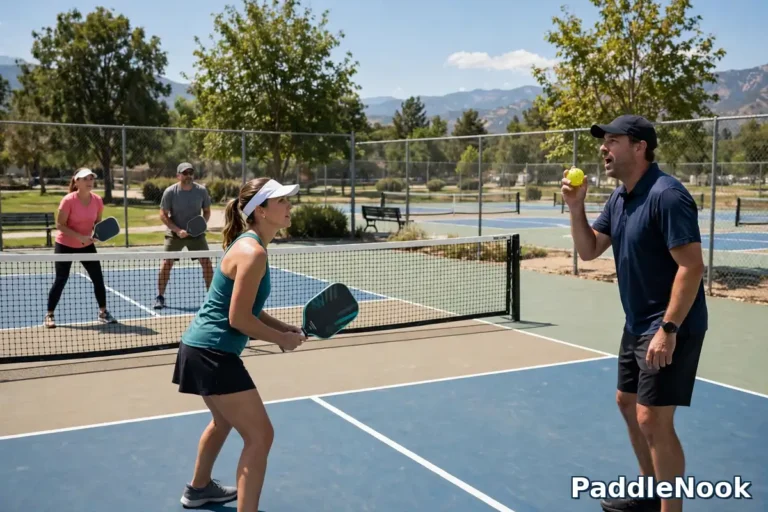
You call the lines on your side, and your opponent calls theirs. A ball touching any part of a line is in, so call it in unless you clearly saw it out. If unsure, give your opponent the benefit of the doubt.
Make calls at once, in a clear voice, and do not replay a point just because a call was close. If a call is disputed, return to the last score both players agreed on. Fair, fast calls keep a solo game moving.
Singles Versus Doubles: What Changes?
| Point | Singles | Doubles |
|---|---|---|
| Players per side | One | Two |
| Score call | Two numbers | Three numbers |
| After a lost serve rally | Side-out at once | Serve passes to partner first |
| Court to cover | Whole side | About half the court |
| Kitchen rule | Same: no volley from the zone | Same: no volley from the zone |
The court, net, and kitchen do not change between formats. What changes is who covers the court, who serves next, and how many numbers you call. Knowing those three changes is enough to switch formats.
People Also Ask
Can you serve twice in singles?
No. You get one serve attempt per rally in singles. A serve that clips the net and still lands in the correct box stays live and is not a second serve.
What is the most common singles fault?
A kitchen volley is one of the most common faults, along with serving from the wrong side. Both are fixed by a short routine: check your feet, check your score, then play.
Do you switch sides after every point in singles?
You switch sides after every point you score while serving. If you lose the rally, the serve passes to your opponent, who then serves from their own score side.
How long is a singles game?
Most singles games go to 11 points, and you must win by 2 points. At 10-10, play continues until one player leads by 2, so a game can end 12-10 or later.
Conclusion
Solo games are won by routines, not by a long list under pressure. Check your score side, serve underhand and diagonal, let the first two shots bounce, step out of the kitchen before you volley, and call two numbers. For doubles contrast, see a clear doubles rules overview.
Review one fault after each game, fix that fault next time, and your singles game will tighten fast. Another guide is given in this singles rules and serving guide.