

Singles Pickleball Rules: Your Ultimate First Game
Singles pickleball rules make most sense when you follow them through a real game, not as a list on a page. Before the first serve, you agree the finish line and who serves first. During the game, you serve from the side your score sets, and you cover the whole court alone. At the end, you must win by 2, even if the score is tied at 10-10, and that finish tests your routine most.
This guide walks you through that first solo game in order. It is written for a new player who knows the basic game but has never played alone on court. By the last section, you will know what to do at each stage, what to check when a rally feels confusing, and how to stay steady when points get close. For the wider game first, see a friendly overview of the whole sport.
What Are the Singles Pickleball Rules for a First Game?
Singles pickleball rules for a first game are: agree to play to 11 points, win by 2, start serving from the right at 0-0, and serve underhand and diagonally. Let the serve and return bounce, never volley from the kitchen, score only while serving, and call two numbers before each serve.
Keep that timeline in mind. Each stage of the game below will feel like the next step, not a new rule to learn.
Before Play: What Do You Agree First?
Agree on the finish line, usually 11 points, win by 2, and on who serves first. Check the court lines, the net height, and that you both know a ball touching a line is in. A short chat before play stops most mid-game debates.
Warm up with a few serves and returns, not just rallies. Practice one serve from the right and one from the left, so your body knows both sides before the score matters. A calm warm-up also helps you settle into the solo pace.
First Serve: How Does the Game Start?
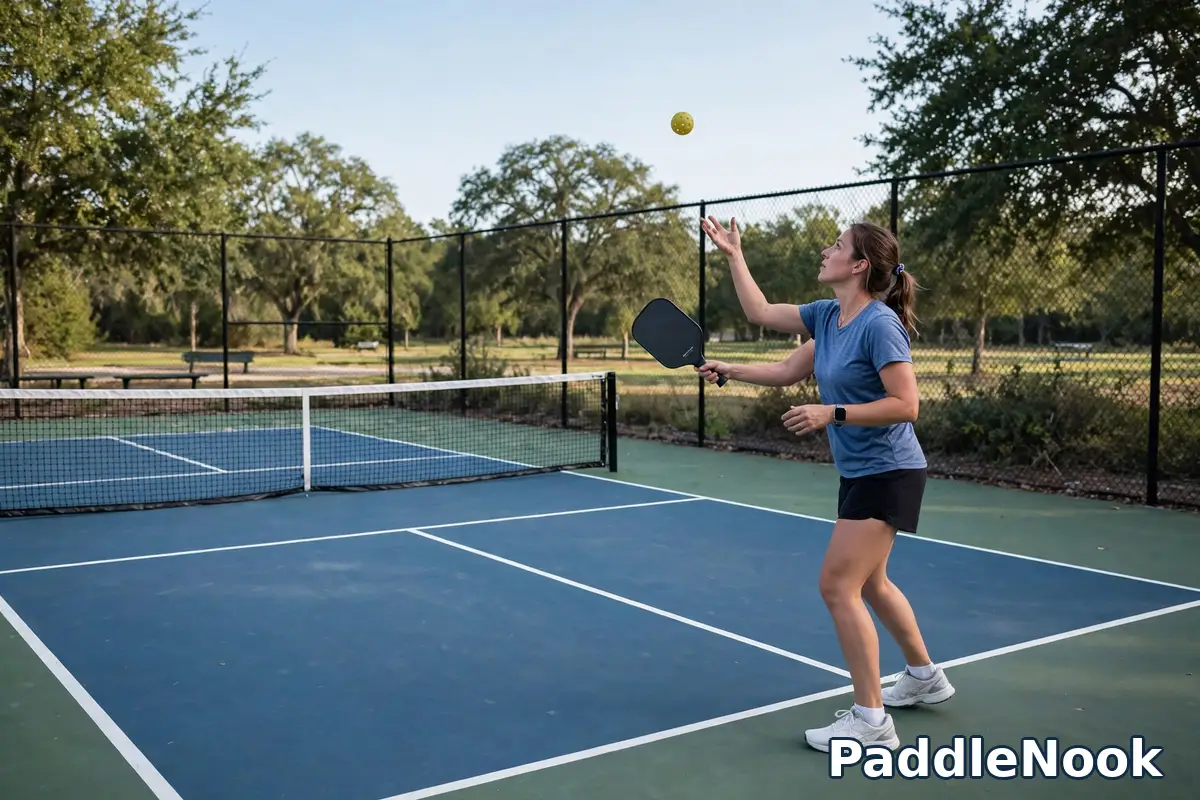
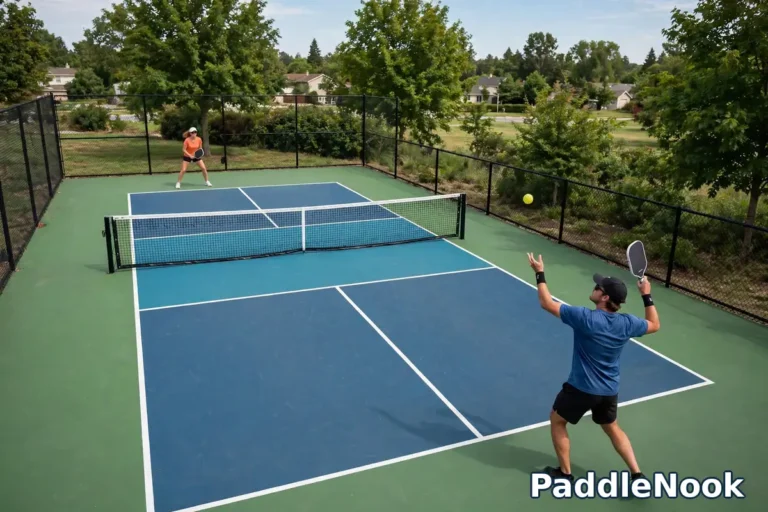
The first server starts from the right side, because both scores are 0, which is even. Call “0-0” before you serve, then serve underhand and diagonally into the opposite box, past the kitchen line. Your opponent must let the serve bounce before returning it.
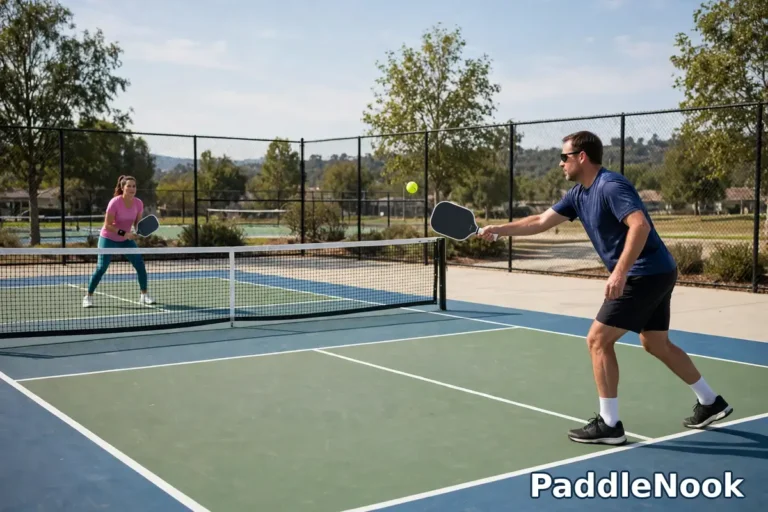
You must then let the return bounce before you hit it. That is the two-bounce rule, and it applies to every rally, not just the first one. After those two bounces, the rally is open and either player may volley.
Mid-Game: How Do You Stay in Position?
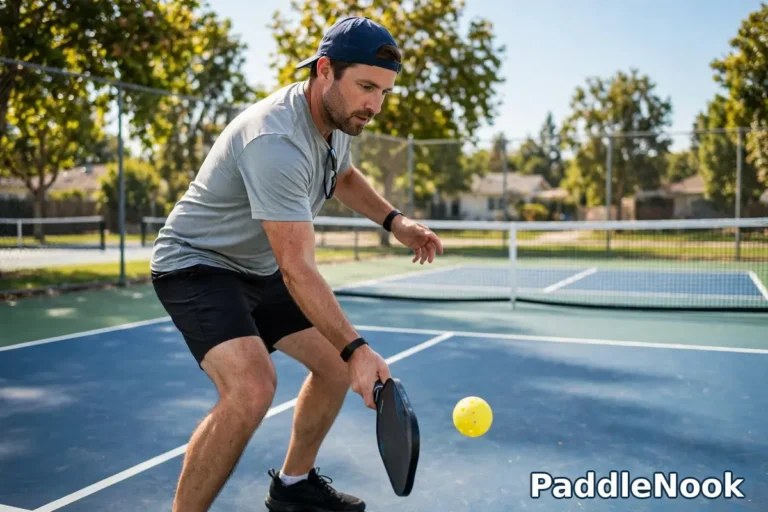
After each shot, return toward the middle of your side, ready to move left or right. Deep shots push your opponent back and give you time to recover, while short shots can win points but leave you open if they are reached. Mix depth and placement, rather than hitting every ball as hard as you can.
Move in small, quick steps, not long lunges that leave you off balance. Good court shoes help with those side steps, as explained in a plain guide to the best court shoes. Rest briefly between rallies, drink water, and reset your serve routine before the next point.
Score and Side-Outs: What Changes as the Score Grows?
Your score sets your serve side for the whole game. Even scores mean the right side, odd scores mean the left side, and you switch sides each time you score while serving. Call two numbers before every serve, your score first, so both players track the game.
When you lose a rally while serving, the serve passes at once to your opponent, in a side-out. Your opponent then serves from the side their own score sets, starting from the right if their score is even. A full rules reference is given in this official singles rules guide.
Kitchen and Line Calls: What Do You Watch?
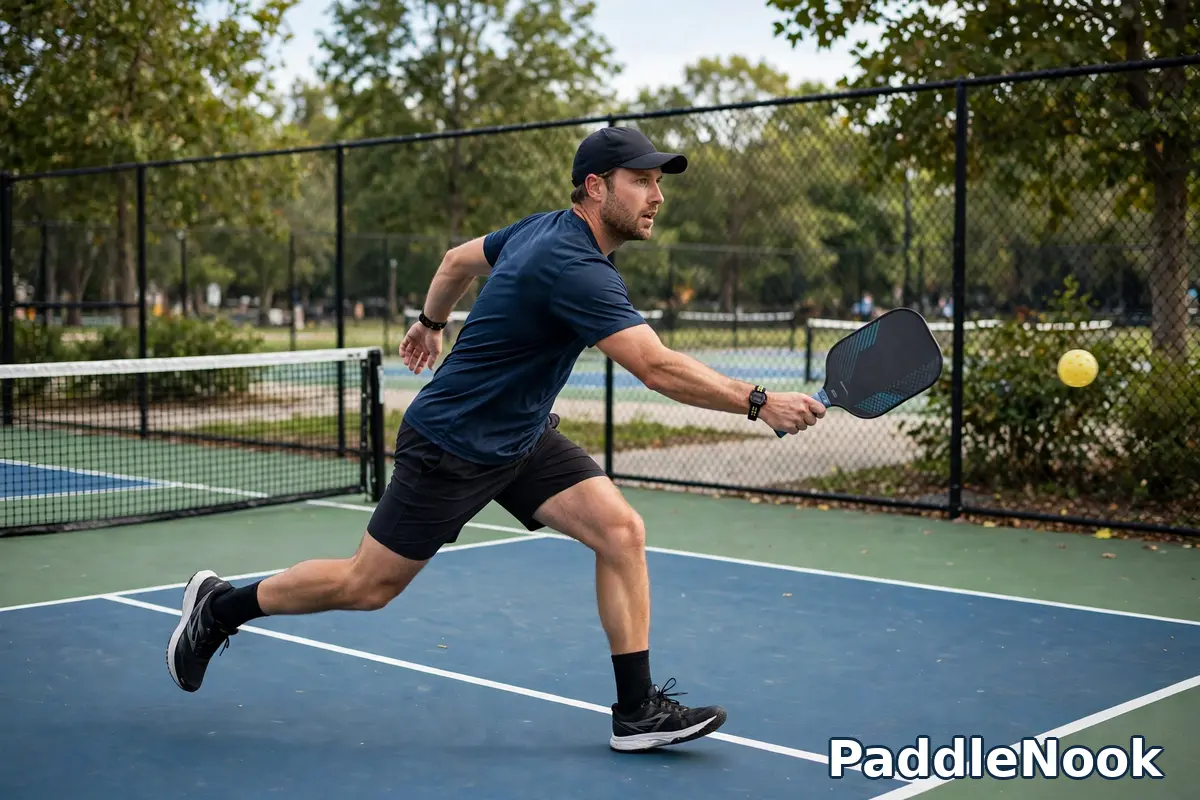
Watch your feet near the net most of all. You may enter the kitchen to hit a ball after it bounces, but you may not volley from the kitchen or on its line. If your momentum carries you in after a volley, that is still a fault, so step back before you volley again.
For line calls, you call your own side and your opponent calls theirs. A ball on any part of a line is in, and an unsure call should go to your opponent. Clear, quick calls keep a first solo game friendly, even when points are close.
Finish Line: How Does a Singles Game End?
A game ends at 11 points only if the leader is ahead by at least 2 points. At 10-10, the game is not over, and play continues until one player leads by win by 2, such as 12-10 or 13-11.
Some games are played to 15 or 21, still win by 2, so agree the finish line before you start.
Do not rush the last points. Use the same serve routine, the same score call, and the same return to the middle that worked all game. For the shared rules behind both formats, see the complete simple rules guide.
People Also Ask
Do singles and doubles use the same court?
Yes. Both formats use a court 20 feet wide and 44 feet long, with the same net and kitchen. The difference is that one player covers each side in singles.
What score do you call in singles?
Call two numbers before serving: your score, then your opponent’s score. There is no third number, because there is no partner rotation in singles.
Can you win a singles game 11-10?
No. You must win by at least 2 points, so 11-10 does not end the game. Play continues until one player leads by 2 points.
Is singles harder than doubles?
Singles is harder on movement, because you cover the whole court alone. Doubles is harder on teamwork and rotation, because you must track a partner’s serve too.
Conclusion
Your first solo game will go well if you follow the timeline: agree the finish line, start from the right at 0-0, serve underhand and diagonal, let the first two shots bounce, call two numbers, and finish win by 2. Those steps are the whole game, in the order you will use them.
Play at a steady pace, return to the middle after each shot, and keep your calls fair and clear. A singles-versus-doubles comparison is given in this singles versus doubles rules guide.


One Comment