
1v1 Pickleball Rules: The Ultimate Beginner Guide
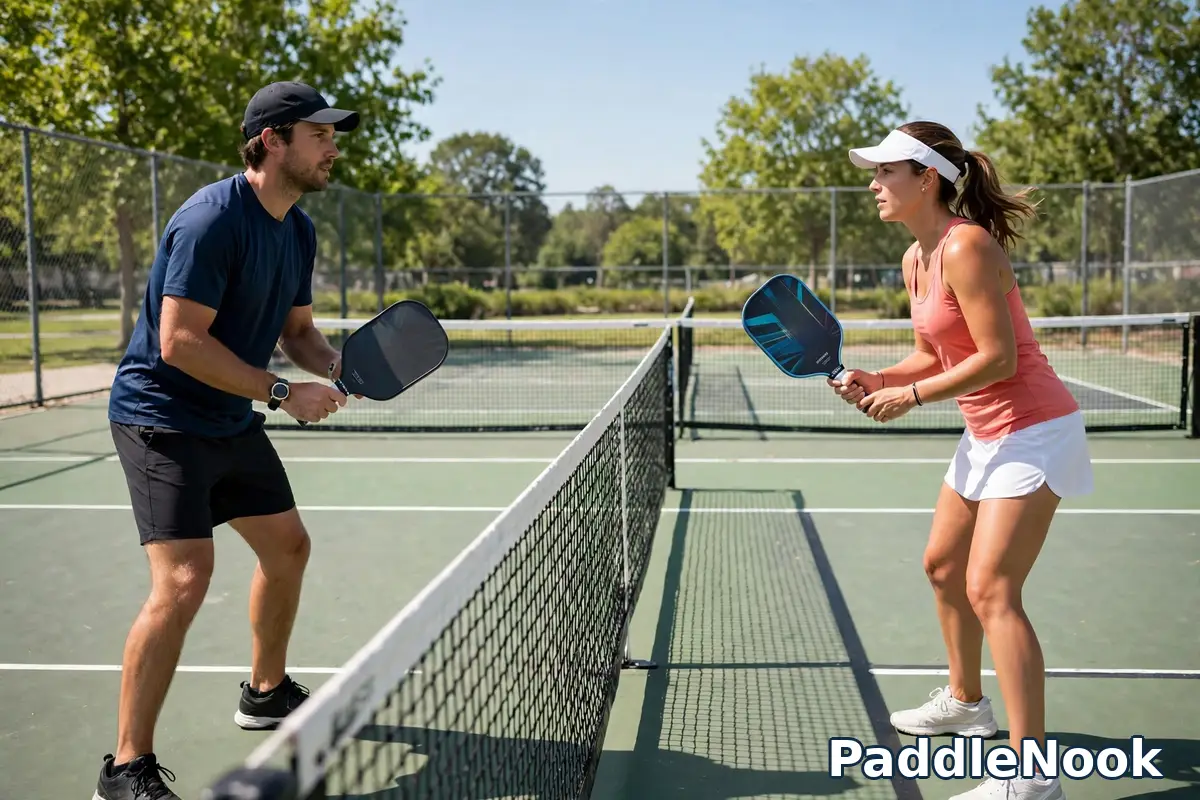
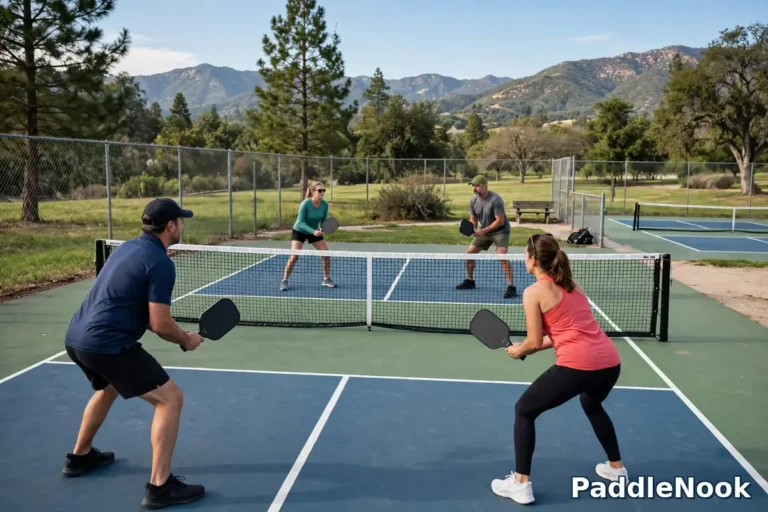
The 1v1 pickleball rules are the rules for a singles game, where two players face each other with no partners. If you have played doubles, most of the game will feel familiar. The court, the paddle, the ball, and the kitchen all stay the same, but you now cover the whole court alone, with no one to cover for you. It is fast, direct, and honest: every shot is yours, and every error is yours too.
That change shapes everything else in this guide. You will learn the serve, the score, and the faults, plus one habit that helps every beginner: returning to the centre after each shot. Read this before your first 1v1 game, and you will know what to expect from the first serve to the last point. By the end, you will know the serve, the score, and the one habit that helps most.
What Are the 1v1 Pickleball Rules in Short?
The 1v1 pickleball rules in short are: two players, one per side, on the full court; serve underhand and diagonally past the kitchen; let the serve and return each bounce once; score only when serving; call two numbers before serving; and play to 11 points, winning by 2.
Those six lines are enough to start a friendly game. The sections below add the details that stop confusion, such as where to stand, what counts as a fault, and how to pace yourself.
What Do You Need for a 1v1 Game?
You need very little: a paddle each, one ball, and a court with a net. Court shoes with good grip help a lot, because singles involves more quick stops and turns than doubles.
The court is the same size as a doubles court, with the same net and kitchen. For a plain-English overview of the sport, see a simple definition of the game.
Agree on the basics before play: the target score, usually 11, win by 2, and who serves first.
How Do You Serve in a 1v1 Game?
Serve underhand, from behind the baseline, into the diagonally opposite service box. The serve must clear the kitchen and land past the kitchen line. At contact, your paddle must move in an upward arc, and the ball must be struck below waist level.
Keep at least one foot behind the baseline when you serve, and do not step on the line before contact. Serve from the right side when your own score is even, and from the left side when it is odd. Zero is even, so the game starts on the right.
You have one serve attempt per rally. If it lands in the kitchen, in the net, or out, it is a fault, and your opponent takes the serve.
How Does Scoring Work in 1v1?
Only the serving player can score. This is the rule that surprises most new singles players. If you win a rally while receiving, you win the serve, but you do not win a point. You must then win a rally on your own serve to score.
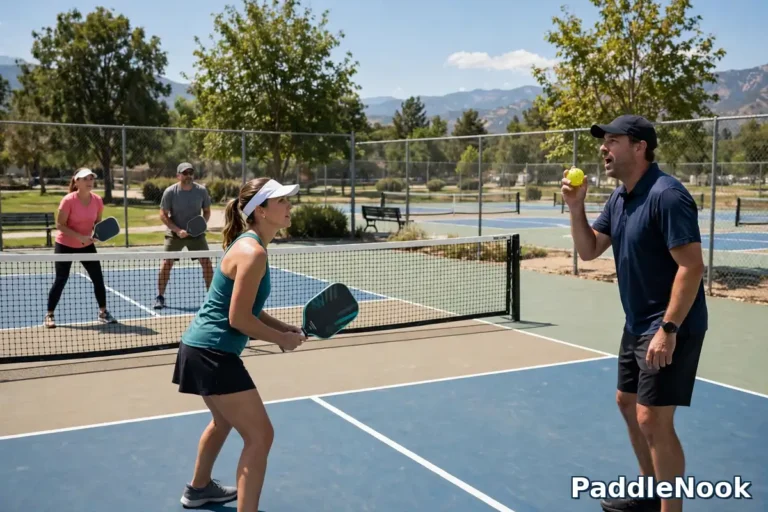
Before every serve, call two numbers: your score first, then your opponent’s score. For example, “6-4” means you have 6 and your opponent has 4, and you are about to serve. There is no third number in 1v1, because there is no second server.
When you score, switch sides and serve again. That change is called a side-out, and it happens far more often in singles than in doubles.
What Does the First Few Points Look Like?
Picture a game starting at 0-0. You serve from the right, and your opponent returns deep. You must let that return bounce.
If you win the rally, the score becomes 1-0, and you now serve from the left. If you lose the next rally, the serve passes to your opponent, who serves from the right and calls “0-1”. Use position to check the score: right means even, left means odd.
Where Should You Stand During a Rally?
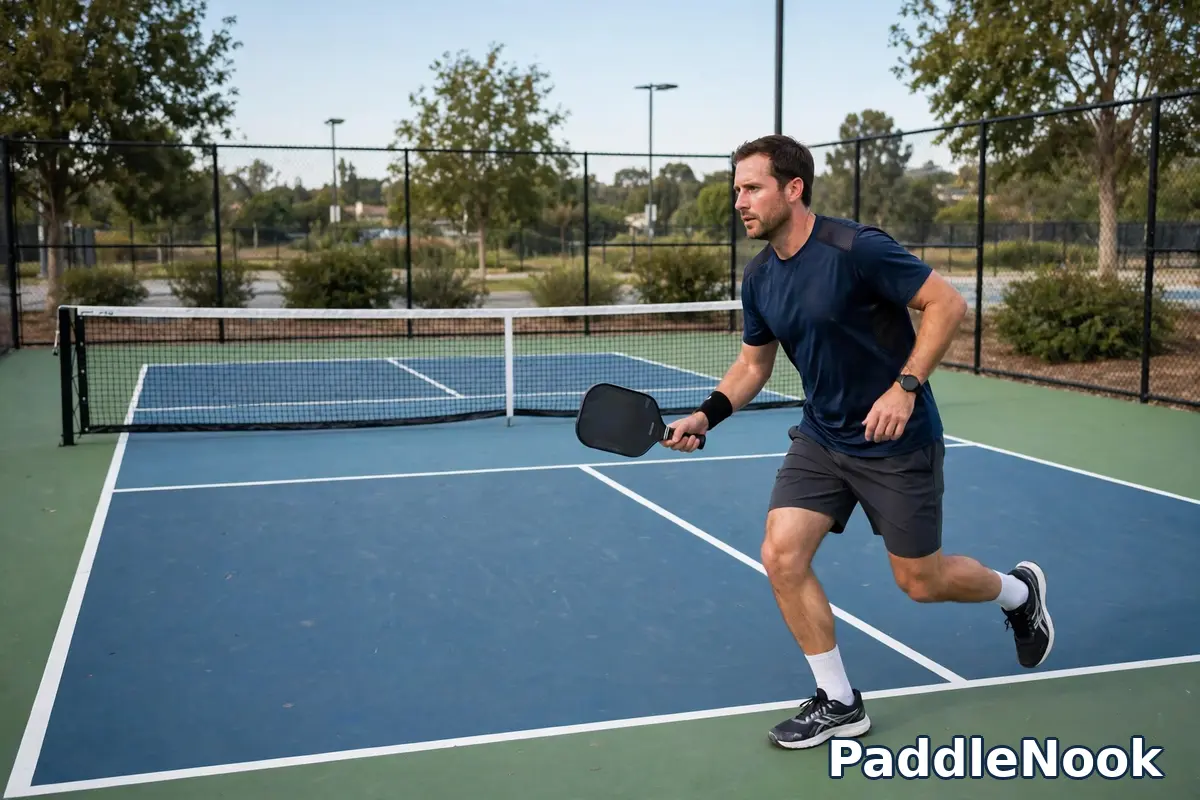
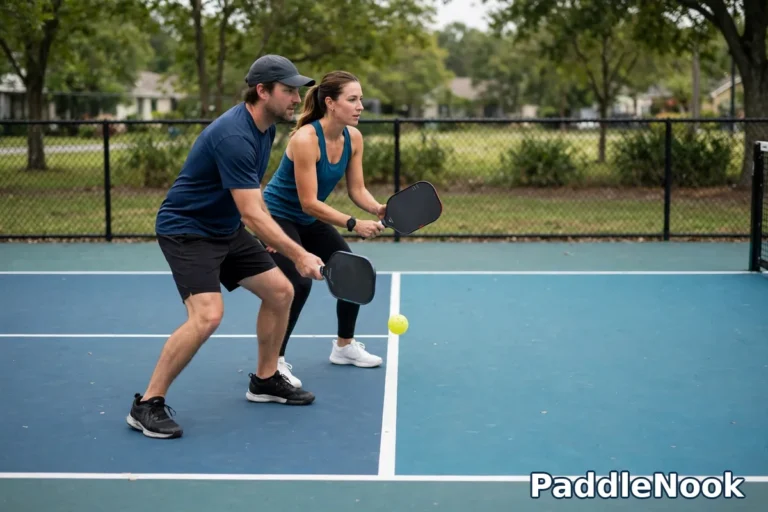
After most shots, move back toward the centre of your side, just behind the kitchen line. For the full court layout, see a zone-by-zone tour of the court. This spot is often called home base, because it gives you the shortest path to either corner. From the centre, you can react to a wide shot without a long sprint.
What Counts as a Fault in 1v1?
A fault ends the rally right away. Common faults include hitting the ball into the net, hitting it out of bounds, letting it bounce twice on your side, and volleying while standing in the kitchen. Breaking the two-bounce rule is also a fault.
Line calls are your own job in 1v1, since there is no partner to help. A ball touching any part of a line is in, except a serve on the kitchen line, which is short and out. Call promptly, and give your opponent the benefit of the doubt on close balls.
How Do You Pace a Solo Game?
Singles is more tiring than doubles, so pace matters. Take a short breath between points, and use the score call as a natural pause. For the full rules behind this format, see the complete simple rules guide.
Drink water at sensible breaks, such as when the score reaches 6, or between games in a longer match.
People Also Ask
Is 1v1 the same as singles pickleball?
Yes. 1v1 means one player against one player, which is the singles format, played on the full court with no partners.
How many points do you need to win a 1v1 game?
Usually 11 points, winning by 2. At 10-10, play continues until one player leads by 2 points.
Do you call three numbers in 1v1 scoring?
No. Call two numbers only: your score first, then your opponent’s score. The third number is only used in doubles.
Can you volley the serve in 1v1?
No. The serve must bounce before the return, and the return must bounce before the server’s next shot, under the two-bounce rule.
Conclusion
A 1v1 game is simple at heart: one against one, full court, underhand serve, two bounces, two-number score, and 11 points, win by 2. Add the centre-position habit and a steady pace, and your first solo games will feel far less frantic.
Play one friendly game, and check your score call and recovery after each point. UNLV also sets out the same solo format in its pickleball singles 1v1 rules, and a second starter guide is given in the pickleball singles rules for 1v1 play.


One Comment