
Pickleball 1v1 Rules: Your Ultimate Match Guide
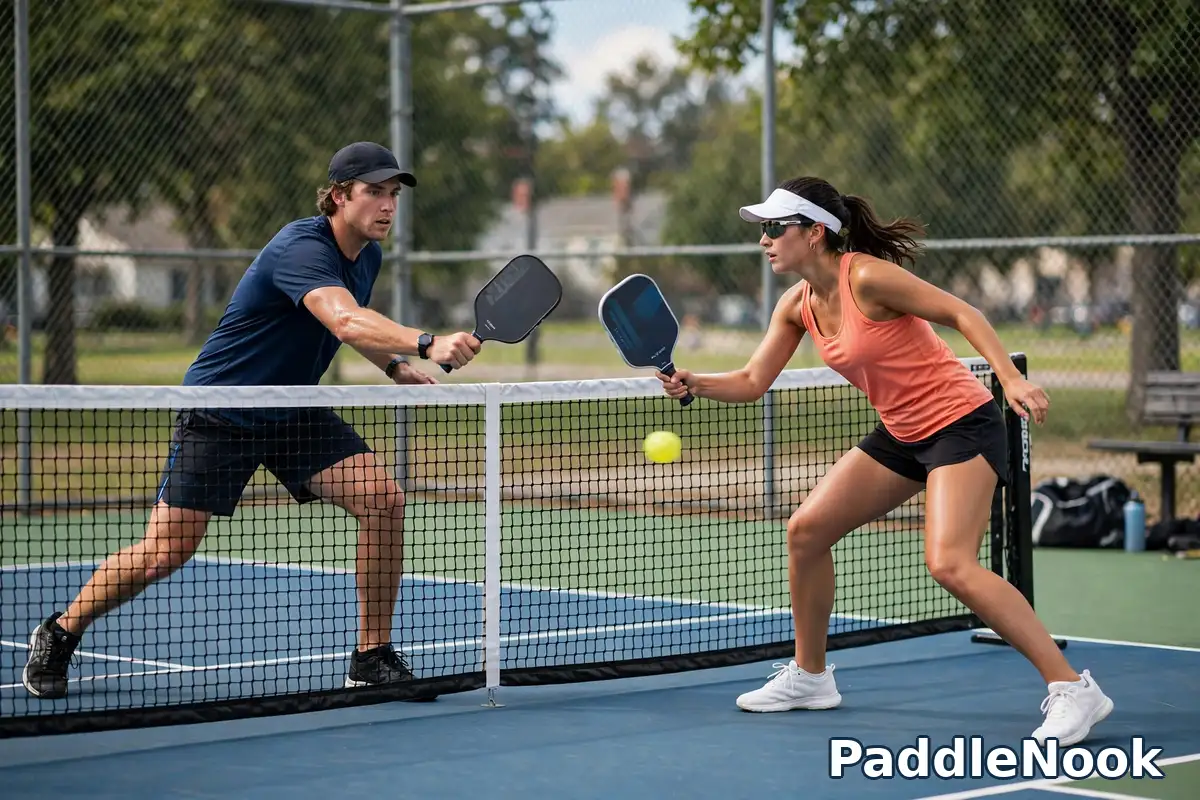
Pickleball 1v1 rules describe a singles match, but a match is more than a list of rules. It is a fair, fast format, and it tests every part of your game. No partner can cover a weak shot, and no partner can save a lost rally. You also need a format, a way to keep score clearly, and a fair way to handle close calls. This guide puts those pieces together, so two players can start a match with no confusion.
Whether your match is friendly or a little more serious, the same habits help. This guide also gives you a dispute plan, so one close call never spoils a good match. Read it once before play. Agree on the format first, call the score every time, and settle disputes calmly. The rules below follow that order, from the pre-match agreement to the final point.
What Are Pickleball 1v1 Rules for a Full Match?
Pickleball 1v1 rules for a full match are: two players on the full court, underhand diagonal serves past the kitchen, two bounces before volleys, points only for the server, two-number score calls, games to 11 points winning by 2, and a clear pre-match agreement on format and close calls.
That summary works for most friendly matches. The next sections explain how to turn it into a smooth match, without stopping every few points to debate a rule.
Agree on the Match Format Before Play
Before the first serve, agree on how many games make up the match. For the full rules behind this format, see the complete simple rules guide.
A single game to 11 is fine for a quick hit. A best-of-three match, where the first player to win two games wins, suits a longer session.
Finally, agree on who serves first and how you will settle a disputed call. In friendly matches, replaying a disputed point is often the fairest choice.
The Court and Equipment Check
Check the court before play: 20 feet wide, 44 feet long, net 36 inches at the sides and 34 inches at the centre, kitchen 7 feet from the net on each side.
Check the ball as well, and keep a spare close, so a cracked ball does not end the session. For the full court layout, see a zone-by-zone tour of the court.
Serve Rotation in a 1v1 Match
Serve underhand, from behind the baseline, into the diagonally opposite service box. The serve must clear the kitchen and land past the kitchen line. Your arm must move in an upward arc, and contact must be below waist level, with the paddle head no higher than your wrist for a volley serve.
Serve from the right when your own score is even, and from the left when it is odd. After you score, switch sides and serve again. After you lose a rally on serve, the serve passes to your opponent, who then serves from the side matching their own score.
Scoring, Side-Outs, and Winning a Game
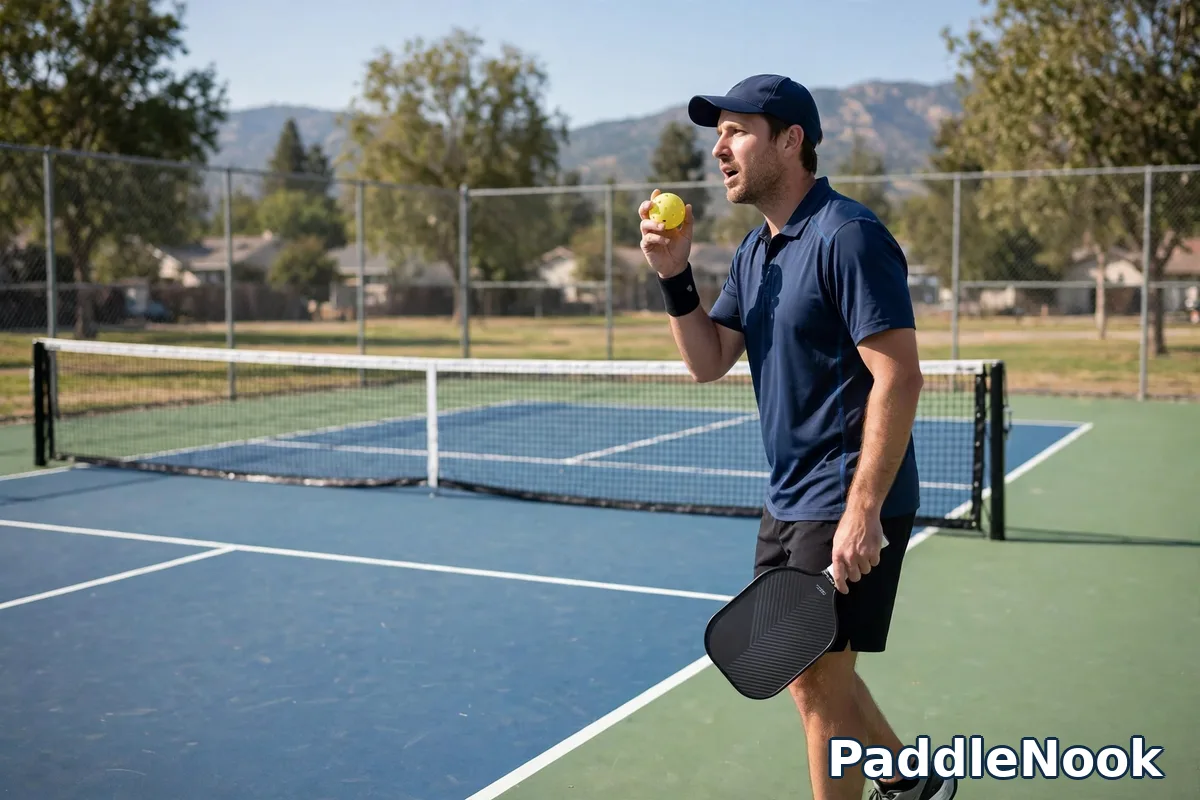
Only the serving player scores in 1v1. Win a rally on serve, and you gain a point. Win a rally as receiver, and you gain only the serve. Call two numbers before serving: your score first, then your opponent’s score, such as “7-5”.
A side-out happens when the server loses a rally. The score does not change, but the serve passes to the other player. Side-outs happen often in singles, so do not treat one as a setback. It is simply the other player’s turn to try to score.
Games are usually won at 11 points, with a lead of at least 2, the win by 2 rule. At 10-10, keep playing until one player leads by 2. In a best-of-three match, rest briefly between games, then start the next game from the right side again, at 0-0.
Rallies, the Kitchen, and the Two-Bounce Rule
Every rally starts with a serve, then follows the two-bounce rule. The serve must bounce before the return, and the return must bounce before the server’s next shot. After those two bounces, volleys are allowed, as long as you stay outside the kitchen.
The kitchen, or non-volley zone, is the 7-foot area on each side of the net. You may not volley while standing in it, or while touching its line. You may enter it for a ball that has already bounced there. If your momentum carries you into the kitchen after a volley, that is a fault.
How to Handle Line Calls and Disputes
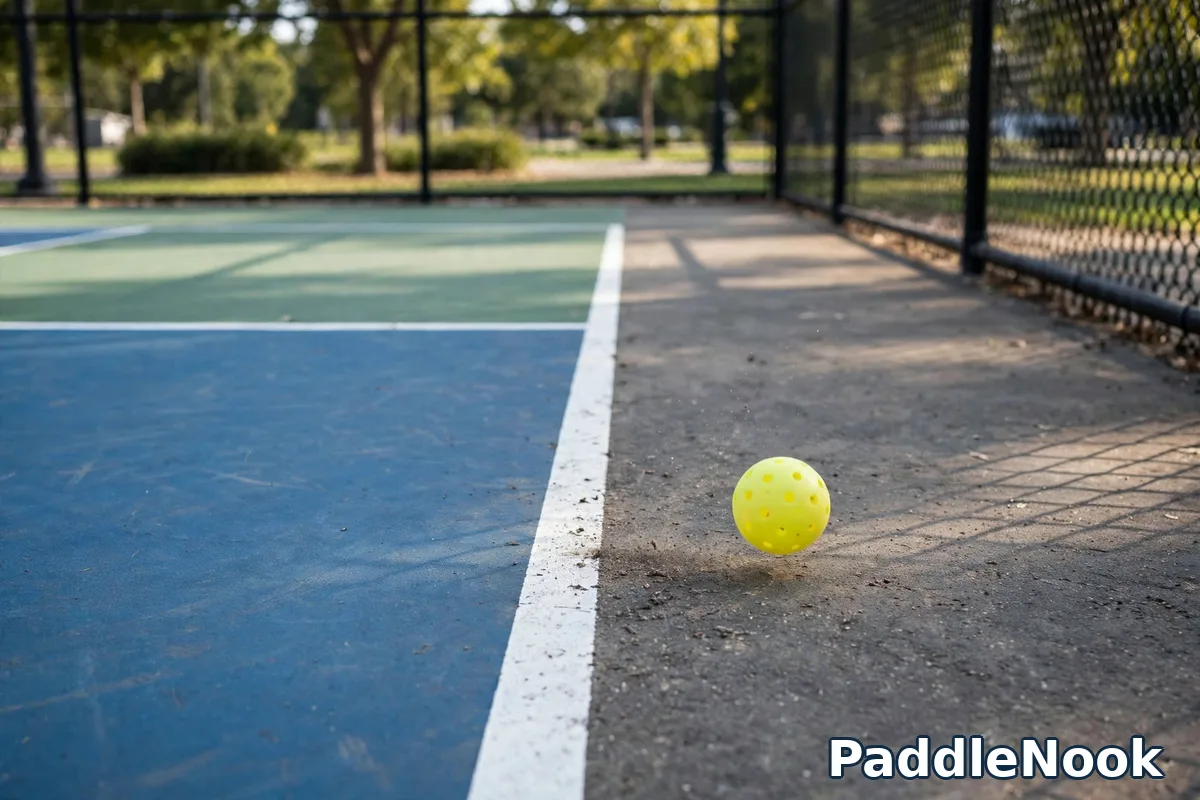
In 1v1, each player calls lines on their own side. A ball touching any part of a line is in, except a serve landing on the kitchen line, which is short and out. Make calls promptly, in a clear voice, so your opponent hears the call and the reason.
If you are unsure, give your opponent the benefit of the doubt and call the ball in. This habit keeps friendly matches fair and calm, and it costs you far less than a long argument. If neither player saw the ball clearly, replay the point, if that was your pre-match agreement.
When the score itself is disputed, go back to the last score both players agreed on. For a full call-it-yourself walkthrough, see the scoring call guide.
People Also Ask
How long does a 1v1 pickleball match take?
It varies with skill and rallies, but a single game to 11 often takes 15 to 25 minutes. A best-of-three match takes longer, with a short break between games.
Do both players serve in each game?
Yes. The serve changes sides whenever the server loses a rally, so both players serve many times during a game.
What happens at 10-10 in a 1v1 game?
Play continues until one player leads by 2 points, so 12-10 wins, but 11-10 does not.
Can a disputed point be replayed?
Yes, in friendly play, if both players agreed on that before the match. If not, the line call on that side of the court stands.
Conclusion
A good 1v1 match starts before the first serve, with a clear format, a fair dispute plan, and a steady score call. Then the rules do their job quietly: underhand serve, two bounces, kitchen control, and points only for the server.
Use the checklist in this guide for your next match, and keep the score call loud and clear. Pickleball Inch also walks through the same solo format in its how to play pickleball singles guide. Pickleball Wiki gives a second full overview in its how to play pickleball singles complete guide.



One Comment