
Pickleball Serve Rules: The Ultimate Legal Serve Guide
Pickleball serve rules sound strict when you first hear them, but they boil down to one idea: start the rally fairly. The serve must be underhand, it must come from behind the baseline, and it must land diagonally past the kitchen. Learn those three checks, and most serve calls in a friendly game will make sense at once. A legal serve also sets a fair tone for the whole game, so both teams can trust the start of every rally.
This guide walks through each check in order, so you can test your own serve before your next game. You will see the legal motion, the foot rule, the landing target, the one-serve rule, and the faults that lose the serve. Use it as a quick check before you play. For the wider rules of the game, see the complete simple rules guide.
What Are the Pickleball Serve Rules in One Answer?
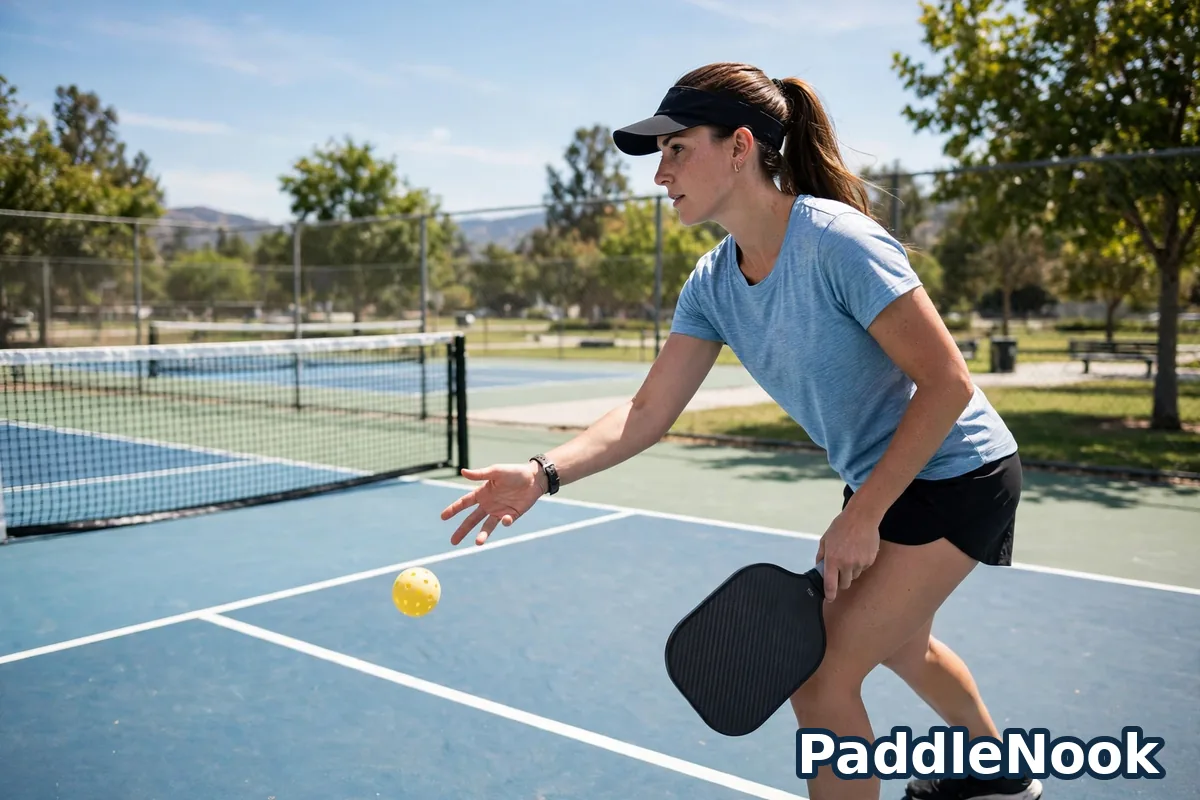
Pickleball serve rules, in one answer, are: serve underhand with an upward arm motion, contact below the waist with the paddle head below the wrist for a volley serve, keep at least one foot behind the baseline at contact, call the full score first, and land the ball diagonally in the opposite service court past the kitchen line.
That answer covers the whole serve, and the rest of this guide shows how each part works on court.
The Three Motion Checks for a Volley Serve
A volley serve is hit out of the air, before the ball bounces. For it to be legal, three motion checks must all pass at the moment of contact. Miss one, and the serve is a fault, even if the ball lands in.
First, your arm must move in an upward arc. Think of a gentle bowling motion, not a tennis smash or a flat sidearm chop. The arm direction matters, not just how low the ball is.
Second, contact must be below your waist, at navel height. A chest-height strike is illegal, even with an upward swing. Drop your release and bend your knees.
Third, the paddle head must not rise above your wrist at contact. Keep your wrist firm and the paddle face slightly upward.
Where Must Your Feet Be?
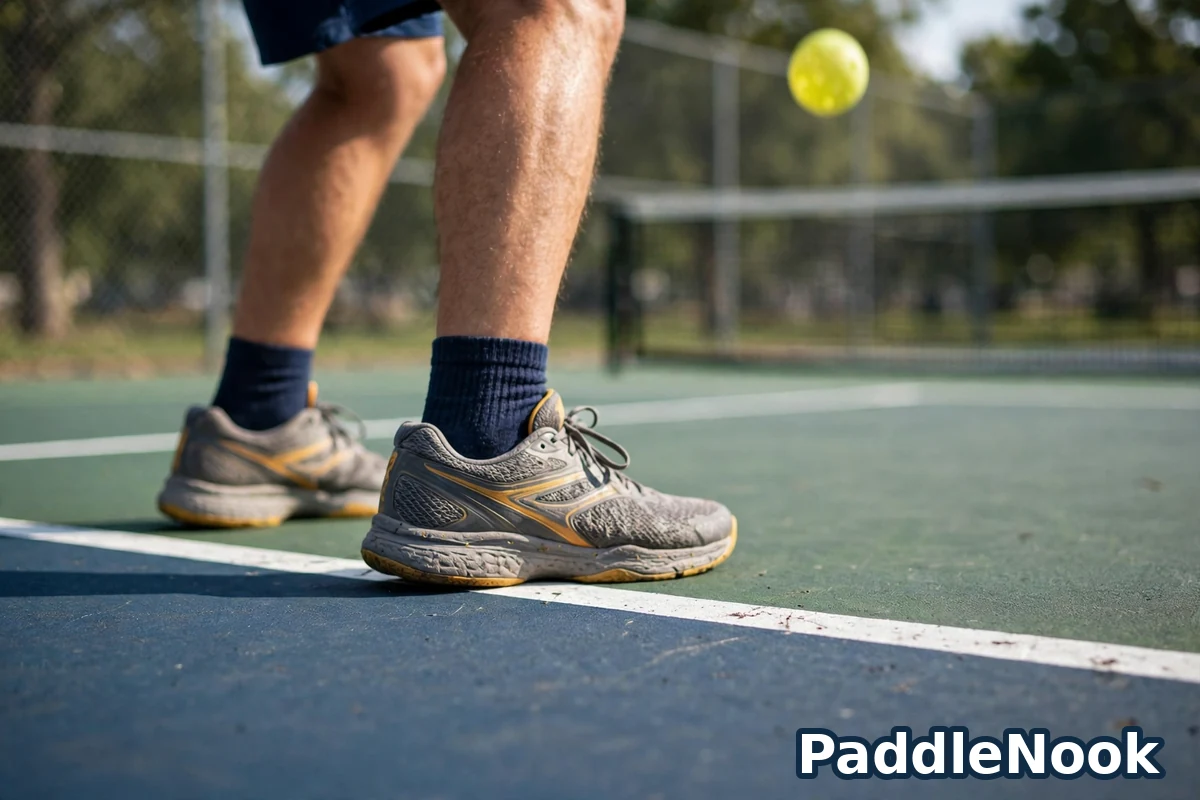
Foot position is easy to check, yet new players break it most often without noticing. At contact, at least one foot must be behind the baseline, and neither foot may touch the court inside it.
Neither foot may touch the ground outside the imaginary extensions of the sideline or centerline either. In plain words, stand inside your serving area, behind the back line, and do not step forward early. You may step into the court after you hit the ball.
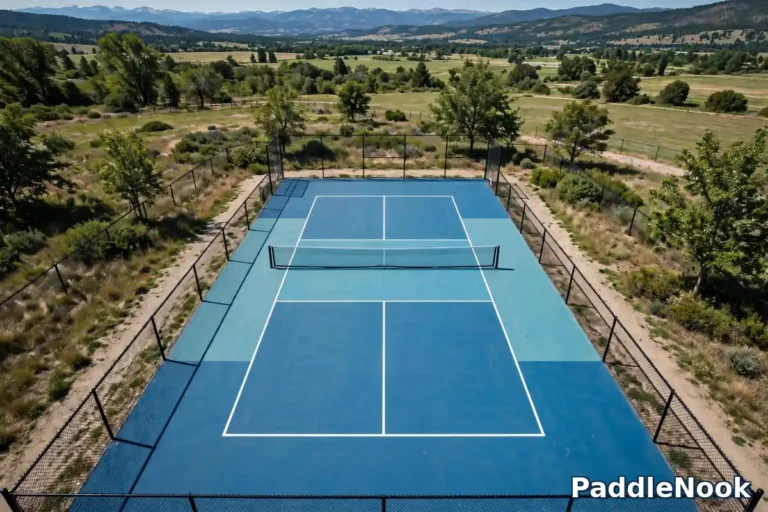
A simple fix: start a few inches farther back than you think you need, so a forward lean does not become a foot fault. For a picture of the court lines behind you, see a zone-by-zone tour of the court.
Where Must the Ball Land?
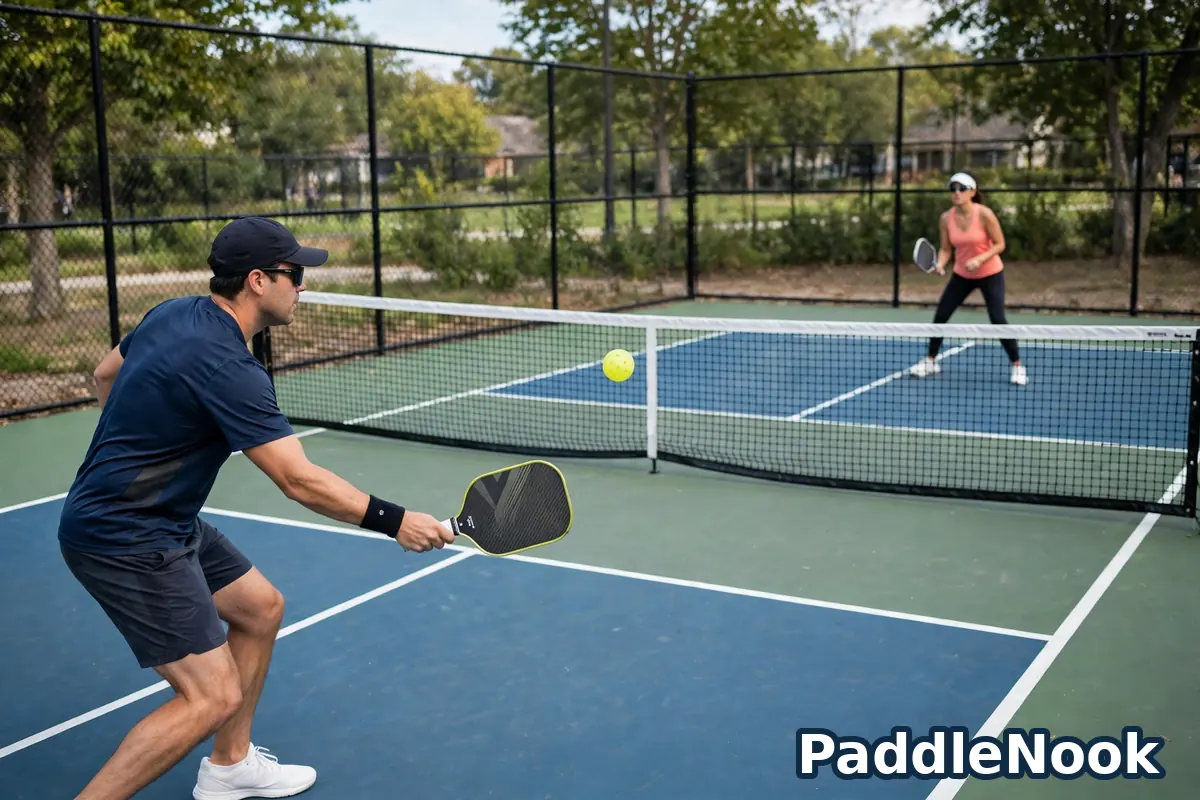
Every serve goes diagonally, into the service court opposite the server. Serve from the right side to the receiver’s right service court, and from the left side to the receiver’s left service court. A straight-ahead serve is a fault, even if it looks strong.
The ball must clear the non-volley zone, the kitchen, and its lines. A serve that lands in the kitchen, or on the kitchen line, is a fault. A serve that lands on any other line of the correct service court is in.
The serve may touch the net and still be good, if it lands in the correct court. There is no let replay for a net-cord serve that lands in. If it clips the net and drops into the kitchen, it is a fault by landing, not by the net touch.
The Score Call and the One-Serve Rule
Call the entire score before you serve, and serve within ten seconds of the call. For how that call works, see the scoring call guide. Serving during the call, or long after it, can be a fault in a refereed game. In a friendly game, the habit still matters, because it keeps both teams on the same score.
You get only one serve attempt per rally. There is no second serve, as in tennis. If your serve faults, the serve passes to your partner in doubles, or to the other side if both partners have served. That is why a safe, deep serve beats a wild, fast one.
Aim deep in the correct box, and let placement do the work. A deep serve pushes the receiver back and gives you time to move up.
Faults That Lose the Serve: A Quick Table
| Fault | What happened | Simple fix |
|---|---|---|
| Foot fault | Foot on or over the baseline at contact | Start farther back |
| High contact | Ball struck above the waist | Lower the release |
| Paddle above wrist | Paddle head above the wrist | Keep the wrist firm |
| No upward arc | Flat or downward swing | Swing low to high |
| Kitchen landing | Serve lands in the kitchen | Aim deeper |
| Wrong box | Serve misses the diagonal court | Pause, check the diagonal |
Use this table as a quick check after a fault. Find the matching row, and use its fix next time. Do not change three things at once.
The release matters too. For a volley serve, release with one hand and do not add finger spin before contact. Paddle spin at contact is allowed. USA Pickleball explains the rules in its official serving rules guide.
People Also Ask
Can you serve overhand in pickleball?
No. A volley serve must use an upward arc, contact below the waist, and a paddle head below the wrist, which together rule out an overhand serve.
What happens if the serve hits the net and lands in?
Play continues. A net-cord serve that lands in the correct service court is a good serve, with no replay.
Is there a second serve in pickleball?
No. You get one serve attempt per rally. A fault passes the serve on, as described above.
Does a serve on the kitchen line count?
No. A serve that lands on the kitchen line is a fault, even though other service-court lines are in.
Conclusion
A legal pickleball serve is not about power. It is about a low-to-high motion, feet behind the line, and a diagonal ball past the kitchen. Check those three things and call the score first. A clear breakdown is given in this pickleball serve rules update.


One Comment