
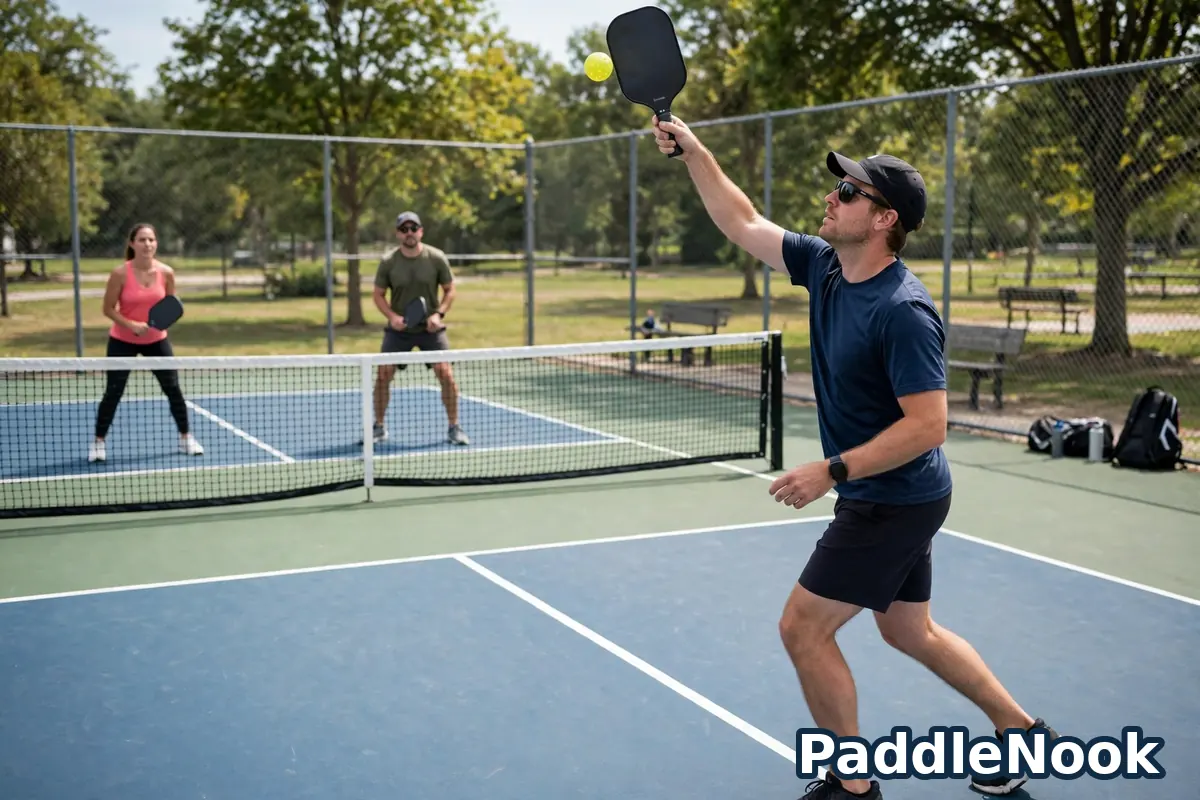
Serving Rules in Pickleball: The Ultimate Fault Fix Guide
Serving rules in pickleball are easy to learn and easy to break by a small margin. A foot an inch too far forward, a paddle a little too high, or a serve a little too short can all end your serve. The fix is usually small too, once you know which fault you made. Most faults are small, and most fixes are smaller, so do not let one fault shake your whole game.
This guide names each fault, shows why it happens, and gives one fix for it. It also clears up the cases that look like faults but are not, so you do not give away a good serve. Work through the groups one at a time, and use the table at the end as a quick check. For the full legal-serve check, see the legal serve guide.
What Counts as a Fault Under Serving Rules in Pickleball?
Under serving rules in pickleball, a fault is any serve that breaks a motion, foot, release, or landing rule. A fault ends your serve at once: in doubles it passes to your partner, or to the other team if both partners have served. There is no second serve to save a faulted attempt.
The rest of this guide sorts faults into four groups, so you can find your fault fast and fix only that part.
Foot Faults: The Line You Must Not Cross
A foot fault happens when a foot touches the court on or inside the baseline at contact, or touches the ground outside the imaginary sideline or centerline extensions. At least one foot must be on the ground behind the baseline when you strike the ball.
The most common foot fault is a forward lean. You start in the right place, then step forward just before contact, and your toe lands on the line. The fix is simple: start a few inches farther back, and keep your feet still until the ball is gone.
Motion Faults: The Three Volley Checks
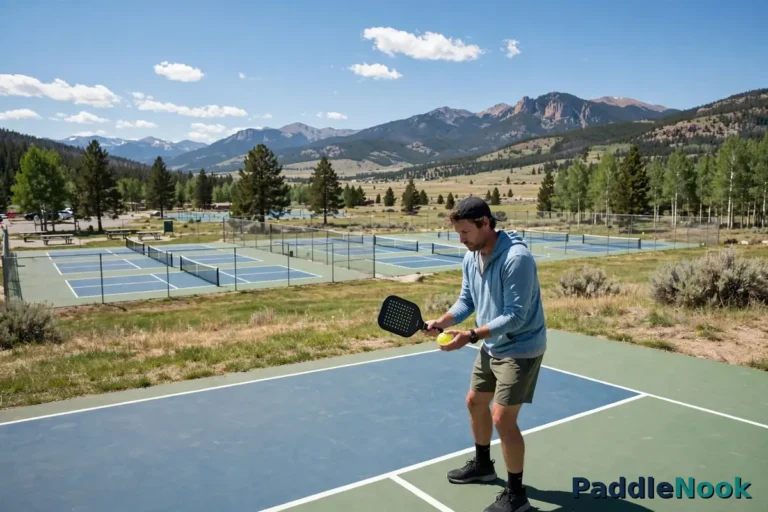
Motion faults apply to the volley serve, which is hit out of the air. Break any one of three checks, and the serve is illegal, even if the ball lands in the right box. The checks are an upward arm arc, contact below the waist, and the paddle head below the wrist.
A flat or downward swing is the most common motion fault, often from a sidearm habit. Think low to high, like bowling, and finish upward, not across your body.
High contact is the second motion fault. If you release too high, you will strike above your waist. Lower the release, bend your knees, and strike at waist height or below.
Landing Faults: The Wrong Box or the Kitchen
A serve must land diagonally in the opposite service court, past the kitchen. A serve that lands in the kitchen, or on the kitchen line, is a fault. A serve that lands wide, long, or in the wrong diagonal box is also a fault.
Short serves are the most common landing fault for beginners, from a soft swing that stops at contact. Swing through the ball and aim for the middle of the deep box.
Long serves come from too much power or too flat an arc. Add height to your swing, aim inside the baseline, and trust the arc to bring the ball down. A serve into the net usually means the paddle head dropped.
Release Faults and the Ten-Second Rule
Release faults are easy to miss, because they happen before contact. For a volley serve, do not add finger spin as you release the ball. Spin from the paddle at contact is allowed, but finger spin on release is not.
For a drop serve, do not throw the ball down, toss it up, or push it in any direction. Let gravity drop it from your hand or paddle face, let it bounce, and then strike it. A forced drop breaks the serve, even if the swing after the bounce looks fine.
The score call has a timing rule too. Call the full score, as in the score sheet guide, then serve within ten seconds. Serving during the call, or waiting far too long after it, can be a fault in a refereed game. In friendly games, a prompt serve after a clear call keeps everyone happy.
What Is NOT a Fault?
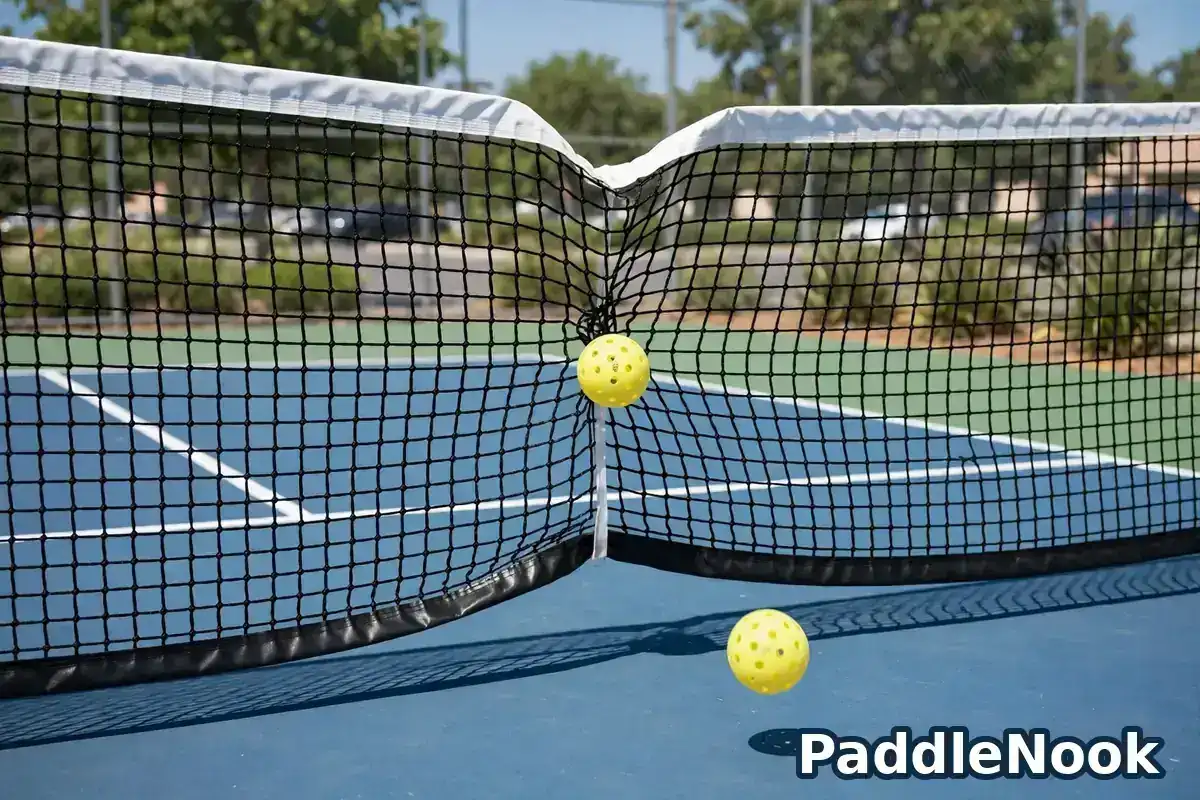
Some serves look wrong but are fully legal. A serve that clips the net and lands in the correct service court is good, with no replay. Pickleball has no let rule on the serve.
A serve that lands on a service-court line is good, except for the kitchen line. The far baseline and the side lines of the correct box are in, so a ball touching them counts. A drop serve with a high swing after the bounce is also good, because the motion checks do not apply to it.
Faults at a Glance: Find Yours, Fix One Thing
| Fault group | Example | One fix |
|---|---|---|
| Foot fault | Toe on the baseline | Start farther back |
| Motion fault | Paddle above the wrist | Keep the wrist firm |
| Motion fault | Contact above the waist | Lower the release |
| Landing fault | Serve in the kitchen | Aim deeper |
| Landing fault | Serve out wide | Check the diagonal first |
| Release fault | Finger spin on release | Release cleanly, no flick |
Use one row at a time. After a fault, name the group and use its fix. Changing feet, swing, and aim at once hides which change worked. USA Pickleball explains illegal serves in its illegal serves guide.
People Also Ask
Is a serve into the kitchen always a fault?
Yes. A serve that lands in the kitchen, or on the kitchen line, is a fault, even if the rest of the motion was legal.
What happens after a serve fault in doubles?
The serve passes to your partner, or to the other team if both partners have already served and lost their serves.
Is a net-cord serve replayed in pickleball?
No. If it lands in the correct service court, play continues. If it drops into the kitchen, it is a fault by landing.
Can a drop serve be a motion fault?
Not in the volley sense. The upward-arc, waist, and wrist checks do not apply to a drop serve, but its release, feet, and landing rules still do.
Conclusion
Every serve fault fits one group: feet, motion, landing, or release. Name the group and fix one thing. For a full list, see this illegal pickleball serves guide, and for a plain-English overview, see a simple definition of the sport.

One Comment