

Rules of Pickleball: The Ultimate Guide Made Simple
The rules of pickleball sound long when you read them all at once, but in a real game only a handful of rules control almost every point. You serve underhand from behind the baseline, you let the ball bounce twice at the start of each rally, you stay out of the kitchen for volleys, and only the serving side scores a point, even though the game can feel fast once the rally opens up.
Once you can say those four ideas in your own words, you can join a friendly game without stopping to check a book after every shot. The rest of this guide puts each rule in order, from the serve to scoring and faults, so you can find the one you need fast, whether you are playing your first game, joining a social session, or helping a friend learn.
What Are the Rules of Pickleball, in One Clear Map?
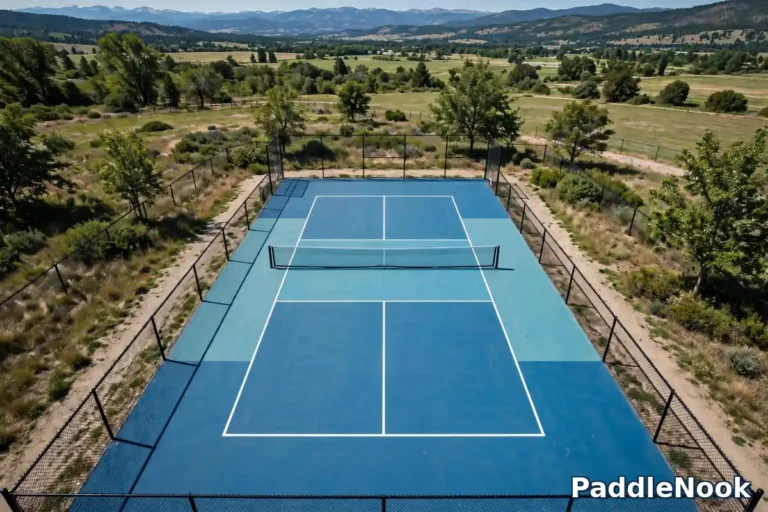
The rules of pickleball form a small, fair system: two or four players use solid paddles on a 20 by 44 foot court, serve underhand diagonally, let the ball bounce once on each side after the serve, avoid volleys from the 7-foot kitchen, and score only while serving, with games usually played to 11 points and won by two.
| Rule area | The simple rule | Why it matters |
|---|---|---|
| Serve | Underhand, diagonal, from behind the baseline | Starts play fairly, with no power serve advantage |
| Two-bounce rule | Serve bounces, return bounces, then volleys are allowed | Gives both sides time to reach the net |
| Kitchen | No volley while in, or touching, the 7-foot zone | Stops smashes right at the net |
| Scoring | Only the serving side scores, to 11, win by 2 | Keeps games short and easy to follow |
| Faults | Out, into the net, or a rule break ends the rally | Gives every rally a clear, fair ending |
That table is your court-side map. If a shot feels wrong, check it against one row before you argue about it. Our zone-by-zone tour of the court explains each line in plain words.
How Does a Point Start?
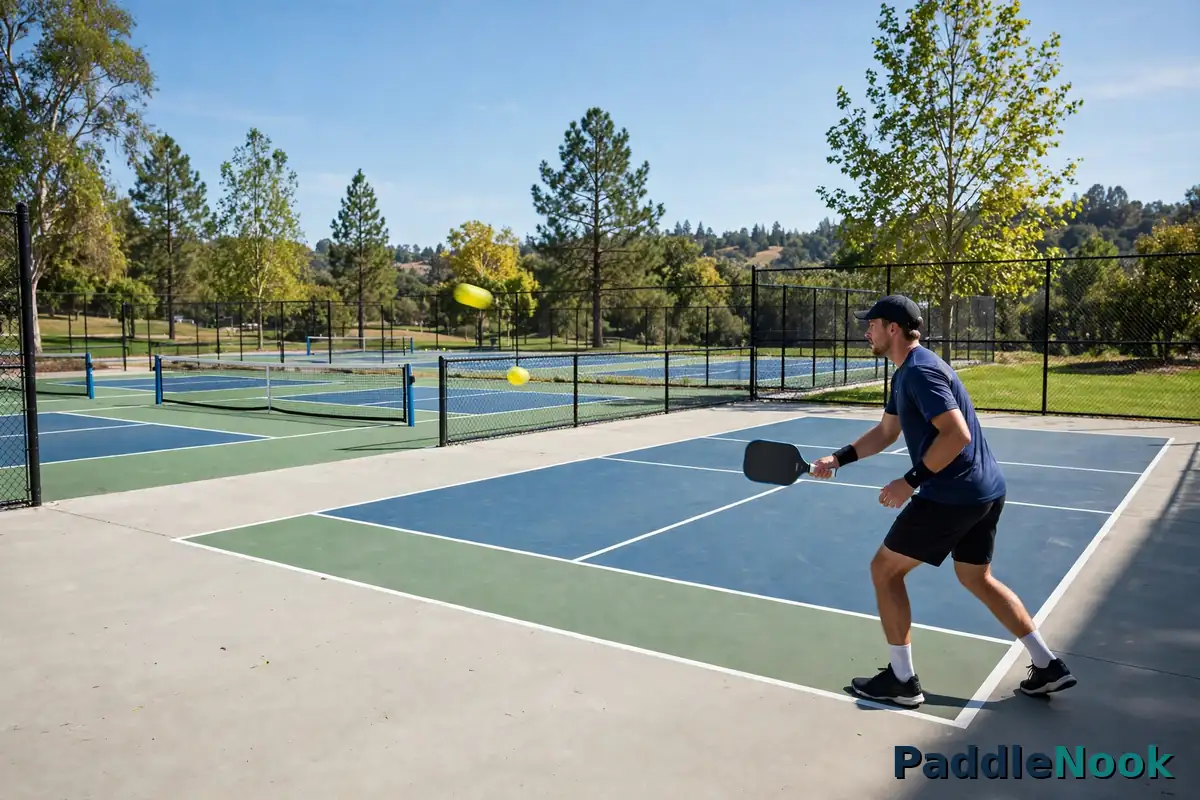
Every point starts with a serve, and the serve has three simple checks. The server stands behind the baseline, with at least one foot behind the line. The paddle hits the ball below the waist, with an upward swing, and the ball travels diagonally into the opposite service box.
A drop serve is also allowed: drop the ball, let it bounce, then hit it, without throwing it down.
Only one serve attempt is allowed, unless the ball clips the net and still lands in the correct box. That is a let. A serve that lands in the kitchen, or on its line, is a fault.
Why Must the Ball Bounce Twice?
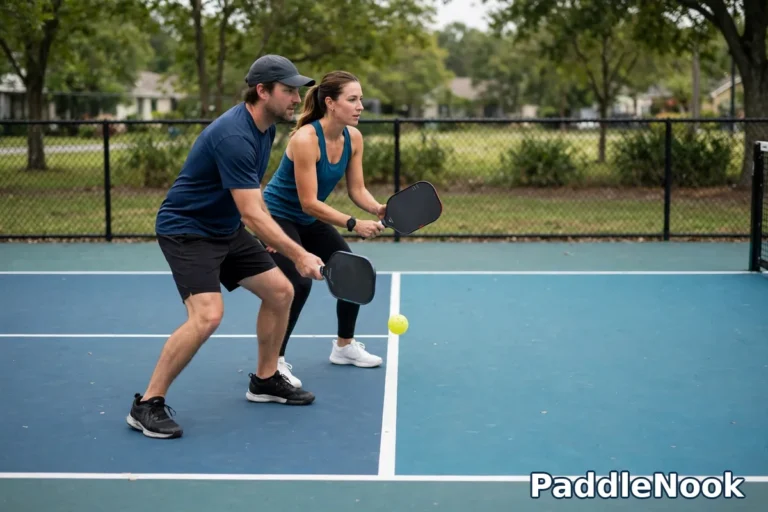
The two-bounce rule is the rule new players forget most, and it is also the rule that makes the game fair. After the serve, the receiving side must let the ball bounce before returning it. Then the serving side must let that return bounce before hitting it back.
Only after those two bounces can either side volley, which means hitting the ball before it bounces. This short delay stops the serving side from rushing the net and smashing the return before the other side is ready.
What Can You Do in the Kitchen?
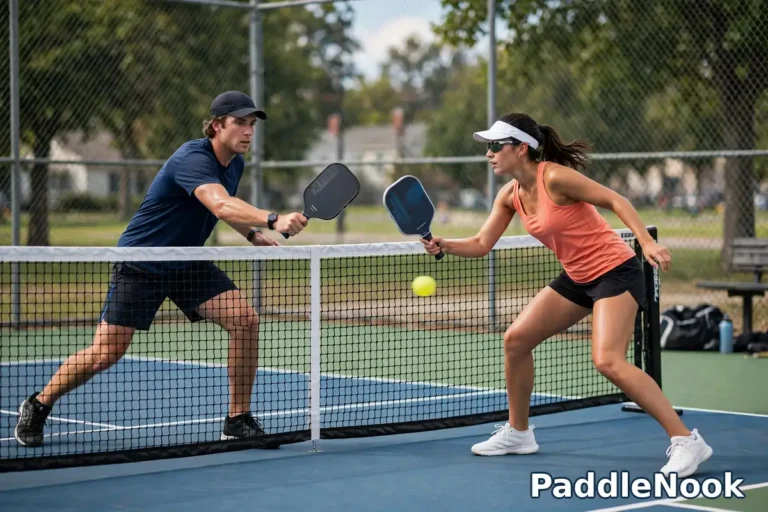
The kitchen is the 7-foot non-volley zone on each side of the net. You may stand there and hit a ball that has bounced, but you may not volley while in it, or while you or your paddle touches its line.
Momentum counts too: if a volley carries you into the kitchen, even after the shot, that is a fault.
A dink is a slow, low shot that lands in the kitchen and forces your opponents to hit up. For a fuller plain-English walkthrough, see a simple definition of the sport.
How Does Scoring Work?
In traditional scoring, only the serving side can score a point. If the serving side wins a rally, it scores one point and keeps serving. If it loses a rally, no point is scored, and the serve moves on.
Games are usually played to 11 points, win by at least 2. Always call the score out loud before you serve, so both sides agree.
In doubles, the call has three numbers: your score, your opponents’ score, and the server number, 1 or 2. At the very start, the call is 0-0-2, because only the second server serves first.
In singles, the call has two numbers, and you serve from the right on an even score and from the left on an odd score.
What Ends a Rally? A Fault Check
A fault ends the rally, and the point or serve goes to the other side. Use this short check when a rally stops and you are not sure why.
- Did the ball land outside the lines? That is out, except a ball on a line is in, apart from a serve on the kitchen line.
- Did the ball fail to clear the net? That is a fault.
- Did a player volley from the kitchen, or let momentum carry them in? That is a kitchen fault.
- Did a player volley before the two bounces were complete? That is a two-bounce fault.
- Did the ball bounce twice on one side before it was returned? That is a fault.
If none of those apply, play continues. When in doubt in a friendly game, replay the point. USA Pickleball, the sport’s national governing body in the United States, gives a clear overview of the basics on its What Is Pickleball page.

People Also Ask
Do I need to learn every rule before my first game?
No. Learn the serve, the two-bounce rule, the kitchen, and the scoring call.
What happens if my serve hits the net but lands in?
That is a let, and you serve again, with no point scored.
Can I stand in the kitchen at all?
Yes. You can stand there and hit a ball that has bounced. You just cannot volley while you are in it or touching its line.
How do I know which side to serve from in doubles?
Use the score: even means the first server serves from the right, odd means from the left.
Conclusion
Start with the serve, the two-bounce rule, the kitchen, and the scoring call, and use the fault check above when a rally stops. For a complete rules overview, see the full simple rules guide.
Play one friendly game with those four ideas in mind, and move to the net only after the second bounce. Pickleball Central also gives a helpful plain overview in its guide to what pickleball is.




One Comment