

Pickleball Rules Serving: The Ultimate Doubles Order Guide
Pickleball rules serving can feel like a puzzle the first time you play doubles. Four players, two servers per team, and a score with three numbers is a lot to track. The good news is that the order follows one simple pattern, and once you see it, it repeats for the whole game. Once you know the pattern, you will stop guessing and start enjoying the game itself.
This guide follows that pattern from the first serve to the first side-out, then shows how singles differs. You will learn who serves first, when partners switch, how the score side works, and what to do when the wrong player serves. Read it once, then try it in your next game, and the order will soon feel natural. For the wider game rules, start with a friendly overview of the whole sport.
Pickleball Rules Serving: Who Serves First?
In pickleball serving, the team that serves first starts with the player on the right side, who serves diagonally to the receiver on the right. At the start of a game, only that one player serves before the first side-out, which is why the first score call is 0-0-2, not 0-0-1.
That one-player start balances the advantage of serving first. After that first turn, both partners on each team serve in turn before the serve passes over.
The First Six Rallies, Step by Step
Picture a game starting at 0-0-2. The right-side player on the serving team serves first. If that team wins the rally, the server switches sides and serves again, because the serving side always switches after scoring.
If the serving team loses a rally at the start, there is no partner to pass to yet. The serve goes straight to the other team, in a side-out. That is the first-server exception, and it only applies at the very start of the game.
Now the other team serves. Its right-side player serves first, from the side that matches the score. If that player loses a rally, the partner serves next, from the correct side for the score. Only after both partners lose a rally does the serve return to the first team.
How Doubles Rotation Works After the Start
After the opening turn, the pattern is steady. Each team gets two serves per turn, one per partner, before a side-out. When the serving team scores, the same server switches sides and serves again.
When the serving team loses a rally, the serve passes to the partner, who serves from the side that matches the team’s score. The players do not switch sides when they lose a rally. They only switch sides when they score while serving.
A side-out happens when the second server on a team loses a rally. The other team then starts serving, with its right-side player first. For a full doubles picture, see the doubles rules in plain English.
Which Side Do You Serve From?
Serve from the right side when your team’s score is even, and from the left side when it is odd. Zero counts as even, so the game starts from the right. This rule follows the player who started the game on the right for each team.
In practice, that means you can check your side by your score. If your score is 4, you should be on the right to serve or receive. If it is 5, you should be on the left. A quick score check solves most side mix-ups before the serve.
How Is Singles Serving Different?
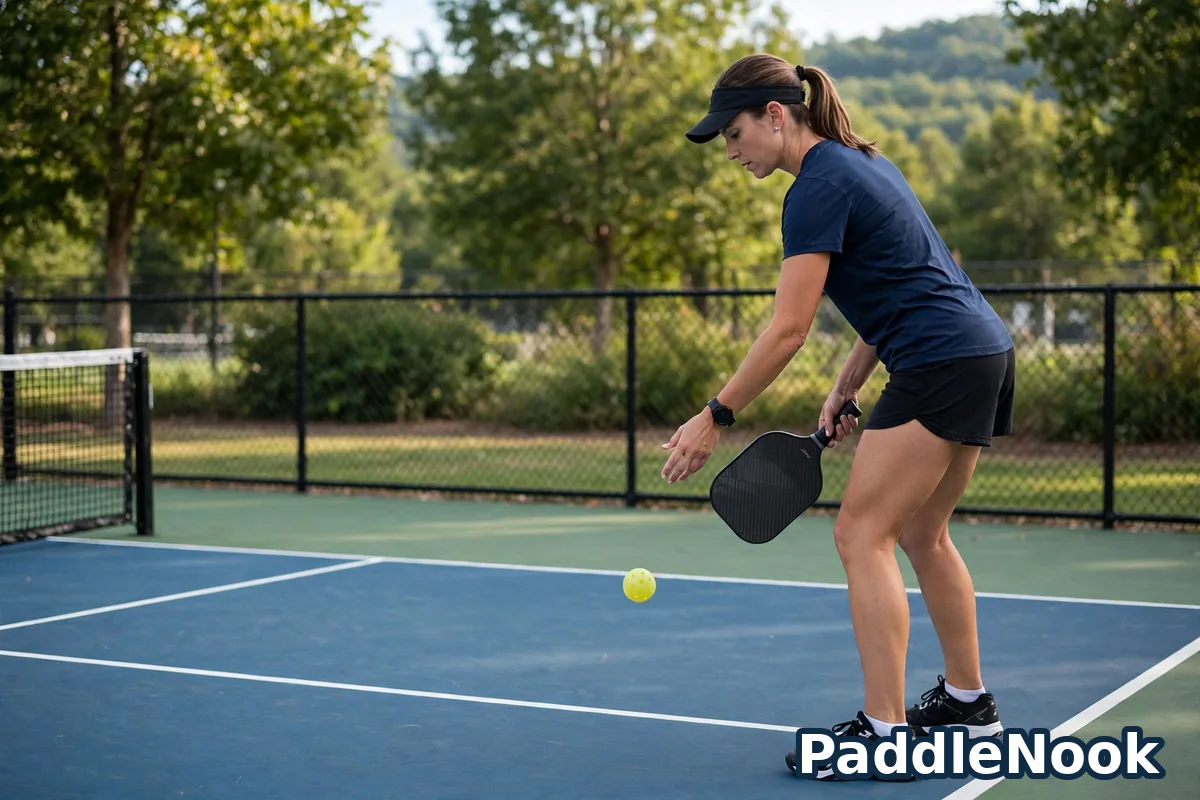
Singles serving is the same pattern with one player per side, so there is no partner rotation. Serve from the right when your score is even, and from the left when it is odd. After you score, switch sides and serve again.
If you lose a rally while serving in singles, the serve passes straight to your opponent. There is no second server and no waiting turn. A side-out happens at once, which makes singles serving easy to follow.
The score call is simpler too. Singles uses two numbers only: your score, then your opponent’s score. Doubles uses three numbers, adding the server number, 1 or 2, at the end.
What If the Wrong Player Serves?
Wrong-server mix-ups happen, even in calm games. The best fix is to ask before the serve. If you are unsure who should serve, ask the other team, and they should answer. A short question saves a disputed rally.
If someone correctly stops the rally for a wrong server, it is replayed. If nobody notices until the rally ends, the result stands. Stopping play with a wrong claim is itself a fault.
Keep the score call clear before every serve, and most wrong-server cases never start. Say all three numbers in doubles, slowly enough for both teams to hear. A detailed serving-order breakdown is given in this pickleball serving rules guide.
A Simple Rotation Table to Keep in Your Head
| Moment | Who serves | From which side |
|---|---|---|
| Game start | Right-side player only | Right, score 0 is even |
| Team scores | Same server again | Switches sides |
| Team loses a rally | Partner serves | Side matching the score |
| Both partners lose | Other team, right player | Right side first |
Read this table before your first doubles game. After a few games, the pattern becomes a habit. For the scoring calls that go with this order, see the scoring call guide.

People Also Ask
Why is the first call 0-0-2?
Because only the second server on the first serving team serves first, so that team gets no second turn at the start of the game.
Do partners switch sides when they lose a rally?
No. Players switch sides only when they score while serving. Losing a rally passes the serve, not the side.
Can the server’s partner stand at the kitchen line?
Yes. Partners may stand anywhere on their own side. Only the server and receiver have set positions at the serve.
How is the first serving team chosen?
In friendly games, agree by a coin toss or a simple choice. In refereed games, the referee uses a fair method, and the winner picks serve, receive, or end.
Conclusion
Doubles serving is a loop: score and switch, lose and pass to your partner, lose twice and hand over the serve. Learn the 0-0-2 start and call the score every time. A plain doubles walkthrough is also given in this doubles rules explained guide.





One Comment