
Skinny Singles Pickleball Rules: The Ultimate Guide
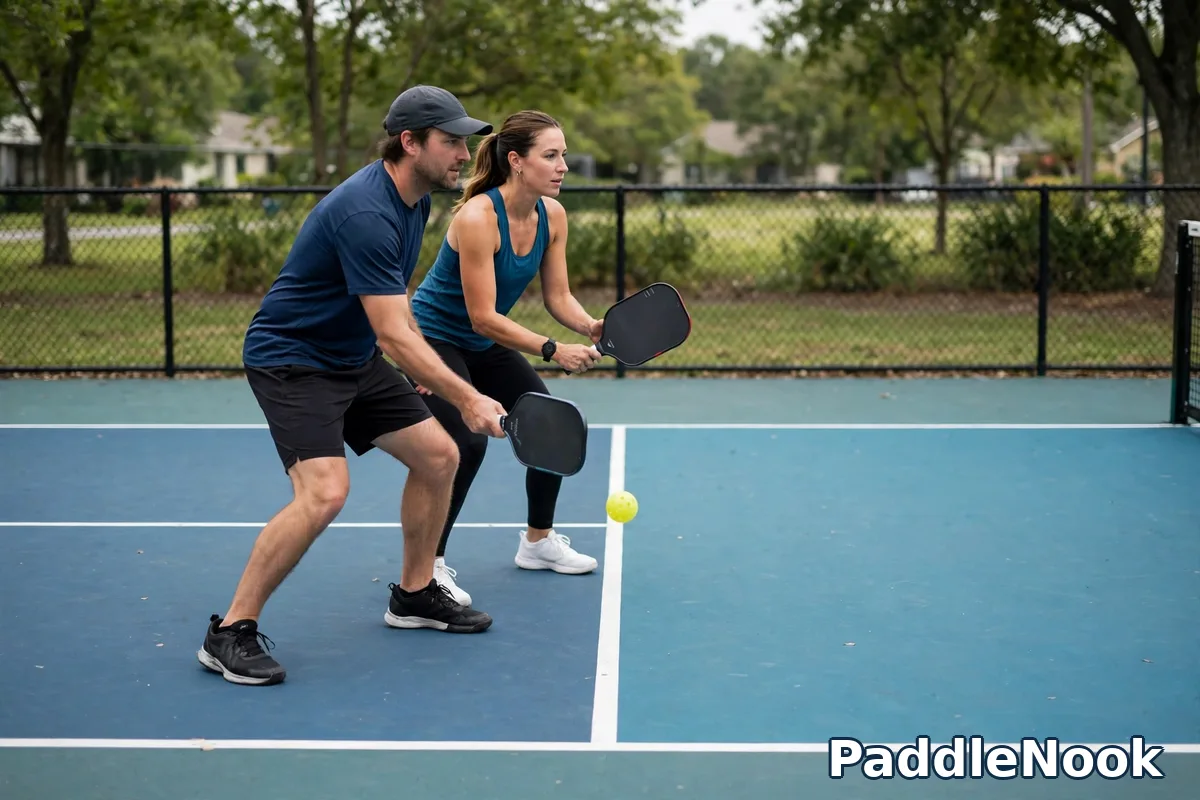
Skinny singles pickleball rules turn a full court into a narrow training game, and that small change makes a big difference. You still play one against one, but you use only one half of a doubles court. The other half is out of bounds, so every shot must be placed with care.
This format is popular as a drill because it builds placement, patience, and kitchen control without the long sprints of full singles. It is a game of angles, not power, and it rewards players who place the ball well. It is also a fun game in its own right, when only two players are free and a full court feels too wide. This guide explains the setup, the serve, and the scoring, step by step. Use it to set up your first game, then try the drills at the end.
What Are Skinny Singles Pickleball Rules in Short?
Skinny singles pickleball rules in short are: play one against one on one half of a doubles court, use the diagonal service boxes inside that half, serve underhand and diagonally, score only when serving, play to 11 points and win by 2, and treat any ball outside the chosen half as out.
That is the whole game in one paragraph. The rest of this guide shows how to mark the half, where to stand for each score, and how to switch sides fairly.
How Do You Set Up a Skinny Singles Court?
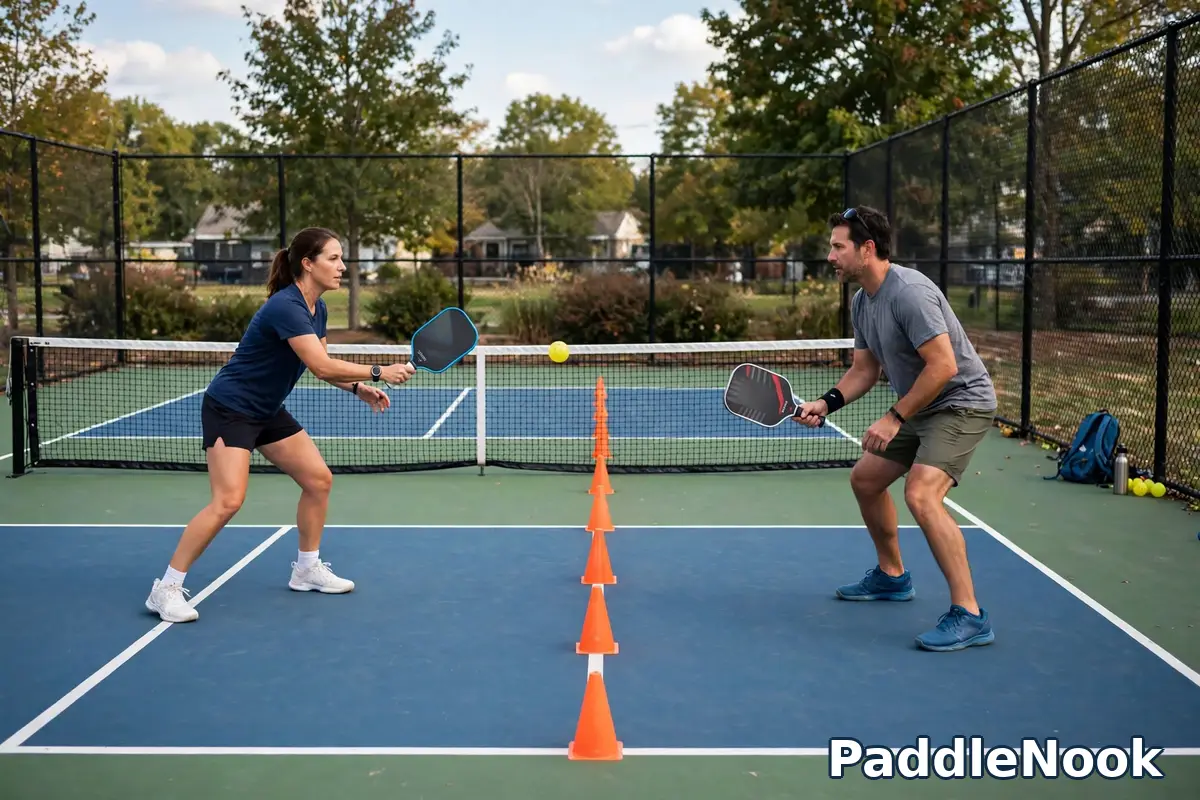
Start with a normal pickleball court, 20 feet wide and 44 feet long. Then choose one half of the width, about 10 feet wide, split by the centre line. That half becomes the whole playing area for both players, from baseline to baseline.
The centre line now acts as a sideline for skinny singles. A ball that lands beyond it, on the unused half, is out, even if it would be in during a normal game. The kitchen still runs 7 feet from the net, across the width of the chosen half.
You do not need new lines to try it. Simply agree on the half before play. For the full court layout, see a zone-by-zone tour of the court.
Which Half Do You Play, Cross-Court or Down the Line?
There are two common ways to set the half, and you should agree on one before the first serve. There are two common versions: cross-court, where each player uses the diagonal half in front of them, and straight-ahead, where both players use the same half. Agree on one before play, then switch versions between games to practise different angles.
How Does Serving Work in Skinny Singles?
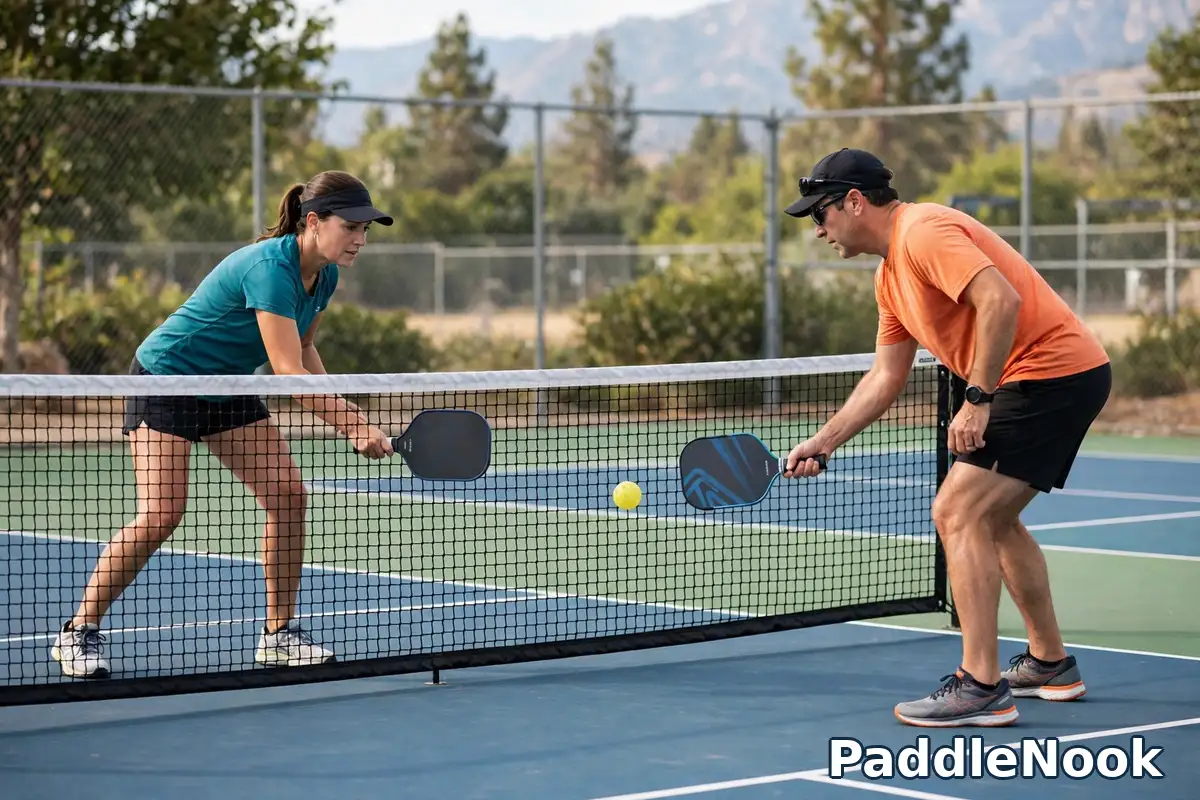
Serving follows normal singles rules, inside the narrow half. Serve underhand, from behind the baseline, diagonally into the correct service box within the chosen half. The serve must clear the kitchen and land past the kitchen line.
Your serve side depends on your own score. Serve from the right side when your score is even, and from the left side when your score is odd. Zero counts as even. After you score a point, switch sides and serve again, still inside the same half.
How Do You Score in Skinny Singles?
Only the serving player scores, just as in normal singles. Win a rally while serving, and you gain a point. Win a rally while receiving, and you gain only the serve. Games are usually played to 11 points, and you must win by 2.
Call the score as two numbers before every serve: your score first, then your opponent’s score. There is no third number, because there is no partner or second server to track.
If the server loses a rally, the serve passes straight to the opponent. This is a side-out.
| Server score | Serve from | Target box |
|---|---|---|
| Even: 0, 2, 4 | Right side | Diagonal box in the half |
| Odd: 1, 3, 5 | Left side | Diagonal box in the half |
| After scoring | Switch sides | Next box in the half |
What About the Kitchen and the Two-Bounce Rule?
The kitchen rule stays the same in skinny singles. You may not volley while standing in the kitchen, or while touching the kitchen line. You may enter the kitchen to play a ball that has already bounced there, but you must be careful, because the narrow court leaves little room to recover.
The two-bounce rule also stays the same. The serve must bounce before the return, and the return must bounce before the server’s next shot. After those two bounces, volleys are allowed, as long as you stay out of the kitchen.
How Can You Use Skinny Singles as a Drill?
Play a short game to 7 or 11, then change one focus for the next game. In one game, aim every third shot at the kitchen line.
In the next, try to keep every rally going for at least six shots. Small goals like these build control faster than simply trying to win. For the full rules behind the serve and score, see the complete simple rules guide.
Common Mistakes to Avoid
The most common mistake is forgetting that the unused half is out. Agree on the half clearly, and point to it before the first serve, so both players share the same picture. For a full call-it-yourself walkthrough, see the scoring call guide.
People Also Ask
Is skinny singles an official tournament format?
No, it is mainly a drill and friendly-game format. It uses normal singles scoring, but the half-court boundary is a local agreement, not a separate official event.
Do you use the full court width in skinny singles?
No. You use only one half of a doubles court, about 10 feet wide, split by the centre line.
Can you switch halves during a game?
Yes, if both players agree before play. Many pairs switch halves between games, so each player practises both cross-court and down-the-line angles.
Does the serve still need to clear the kitchen?
Yes. The serve must clear the kitchen and land in the correct diagonal service box inside the chosen half.
Conclusion
Skinny singles keeps the heart of pickleball, but shrinks the space, so placement matters more than power. Agree on the half, serve diagonally inside it, score only on serve, and play to 11, win by 2. That is all you need for a fair, useful game.
Try one game this week, first cross-court, then straight ahead, and notice which shots improve fastest. Dink and Drill also explains the same half-court setup in its what is skinny singles guide. Luxe Pickleball gives a second clear outline in its pickleball skinny singles guide.



One Comment