
Pickleball Serving Rules: The Ultimate Serve Guide
Pickleball serving rules decide whether a rally starts fairly, so they deserve more care than most players give them. A serve looks simple: stand behind the line, hit underhand, and send the ball across the court. A good serve is steady, legal, and deep, not simply hard. It sets the tone for the whole rally. Yet small details, such as foot placement and paddle height, can turn a good serve into a fault.
This guide covers both legal serves, the faults to avoid, and where to aim for a steady, useful serve. It also gives you a short checklist to run through before each serve, so you can serve with confidence in any friendly game. Use the checklist in this guide before every serve, until it becomes automatic. That confidence is worth practising. For the full rules behind the serve, see the complete simple rules guide.
What Are the Pickleball Serving Rules in Short?
Pickleball serving rules in short are: stand behind the baseline, serve underhand and diagonally into the opposite service box, clear the kitchen, use a volley serve or a drop serve, call the score first, allow only one serve attempt per rally, and let the return bounce before your next shot.
That short list is the backbone of this guide. The sections below explain the two serve types, the foot rules, and the faults, with a simple fix for each common error.
Where Do You Stand to Serve?
Stand behind the baseline, between the centre line and the sideline, extended. For the full court layout, see a zone-by-zone tour of the court.
At contact, at least one foot must be on the ground behind the baseline, and neither foot may touch the court, the baseline, or the ground outside your serving area. Step over the line only after you have hit the ball.
Choose your side by your score. In singles, serve from the right when your own score is even, and from the left when it is odd. In doubles, the same even-right and odd-left rule applies to the player who started the game on the right for that team.
Make the score call before you serve, in the correct order for your format. In singles, call two numbers. In doubles, call three numbers, with the server number last. A clear call gives your opponent time to get ready, and it stops most score disputes.
What Is a Volley Serve?
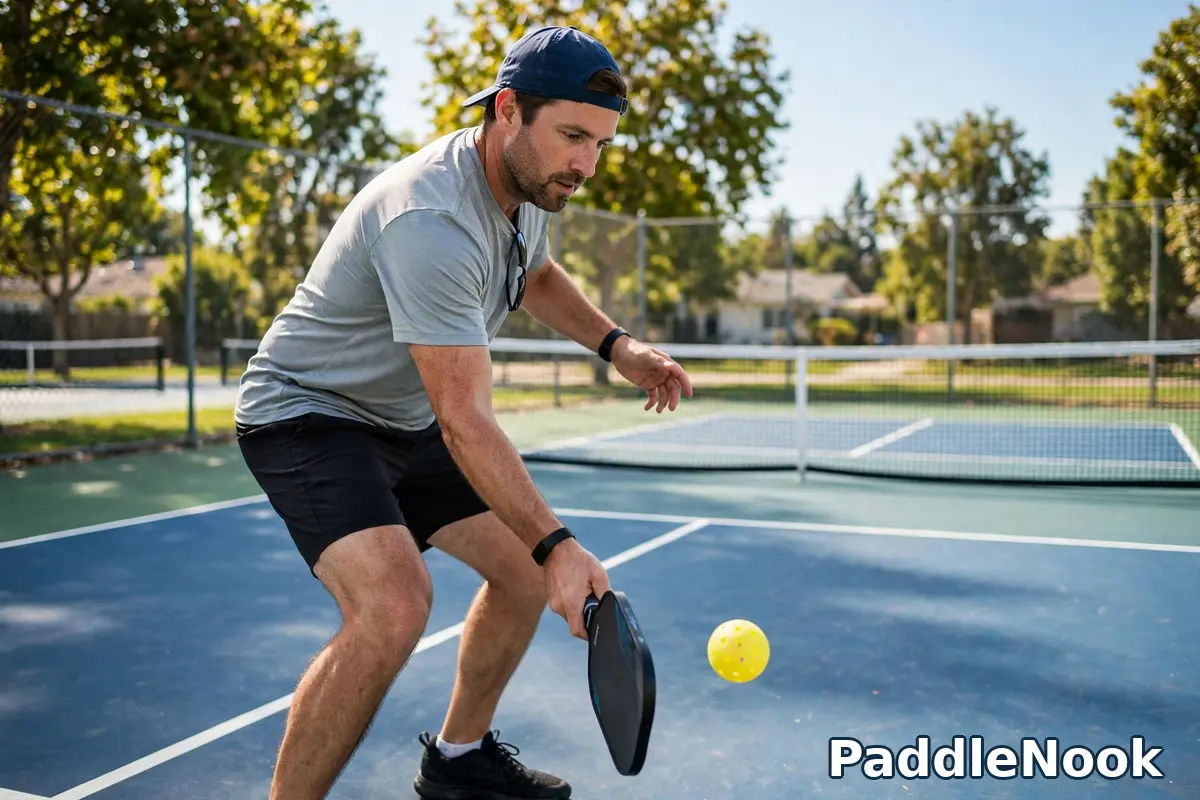
A volley serve is hit out of the air, before the ball bounces. It is the serve most players use, because it feels natural and gives good control. Three motion rules apply, and all three must be met at contact.
First, your arm must move in an upward arc when the paddle hits the ball. Second, contact must be below your waist. Third, the highest point of the paddle head must not be above the highest part of your wrist at contact. Together, these rules keep the serve underhand.
What Is a Drop Serve?
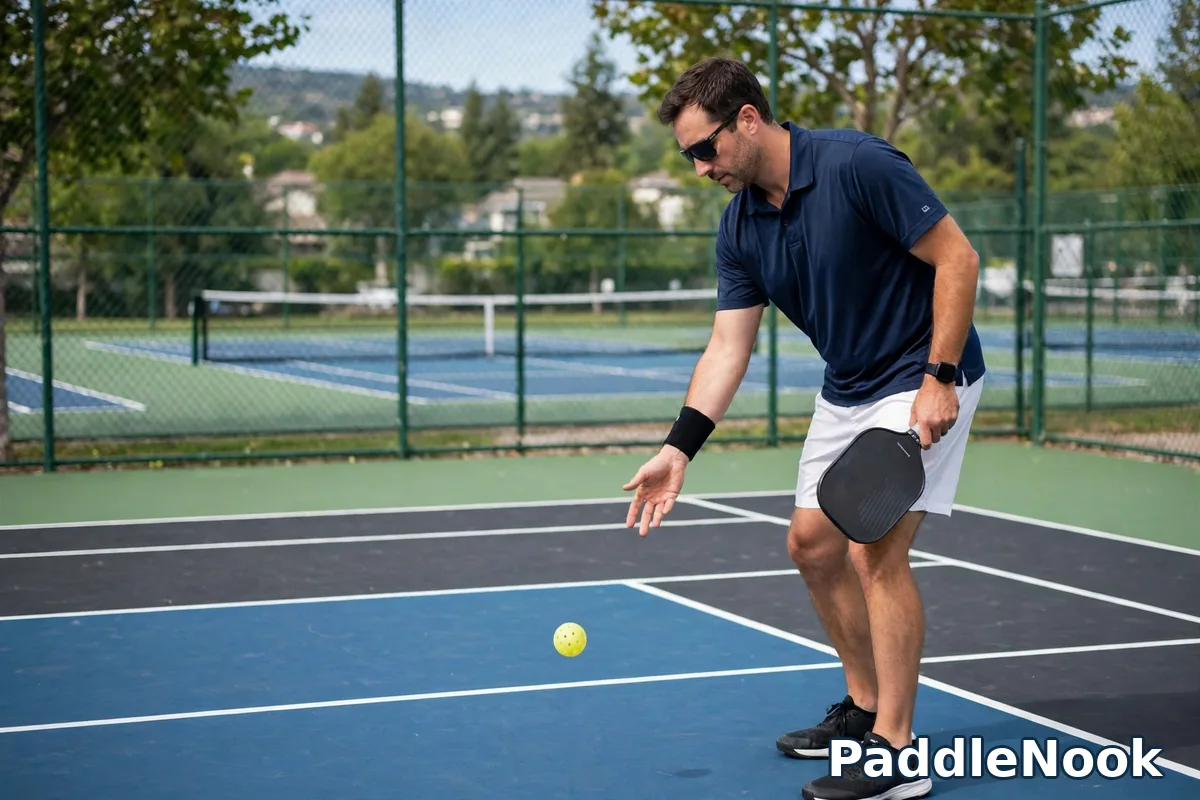
A drop serve is hit after the ball has bounced. Drop the ball from your hand or from the paddle face, let it bounce once, then hit it. Do not throw it down, toss it up, or add force to the release, because that would break the drop rule.
The three motion rules for a volley serve do not apply to a drop serve. That freedom makes the drop serve a good choice for players who struggle with the volley motion.
Where Must the Serve Land?
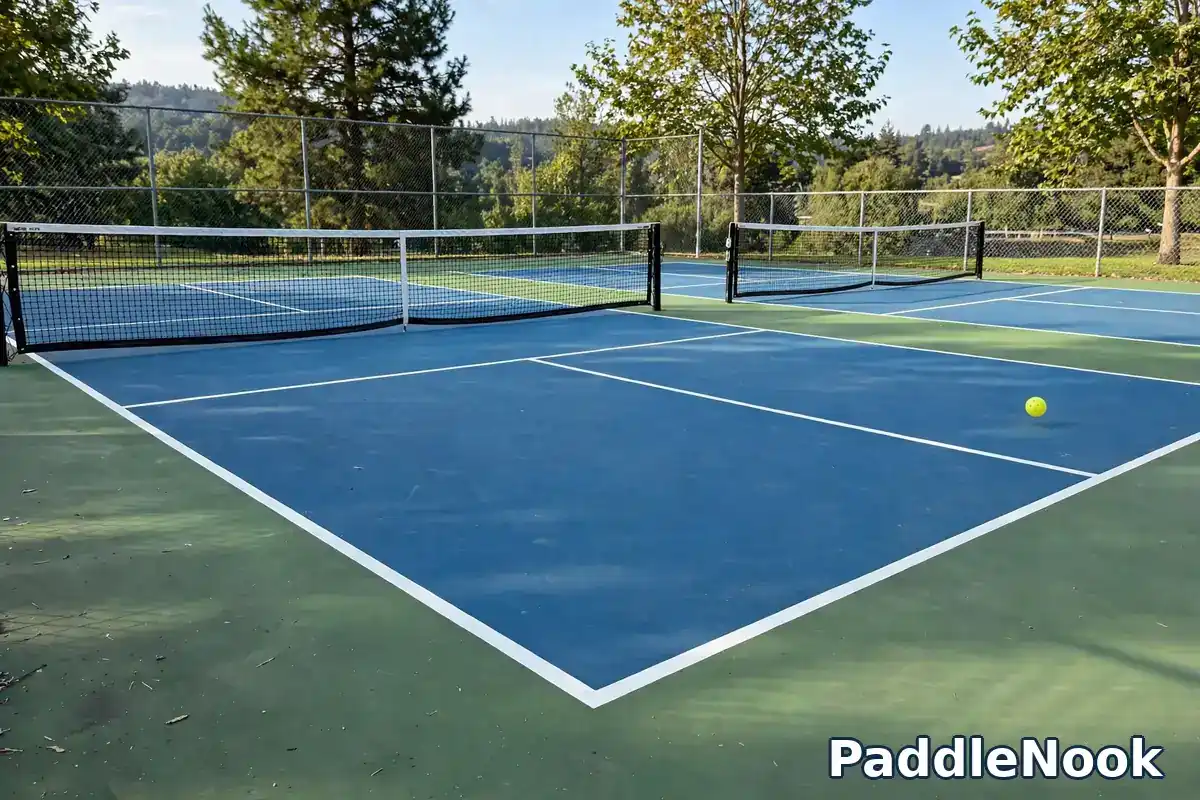
The serve must land in the diagonally opposite service box, past the kitchen line. If you serve from the right, the ball must land in your opponent’s right service box, from your view. If you serve from the left, it must land in the left box.
A serve that lands on the kitchen line is short, and it is a fault. A serve that lands on any other line of the correct box is in.
A serve that clips the net but still lands in the correct box is live, with no replay in normal play. If it clips the net and lands out or in the kitchen, it is a fault.
Serve Fault Checklist: Check Before You Hit
Run this quick check before each serve, until it becomes habit. First, feet: at least one foot behind the baseline, no foot on the line. Second, side: right for even, left for odd. Third, score: called clearly, in the right order.
Fourth, motion: for a volley serve, upward arc, below waist, paddle head below wrist. For a drop serve, clean drop, no throw, no toss. Fifth, target: diagonal box, past the kitchen line, deep if possible. Sixth, attempt: one only, so make it count.
If any check fails, stop and reset before you serve. For a full call-it-yourself walkthrough, see the scoring call guide.
What Happens After a Legal Serve?
After a legal serve, the receiver must let the ball bounce before returning it. Then the serving side must let the return bounce before hitting it next. This is the two-bounce rule, and it applies to every rally, in singles and doubles.
People Also Ask
Can you serve overhand in pickleball?
No. The serve must be underhand, with the volley-serve motion rules met, or use a legal drop serve after a bounce.
How many serve attempts do you get?
One per rally, for each server. There is no second serve, as in tennis, except that a net serve landing in the correct box stays live.
Does a serve that hits the net get replayed?
No, in normal play. If it lands in the correct service box, play continues. If it lands out or in the kitchen, it is a fault.
Can you use a drop serve in a friendly game?
Yes. The drop serve is a legal serve, as long as the ball is dropped cleanly, without a throw or toss, and lands diagonally past the kitchen.
Conclusion
A legal serve is not about power. It is about feet behind the line, the right side for your score, a clean underhand or drop motion, and a diagonal landing past the kitchen. Run the checklist, aim deep, and let the return bounce.
Practise one serve type until it lands in the box most of the time, then add placement and pace. All Racket also explains both serve types in its how to serve in pickleball guide. The University of Miami sets out the same serve rules in its pickleball rules guide.

One Comment