
Rules of Pickleball Singles: The Ultimate Solo Play Guide
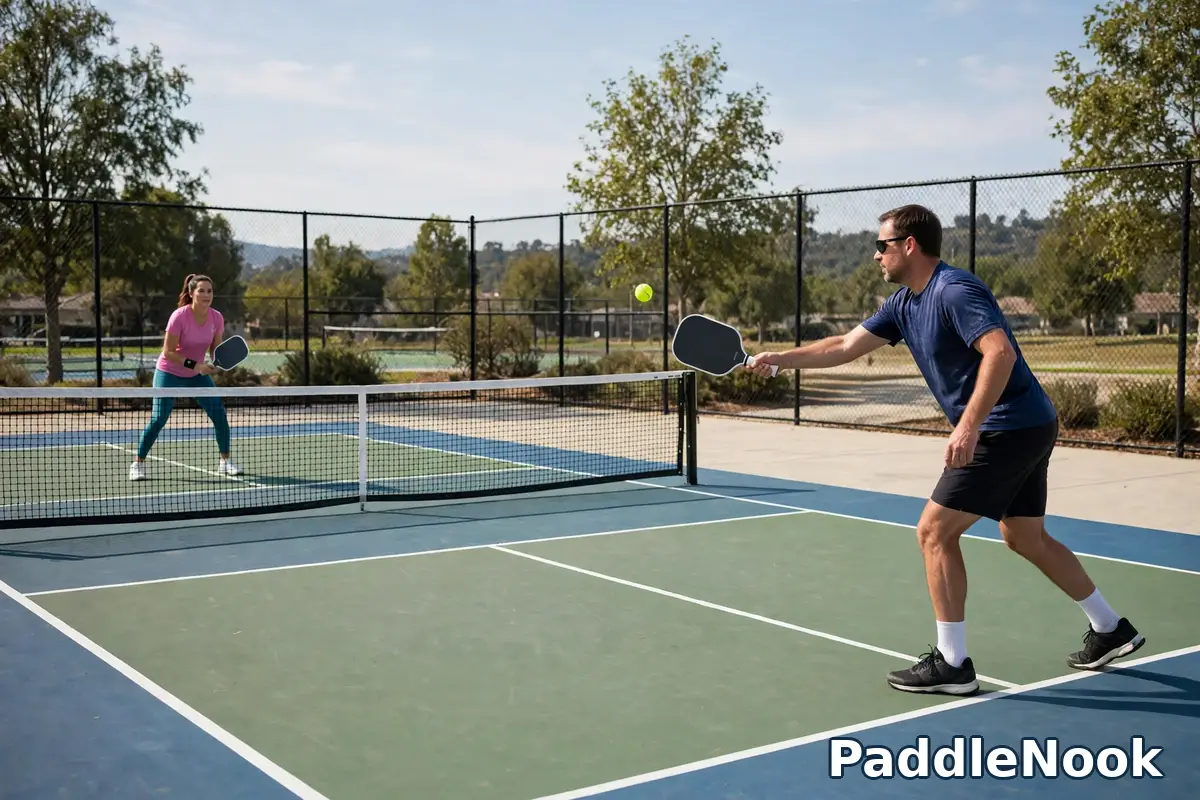
Singles pickleball is the same game you love in doubles, played one against one, with no partner to cover half the court. That single change makes the rules feel sharper, because every serve, every score call, and every fault is yours alone. This guide explains the rules of pickleball singles in plain language, so you can walk onto court for a first singles game with confidence. You will learn where to serve from, how the score works, and which faults end a rally.
The good news is that most singles rules match doubles rules exactly. The court, the net, the kitchen, and the two-bounce rule do not change at all. What changes is serving and scoring: there is no second server, the score call has only two numbers, and one fault ends your turn to serve. Keep those three differences in mind, and the rest falls into place quickly.
What Are the Rules of Pickleball Singles?
The rules of pickleball singles are: serve underhand and diagonally from behind the baseline, let the serve and the return bounce, do not volley from the kitchen, score only while serving, and win by reaching 11 points with a lead of 2. One fault ends your serve, and the serve passes to your opponent.
That short list covers a whole game, and the sections below show how each rule works in a real rally. Start with the court, then follow the serve, the bounces, and the score in order.
How Do You Serve in Singles?
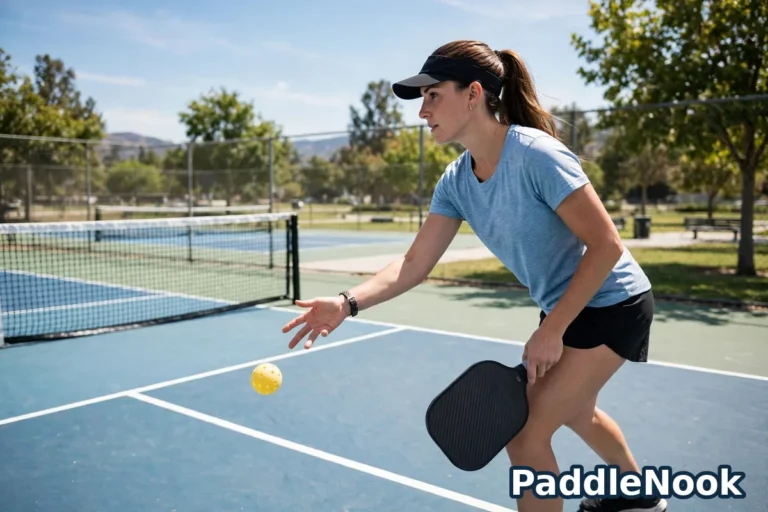
A legal singles serve is an underhand serve, with the paddle below your waist and the paddle head below your wrist at contact. Stand behind the baseline, with at least one foot on the ground, and serve diagonally into the opposite service box. The serve must clear the net and land past the kitchen line.
A serve that lands on the kitchen line is short and a fault. A serve that hits the net but still lands in the right box stays live, with no replay in casual play. You get one serve attempt per rally, so a fault on the serve ends your turn at once.

Where Do You Stand to Serve?
Your own score tells you where to stand. Serve from the right side when your score is even, and from the left side when your score is odd. Zero counts as even, so the first serve of a game always comes from the right.
After you score a point while serving, switch sides and serve again. After you lose a rally while serving, the serve passes to your opponent, who then serves from the side that matches their own score. This even-odd link, shown on the court layout guide, is the easiest way to check the score.
| Your score | Serve from |
|---|---|
| Even: 0, 2, 4, 6, 8, 10 | Right side |
| Odd: 1, 3, 5, 7, 9 | Left side |
What Is the Two-Bounce Rule in Singles?
The two-bounce rule means the serve must bounce before the receiver returns it, and the return must bounce before the server hits it. After those two bounces, either player may volley or play the ball after a bounce.
This rule stops a serve-and-volley rush and gives both players time to get into the rally. Volleying the serve, or volleying the return of serve, is a fault, even if the shot itself looks clean. Once the two bounces are done, the rally opens up fully.
What Can You Not Do in the Kitchen?
You may stand in the kitchen at any time, and you may hit a ball from it after the ball bounces. What you may not do is volley while your feet touch the kitchen or the kitchen line. If your momentum carries you into the kitchen after a volley, that is a fault too.
In singles, the kitchen still shapes the end of rallies, even though long baseline rallies are more common. Move up for a short ball only when you can stop safely behind the line, or wait for the bounce before stepping in. For the wider rulebook behind these lines, see the complete simple rules guide.
How Does Scoring Work in Singles?
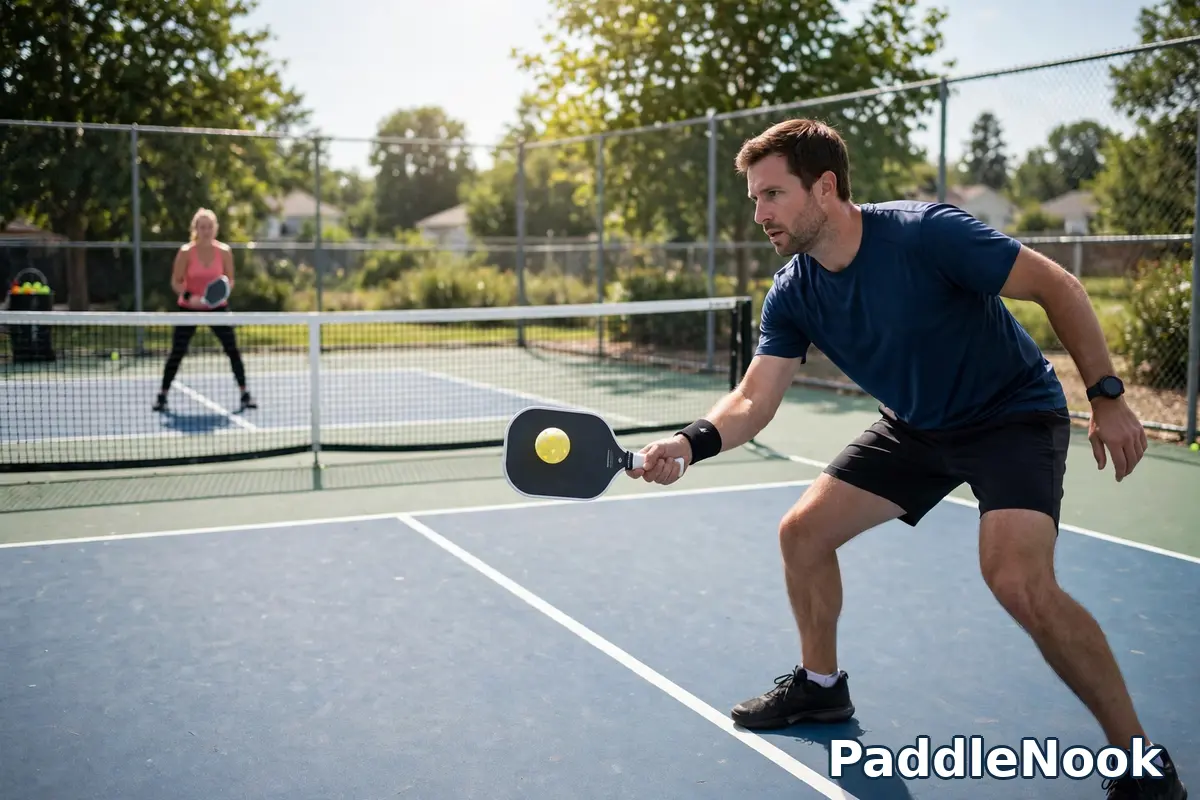
Only the serving player can score a point in singles. If you win a rally while serving, you score one point and keep serving. If you win a rally while receiving, you score no point, but you win the serve, which is called a side-out.
Make a score call before every serve, with two numbers only: your score first, then your opponent’s score. There is no third number in singles, because there is no second server to track. A sample call of “6-4” means the server has 6 points and the receiver has 4.
How Does a Singles Game End?
Most singles games go to 11 points, and you must win by a win by 2 margin. At 10-10, the game is not over. Play continues until one player leads by 2, so a game can finish 12-10, 13-11, or later.
Some events play to 15 or 21 points, still win by 2. Agree on the finish line before the game starts, so a close finish causes no argument. The USA Pickleball singles page explains the same serving and scoring rules in full in its singles rules guide.
People Also Ask
Do singles and doubles use the same court?
Yes. Both formats use the same 20 by 44 foot court, the same net, and the same kitchen lines.
Why is the score call only two numbers in singles?
Because there is only one player per side, so there is no second server number to track, unlike doubles.
Can you score points while receiving in singles?
No. Only the serving player scores. Winning a rally as receiver wins the serve, not a point.
What happens if you serve from the wrong side?
Serving from the wrong side for your score is a fault, and the serve passes to your opponent.
Conclusion
Singles rules are simple once you link your score to your serving side. Serve underhand and diagonally, respect the two bounces, stay out of kitchen volleys, and score only while serving. That is the whole game in one short habit.
Play your first singles game to 11, win by 2, and call every score out loud. For how doubles serving differs, with its second server, see the doubles rules comparison. A clear worked guide to singles serving and scoring is also given in this singles rules and strategy guide.



One Comment